Attic Fan Installation Service in Houston: What to Expect
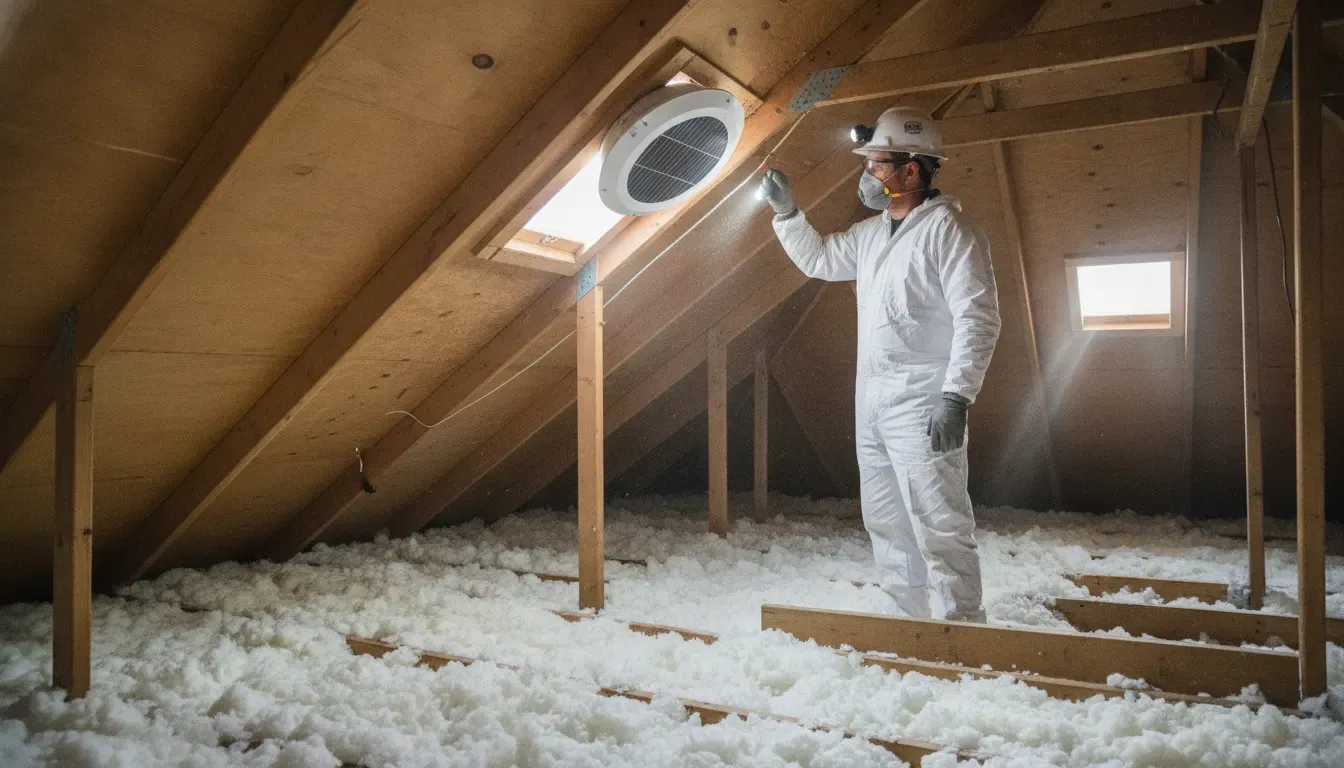
If you are considering an attic fan installation service in Houston, you probably want more than a fan mounted in the roof. You want to know whether your attic needs mechanical ventilation, how the installation fits with existing soffit and exhaust vents, and what happens to the insulation around the work area. A professional assessment should answer those questions before anyone recommends a specific fan.
Book Now: Call EZ Attic Insulation at (713) 909-0390 | Get a Quote | Hablamos Espanol!
What Does an Attic Fan Installation Service Include?
An attic fan installation service is a ventilation assessment and installation process, not simply a product delivery. The work should account for the attic's size, roof shape, existing intake and exhaust openings, insulation condition, wiring or solar placement, and the way the attic connects to the living space.
For a Houston homeowner, a thorough service generally includes:
- Attic inspection: The technician looks at the roof space, insulation, soffit or eave intake, existing exhaust vents, moisture indicators, and access conditions.
- Ventilation planning: The installer determines whether the attic has a usable intake path and an exhaust path that can work with a fan. A fan without adequate intake can create poor airflow.
- Fan selection: The recommendation should fit the attic and roof assembly rather than rely on a one-size-fits-all unit.
- Installation: The crew positions and secures the fan, completes the appropriate power or solar setup, and protects the roof or gable opening from weather exposure.
- Final check: The technician confirms that the fan operates as intended and that insulation, baffles, wiring, and surrounding materials remain in a safe, orderly condition.
EZ Attic Insulation offers solar attic fan installation as part of its Houston-area home efficiency services. The exact scope should be confirmed after looking at the home's existing attic assembly.
Does a Houston Attic Need a Fan?
Not every attic needs a powered fan. Some homes have adequate passive ventilation through correctly designed intake and exhaust openings. Other attics have blocked soffit paths, limited exhaust, air leaks, or moisture concerns that require a broader correction plan. A fan may be one part of that plan, but it should not be presented as a universal solution.
ENERGY STAR explains that natural attic ventilation can help move hot, moist air out of a well-designed attic during summer. It also warns that a powered attic fan can pull conditioned air from the home if soffit vents are blocked or the attic floor is not properly air sealed. That is why the installation decision should follow an inspection, not come first.
Useful reasons to request an assessment include:
- The upper floor becomes noticeably warmer than the rest of the home.
- The attic feels damp, has visible moisture concerns, or shows signs that ventilation paths may be blocked.
- Existing roof or gable vents do not appear to provide a clear intake and exhaust route.
- The attic has uneven insulation, missing baffles, or air leaks around the attic access and ceiling penetrations.
- You are planning insulation work and want ventilation considered before new material is installed.
These signs do not prove that an attic fan is the right answer. They indicate that a closer look may be worthwhile. Roof leaks, duct problems, inadequate insulation, and air-sealing defects can create similar comfort complaints and need different solutions.
How Does an Attic Fan Work With Insulation?
Insulation and ventilation do different jobs. Insulation slows heat transfer through the ceiling or roof assembly. Ventilation moves outdoor air through a vented attic when the intake and exhaust paths are designed to work together. Air sealing limits uncontrolled movement between the conditioned home and the attic.
A fan does not replace insulation. If insulation is thin, compressed, wet, or missing at the attic edges, adding a fan will not correct that heat-transfer problem. In the same way, adding insulation should not cover soffit vents or block the airflow channel created by rafter vents.
ENERGY STAR recommends keeping soffit vents clear and using rafter vents, also called baffles, to maintain an open path from the eaves. The agency also notes that attic fans can reduce efficiency when they draw conditioned air upward through ceiling leaks. A careful installation therefore considers the ceiling boundary, insulation coverage, baffles, intake vents, exhaust vents, and fan location together.
Houston homeowners often benefit from asking for a systems-based recommendation. Depending on the attic, that may involve ventilation work, air sealing, insulation repair or replacement, or a combination. EZ Attic's guide to attic ventilation and insulation in Houston explains why these components should not be treated as interchangeable.
What Happens During the Installation?
1. The technician reviews the attic and the home's symptoms
The visit should begin with questions about hot rooms, comfort changes, moisture concerns, prior insulation work, and any existing fan or vent. The technician may also review the roof type, attic access, and the location of electrical or solar components. This conversation helps separate a ventilation question from an insulation, duct, roof, or HVAC issue.
2. The ventilation paths are checked
Intake and exhaust are both important. Common intake locations include soffits or eaves. Exhaust may use a ridge vent, gable vent, roof vent, or another designed opening. If insulation has been pushed into the eaves, baffles may be needed to protect the airflow channel. The installer should explain any blocked or missing path before recommending a powered fan.
3. The installation location and equipment are confirmed
A roof-mounted fan and a gable-mounted fan affect the work area differently. A solar fan also needs a suitable location for its solar panel and a clear path to operate. The installer should explain where the unit will sit, how the opening will be weather-protected, how the equipment will be controlled, and what access the crew needs.
4. The fan is secured and connected
The crew installs the selected unit according to the roof or gable configuration and completes the appropriate connection. For a solar installation, that means positioning the panel where it can receive useful sunlight. The exact installation details depend on the home, fan, and attic layout, so homeowners should request a clear description of the proposed work rather than assume every project follows the same steps.
5. The crew checks operation and the surrounding attic
After installation, the technician should confirm that the fan runs correctly and that the work area is clean and secure. The check should also look for displaced insulation, covered vents, loose materials, and other conditions that could interfere with attic performance. Ask for photos or a walk-through if the attic is difficult to access.
What Should You Ask Before Scheduling?
A good consultation makes the scope easy to understand. Before scheduling an attic fan installation service, ask:
- What problem is the fan expected to address? The answer should connect the recommendation to heat buildup, airflow, moisture management, or another observed condition.
- Does my attic have enough intake ventilation? Ask how the installer will confirm that the fan will not simply pull conditioned air from the house.
- Will the installation affect my insulation or baffles? Clarify whether existing insulation must be moved, repaired, or supplemented around the work area.
- Where will the fan and solar panel be placed? Request a clear explanation of the mounting location and weather protection.
- What power or controls are required? Ask how the fan activates, what happens during limited sunlight, and whether any electrical work is included.
- What is not included? A written scope should distinguish fan installation from roof repair, insulation replacement, air sealing, duct work, and electrical changes outside the agreed service.
- How will the finished work be checked? Confirm that operation, airflow paths, insulation clearance, and cleanup are part of the final review.
These questions help you compare recommendations by scope and quality instead of choosing only by the fan itself. A reputable contractor should be comfortable explaining why a fan is appropriate, what it cannot fix, and whether another attic improvement should come first.
When Is Attic Insulation the Bigger Priority?
If the attic has little insulation, large gaps, compressed material, or obvious air leaks, insulation and air sealing may deserve attention before a fan. The goal is to keep unwanted heat and air movement from reaching the conditioned space. A powered fan cannot make up for missing thermal protection at the ceiling.
Homeowners planning a broader upgrade can review EZ Attic Insulation's attic insulation service to understand the available insulation scope. Removal and replacement, blown-in fiberglass, batt insulation, spray foam, and radiant barrier work each address different parts of an attic assembly. The right choice depends on the home's existing conditions and the intended insulation boundary.
Also check whether a bathroom or kitchen exhaust fan is venting into the attic. That issue is different from roof-space ventilation and may require its own correction. The U.S. Department of Energy's Consumer Guide to Durable Attics treats moisture control, air sealing, insulation, and ventilation as connected parts of attic performance.
Talk with a Houston attic specialist at (713) 909-0390 | Ask for a ventilation assessment
Attic Fan Installation Service FAQ
Will an attic fan cool my entire house?
An attic fan is intended to move air through the attic, not to replace the home's air-conditioning system. It may help manage conditions in a properly designed and air-sealed attic, but it does not guarantee a specific indoor temperature or energy-bill result.
Can I install a fan if my attic has insulation?
Possibly. Insulation is common in attics, but the installer must confirm that soffit intake paths, baffles, exhaust openings, and the ceiling air barrier are compatible with the fan. Insulation should not cover soffit vents.
Is a solar attic fan a good fit for a Houston home?
It can be a fit when the attic has a suitable ventilation design and a location for the solar panel. A professional should inspect the roof space first and explain how the fan will work with existing intake, exhaust, insulation, and air sealing.
Should attic ventilation or insulation be installed first?
There is no single order for every home. The best sequence depends on what the inspection finds. Blocked airflow, moisture entry, air leaks, and damaged insulation may need attention before or alongside fan installation.
How do I prepare for the appointment?
Tell the contractor about hot rooms, moisture concerns, previous attic work, and any existing fan. Make the attic access reachable and ask what the crew needs moved or protected. If you want a quote, have questions ready about scope, controls, cleanup, and follow-up.
Plan the Right Attic Ventilation Solution
The best attic fan installation service starts with diagnosis. In Houston, a fan may support a well-designed ventilation system, but it should be evaluated alongside intake airflow, exhaust paths, air sealing, insulation, roof conditions, and the home's comfort symptoms. That approach helps you avoid paying for a fan that cannot solve the actual problem.
EZ Attic Insulation is a locally and family-owned Texas home efficiency company serving Houston and surrounding communities. The team is 100% certified and insured, and can help you discuss attic insulation and solar fan options. For a clear next step, request an assessment and ask what the attic needs before scheduling the work.
Book Now: Call EZ Attic Insulation at (713) 909-0390 | Get a Quote | Hablamos Espanol!