'Attic Ventilation vs Insulation in Houston: Do You Need Both?'
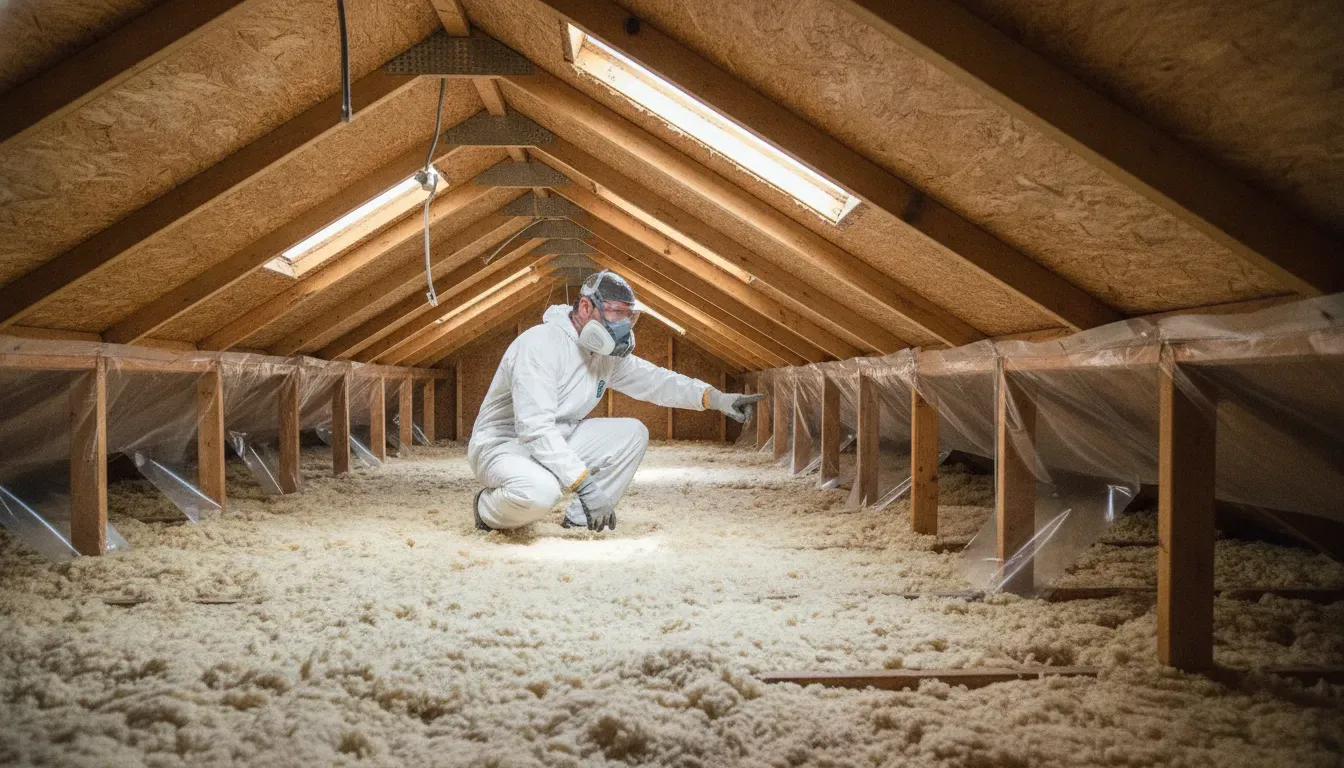
If you are comparing attic ventilation vs insulation in Houston, the short answer is that they are not substitutes. Insulation slows heat moving between your attic and living space. Ventilation manages airflow and moisture in a vented attic. Air sealing connects the two by limiting unwanted air movement. Many Houston homes need a coordinated look at all three, not simply more insulation or another roof vent.
Book Now: Call EZ Attic Insulation at (713) 909-0390 | Get a Quote | Hablamos Español!
Do You Need Attic Ventilation If You Have Good Insulation?
Usually, yes, when the attic is designed as a vented assembly. Good insulation reduces heat transfer through the ceiling, but it does not create an airflow path or remove moisture from the roof space. Proper soffit, ridge, gable, or other approved ventilation works with insulation. The correct combination depends on the roof design, existing air leaks, insulation coverage, and the condition of the intake and exhaust paths.
| Attic component | Primary job | What it cannot fix by itself |
|---|---|---|
| Insulation | Slows heat transfer through the ceiling or roof assembly | Blocked soffit vents, roof leaks, or open air bypasses |
| Ventilation | Moves outdoor air through a properly designed vented attic | Thin insulation, ceiling leaks, or poorly sealed ducts |
| Air sealing | Limits uncontrolled air movement between the home and attic | Missing intake or exhaust ventilation in a vented roof |
The U.S. Department of Energy explains that a durable attic needs moisture control, air sealing, insulation, and appropriate ventilation. That systems view is especially useful in Houston, where a hot roof space can expose several weaknesses at once.
What Does Attic Insulation Do in a Houston Home?
Attic insulation creates resistance to heat flow. During a Houston summer, it helps slow the transfer of heat from the roof and attic into the conditioned rooms below. During cooler weather, it helps keep indoor heat from escaping through the ceiling. It can support more consistent room temperatures and reduce the amount of work your HVAC system needs to do.
Insulation performs best when it is continuous, dry, and installed at the correct boundary. Common problems include uneven depth, compressed batts, gaps around the attic hatch, wind washing near the eaves, and insulation pushed away from the edges of the attic floor. Ductwork that is poorly sealed or located in a hot attic can also affect comfort even when the insulation looks thick from the access opening.
EZ Attic Insulation provides attic insulation services, including removal and replacement, blown-in fiberglass, batt insulation, and spray foam options. The right material and location should follow an inspection of the existing assembly rather than a one-size-fits-all recommendation. See the home attic insulation service page for the scope of that work.
What Does Attic Ventilation Do?
Attic ventilation helps move outdoor air through a vented attic when intake and exhaust openings are balanced and unobstructed. Intake commonly occurs at the soffits, while exhaust may leave through a ridge vent, gable vent, or another designed outlet. The goal is not to air-condition the attic. It is to support a healthier roof-space environment and reduce trapped heat and moisture when the assembly is designed for ventilation.
ENERGY STAR warns that insulation should not cover attic soffit vents. Rafter vents, also called baffles, help preserve an airflow channel from the soffit while allowing insulation to reach the outer edge of the attic floor. If a Houston attic has blocked intake paths, missing baffles, damaged vents, or an exhaust path that does not match the roof design, adding insulation without correcting the airflow path can create a new problem.
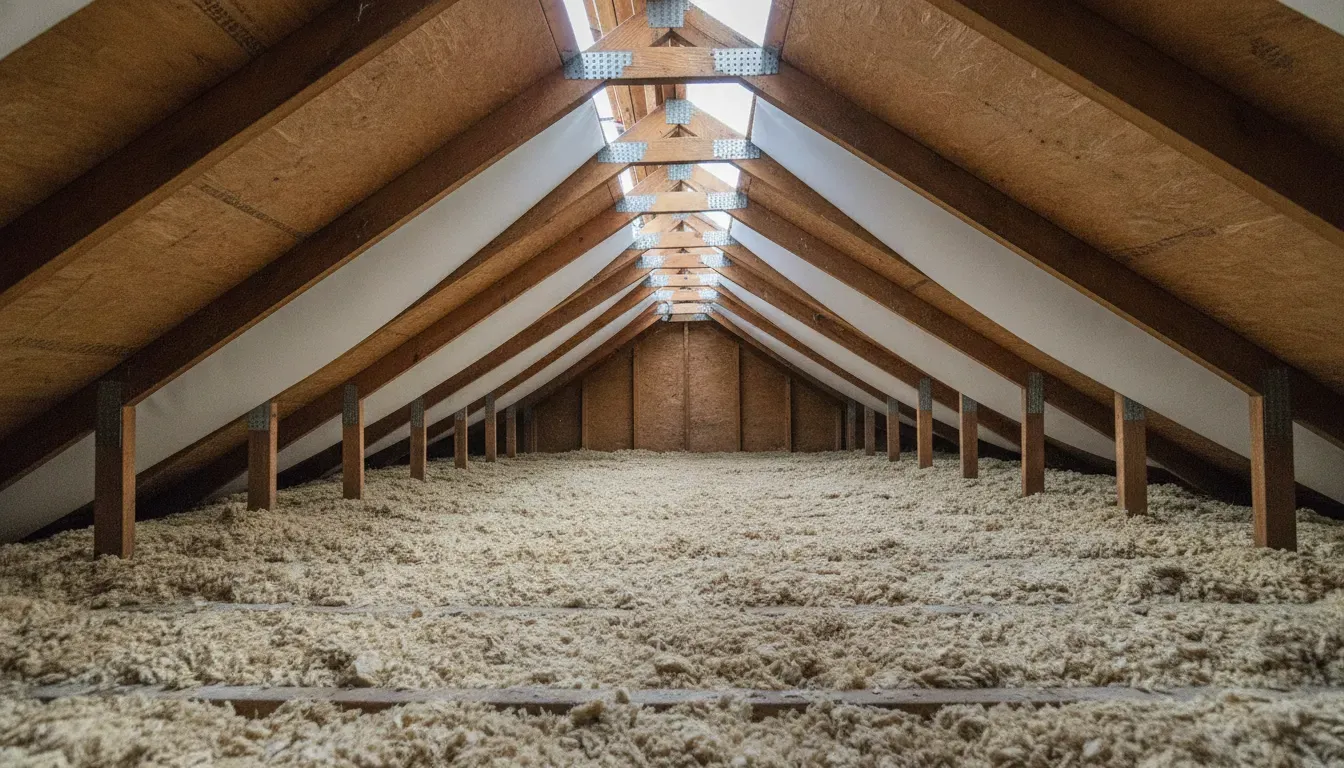
Ventilation also does not repair a roof leak or an exhaust fan that sends humid household air into the attic. Those conditions need their own correction. The DOE's Consumer Guide to Durable Attics recommends addressing moisture entry, air gaps, insulation, and ventilation as related parts of attic durability.
How Does Houston's Climate Affect the Ventilation and Insulation Decision?
Houston homes face a long cooling season, strong solar heat on the roof, humid outdoor air, and weather that can change quickly. Those conditions make attic diagnosis more important than choosing a product from a short list. A hot room may be caused by insufficient insulation, air leakage, a duct issue, blocked soffit airflow, inadequate exhaust, or several conditions together.
Humidity deserves special attention. Ventilation is not a license to pull uncontrolled outdoor air into the house, and it cannot replace proper air sealing. Likewise, insulation is not a moisture-removal system. If the attic has damp insulation, staining, musty odors, or visible roof damage, identify the moisture source before covering the area with new material.
Houston homeowners should also be cautious about judging an attic only by its temperature. A warmer attic does not automatically prove that a powered fan is needed. The roof assembly, vent placement, air barrier, insulation coverage, and pressure relationships all matter. A professional inspection can separate a ventilation concern from an insulation or duct concern before you commit to a scope of work.
What Does an Attic Solar Fan Actually Do?
An attic solar fan is an exhaust device that uses solar power to move air out of an attic during suitable daylight conditions. It may be useful when the attic has a compatible, unobstructed intake path and the roof assembly is designed for that type of exhaust. It does not add insulation, seal ceiling penetrations, remove wet insulation, or solve a roof leak.
ENERGY STAR notes that an attic fan can draw conditioned air from the home when soffit intake is blocked or the ceiling plane is not well sealed. That is why a fan should be evaluated as part of the whole attic system. Before installation, confirm where replacement air will enter, whether the existing exhaust layout is appropriate, and whether air leaks connect the attic to the living space.
EZ Attic Insulation offers attic solar fan installation in its broader home-efficiency service mix. The useful question is not simply, "Will a fan make my attic cooler?" It is, "Will this exhaust strategy work with my roof design, intake ventilation, air sealing, and insulation?"
Why Do Many Houston Homes Need Both Insulation and Ventilation?
Insulation and ventilation address different parts of the same heat and moisture environment. In a vented attic, the ventilation path helps manage the roof space, while insulation reduces the heat reaching the conditioned rooms. Air sealing keeps the boundary between the home and attic from leaking. When those functions are coordinated, each component can do its intended job instead of compensating for another component's failure.
For example, adding insulation over a ceiling with large bypasses can leave warm, humid air moving into the attic. Installing a fan in an attic with blocked soffits can create unwanted pressure and pull cooled air from the home. Clearing the soffits but leaving thin insulation can still leave the upstairs rooms uncomfortable. The inspection should therefore look at coverage, edges, penetrations, ducts, intake, exhaust, and moisture together.
For a broader overview of attic-first ways to improve comfort and energy performance, read EZ Attic Insulation's Houston home energy savings guide. This article is the narrower companion: it helps you understand which attic function may be missing before you request a recommendation.
When Can Ventilation Alone Not Solve a Hot Attic Problem?
Ventilation alone is unlikely to solve a comfort problem when the main issue is heat transfer through the ceiling, air leakage, duct performance, or incomplete insulation coverage. It also cannot correct a roof leak or wet insulation. A fan may change attic air movement while leaving the rooms below just as hot. In some homes, an incorrectly planned fan can make cooling performance worse.
Look for clues that point beyond ventilation:
- One or two rooms stay hot while the rest of the house is comfortable.
- The attic insulation is thin, uneven, compressed, displaced, or missing near the edges.
- There are visible gaps around the attic hatch, wiring, plumbing, recessed lights, or duct penetrations.
- Supply ducts are damaged, disconnected, poorly sealed, or exposed to extreme attic heat.
- You see staining, damp insulation, condensation, or a musty odor.
- Soffit vents are blocked or there is no clear path from intake to exhaust.
- The air conditioner runs for long periods without reaching the expected indoor temperature.
These signs do not identify the final repair by themselves. They show why a whole-attic assessment is more useful than buying a fan based on a hot afternoon reading.
What Should a Houston Attic Inspection Check?
A practical inspection should establish the condition of the attic before recommending insulation, ventilation, or both. Ask the technician to review:
- The roof assembly and whether it is intended to be vented or unvented.
- Insulation type, depth, continuity, compression, and coverage at the eaves.
- Air-sealing gaps between conditioned rooms and the attic.
- Soffit intake, baffles, ridge or gable exhaust, and obstructions.
- Duct condition and whether ducts are contributing to uneven comfort.
- Signs of water entry, excess moisture, or damaged materials.
- Whether a powered or solar exhaust fan is compatible with the existing system.
A clear recommendation should explain what the observed condition is, what work addresses it, and what the work does not address. That makes it easier to compare scopes based on quality and fit rather than assuming the biggest equipment or thickest material is automatically the answer.
Book Now: Call EZ Attic Insulation at (713) 909-0390 | Get a Quote | 100% Certified & Insured
Attic Ventilation vs Insulation in Houston: FAQ
Is attic ventilation more important than insulation in Houston?
Neither is automatically more important. Insulation slows heat transfer, while ventilation supports airflow and moisture management in a vented attic. The correct priority depends on the roof assembly and the observed problem. Many homes also need air sealing because gaps can undermine both functions.
Can I add insulation over existing insulation?
Sometimes, but the existing layer should be checked first. Wet, contaminated, damaged, or poorly distributed insulation may need a different scope. The installer should also protect soffit airflow, address accessible air leaks, and confirm that the added material will not cover unsafe or unsuitable areas.
Do attic fans reduce Houston energy bills?
Not automatically. An attic fan may help a compatible vented attic, but it cannot replace insulation or air sealing. If intake vents are blocked or the ceiling plane leaks, a fan may draw conditioned air from the house. Evaluate the whole system before choosing powered exhaust.
What are attic baffles for?
Attic baffles, also called rafter vents, help preserve a channel for air to move from soffit vents into a vented attic. They also help keep loose-fill or batt insulation from blocking the eaves. Their placement should match the roof and insulation design.
How do I know whether my attic needs ventilation or insulation?
Start with an inspection of insulation coverage, air leaks, ducts, moisture, soffit intake, and exhaust. A hot attic alone does not identify the cause. The goal is a recommendation that matches the actual condition of your Houston home.
Book an Attic Inspection in Houston
Book Now: Call EZ Attic Insulation at (713) 909-0390 | Get a Quote | Hablamos Espanol!