Why House Won't Cool Below 75 Degrees Houston AC Running?
If you searched for "house won't cool below 75 degrees houston ac running," the short answer is that heat may be entering faster than the system can remove it. Cooled air may be escaping, or the HVAC equipment may not be producing enough cooling. In Houston, attic heat, duct leakage, restricted airflow, humidity, and equipment problems can overlap.
Start with safe checks at the thermostat, filter, registers, and outdoor unit. Then compare the rooms that feel warmest. If the AC is delivering cool air but upper rooms still lag, the attic and duct system deserve attention. If the air is warm, weak, or accompanied by ice, water, unusual sounds, or electrical symptoms, call an HVAC professional first.
Book Now or Get Quote: Call (713) 909-0390 for an insulation inspection. Hablamos Espanol!
This guide focuses on diagnosis, not guesswork. For the wider home-efficiency picture, see EZ Attic Insulation's Houston home energy savings guide. The steps below can help you decide whether to start with HVAC service, an attic evaluation, or both.
What Does "House Won't Cool Below 75 Degrees Houston AC Running" Mean?
A house that will not cool below 75 degrees with the AC running is usually dealing with an imbalance. The home is gaining heat, losing conditioned air, receiving too little airflow, or operating with an equipment problem. Houston's long cooling season and hot, humid weather make each issue more noticeable.
Common causes include:
- Attic heat moving through thin, settled, missing, or uneven insulation.
- Air leaks around attic penetrations, duct connections, plumbing, wiring, recessed lights, windows, or doors.
- Leaky, crushed, disconnected, or poorly insulated ducts that lose cooled air before it reaches a room.
- A dirty filter, blocked return, closed register, dirty coil, or blower problem that restricts airflow.
- High indoor humidity, which can make a room feel warmer and clammy even when the thermostat reading changes.
- Thermostat settings, refrigerant, electrical, condensate, coil, or compressor issues that require HVAC diagnosis.
One symptom can have more than one cause. An under-insulated attic can add heat while a leaky duct loses cooled air to the attic. A restricted filter can reduce airflow while high humidity makes the remaining cooling feel less effective. Looking at the pattern across rooms is more useful than changing the thermostat repeatedly.
What does the room pattern tell you?
If the top floor, a room below the roof, or a west-facing room becomes much hotter in the afternoon, the building envelope may be contributing. If every room has weak or warm airflow, the HVAC system or ductwork deserves priority. If the thermostat reaches its setting in one area while another room remains uncomfortable, distribution, insulation, sun exposure, or duct leakage may be involved.
The Department of Energy explains that uncontrolled air leakage affects comfort and can contribute to moisture problems. Checking leakage as part of a broader comfort evaluation can help explain rooms that stay warm.
Why Won't My House Cool Below 75 Degrees Houston AC Running?
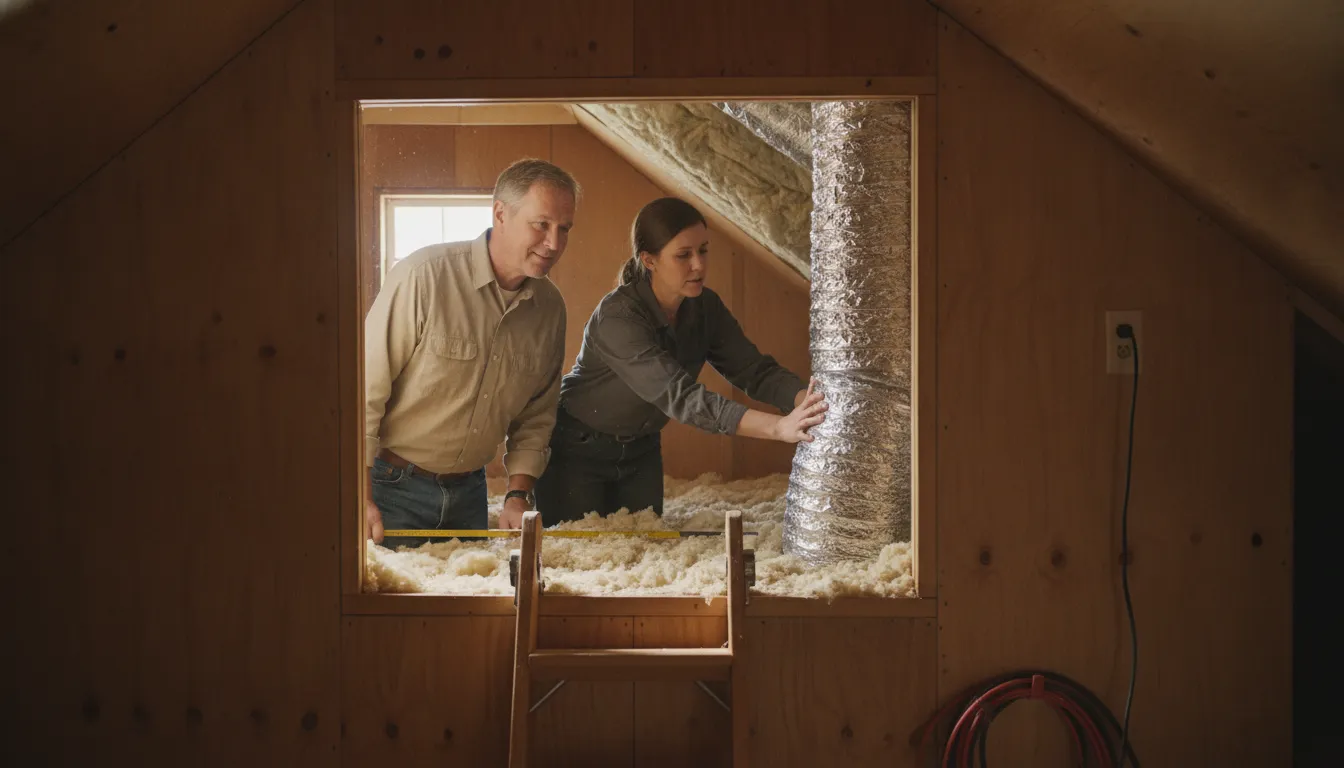
Your attic is a heat buffer between the roof and the conditioned rooms below. On a sunny Houston day, roof surfaces and attic spaces become extremely hot. A continuous, properly installed insulation layer slows heat movement toward the ceiling. When that layer is thin, compressed, disturbed, wet, or missing, more heat reaches the living space and the AC may need longer cycles to keep up.
Insulation does not make an air conditioner stronger, repair a refrigerant leak, or correct a failing blower. Its role is to slow heat transfer. The Department of Energy's home insulation guidance explains that insulation reduces heat flow between inside and outside, while the needed R-value depends on the home's region and construction.
Which attic clues should you notice?
- The upstairs rooms or rooms directly below the roof are consistently warmer.
- The ceiling feels hot in the afternoon, especially under a sunny roof area.
- The thermostat reaches its setting in one part of the home while another room stays uncomfortable.
- The system runs for long periods after sunny days even though the supply air feels cool.
- Insulation appears low, uneven, compressed, disturbed, or absent around attic penetrations.
Air sealing matters alongside insulation. Gaps around wiring, plumbing, recessed lights, access panels, and ducts can allow hot, humid air to enter and conditioned air to escape. Adding insulation without addressing major leakage can leave part of the comfort problem unresolved. An attic assessment should look at coverage, leakage paths, duct condition, and ventilation as related parts of the same system.
For Houston homeowners, EZ Attic Insulation can evaluate existing attic coverage and discuss appropriate options through its home attic insulation service. Depending on the attic, blown-in fiberglass insulation may help fill suitable areas without disturbing finished rooms. EZ's approved guidance cites savings of up to 15% on heating and cooling costs when insulation and unwanted air leaks are addressed. That is a maximum claim, not a guarantee for every home.
Is It Your AC or Your Attic? How Can You Tell the Difference?
Before choosing a repair, identify what the air and room pattern are telling you. An attic or envelope issue usually appears as heat entering the home, especially through ceilings and upper rooms. An HVAC issue is more likely to affect the temperature of the air from the registers, overall airflow, system cycling, or equipment sounds.
| Pattern | Attic | HVAC |
|---|---|---|
| Rooms | Hot upstairs | Weak airflow |
| Supply air | Cool air | Warm air |
| Next check | Inspect insulation | Call an HVAC professional |
Carrier lists incorrect thermostat settings, dirty filters, and blocked outdoor condenser units among common starting points when an air conditioner is not cooling correctly. Set the system to Cool, confirm the filter is not clogged, and keep leaves or debris from blocking the outdoor unit. After a few minutes, compare airflow at several registers.
If the air is clearly cool but the home cannot keep up, the building envelope deserves attention. If the air is warm or weak throughout the home, have the HVAC system and ducts evaluated first. ENERGY STAR notes that airflow problems can reduce system efficiency by up to 15 percent, so weak airflow should not automatically be blamed on insulation.
Do not open refrigerant lines, troubleshoot electrical components, dismantle equipment, or enter an unsafe attic. If the system is blowing warm air, icing up, leaking water, making unusual noises, or repeatedly shutting off, contact a qualified HVAC professional. An attic evaluation is useful after or alongside HVAC diagnosis when the equipment is operating but rooms below the roof remain hot.
What Else Can Keep a House From Cooling in Texas Heat?
Attic heat is one part of the diagnosis. Several smaller problems can add up, especially during a Houston heat wave. Start with checks that do not require tools or equipment disassembly. Then bring in the appropriate professional for anything involving sealed refrigerant circuits, electrical components, internal coils, or duct repairs.
Thermostat, filter, and register problems
Confirm that the thermostat is set to Cool rather than Heat, Off, or constant Fan. Inspect the filter and replace or clean it according to the equipment instructions. Make sure supply registers and return grilles are open and not blocked by furniture, rugs, or curtains. Notice whether airflow is weak in every room or only at certain vents.
A clogged filter can restrict airflow and make the system run longer. A blocked return, dirty indoor coil, blower problem, or crushed duct can create similar symptoms. These issues need more than a lower thermostat setting. If the basic checks do not change the airflow, schedule HVAC service.
Outdoor unit and cooling-component concerns
Keep leaves, grass, and other debris away from the outdoor condenser, but do not open electrical panels or attempt coil repairs. Dirty coils, incorrect refrigerant levels, frozen evaporator coils, and failing components can prevent normal cooling. Carrier's air-conditioner troubleshooting guidance provides useful context, but it does not replace professional diagnosis.
Humidity, sun, and duct leakage
Houston's humidity can make a home feel hot even when the thermostat number changes. The Department of Energy explains that air conditioning lowers temperature more effectively than it removes moisture in hot-humid climates. A condensate problem can also affect humidity and create water damage, so include drainage in professional maintenance.
Afternoon sun through windows, hot exterior walls, leaky ducts, and disconnected duct sections can add heat or lose cooled air before it reaches a room. If the AC checks out but certain rooms stay warm, have an HVAC professional evaluate equipment and ducts. Then address verified building-envelope problems, including air leakage and insulation, as a separate part of the solution.
What Should You Fix First? A Houston Homeowner Checklist
When your house won't cool below 75 degrees in Houston with the AC running, resist the urge to change several things at once. A short, repeatable check helps separate a thermostat or airflow problem from duct leakage, attic heat gain, or an equipment fault. Record what you find so the next professional has a clear starting point.
- Record the pattern. Note the thermostat setting, indoor temperature, time of day, outdoor conditions, and rooms that feel hottest. Record whether the system runs continuously, cycles normally, or blows air that is not noticeably cool.
- Check the thermostat and filter. Confirm the system is set to Cool. Inspect the filter and replace it if dirty, using the correct size and type. Do not keep lowering the setpoint as a substitute for diagnosis.
- Compare airflow. With the system running, compare supply-air strength and temperature in comfortable and uncomfortable rooms. Weak airflow in one area can point to a blocked register, duct restriction, or leakage. Weak airflow throughout the home calls for HVAC evaluation.
- Look for HVAC warning signs. Stop troubleshooting and call an HVAC professional if you see ice, smell burning. Hear unusual electrical or mechanical noises, find water near the air handler, or notice repeated shutdowns. Refrigerant, frozen-coil, electrical, and condensate problems are not DIY repairs.
- Make only a safe attic observation. From a safe, accessible location, look for visibly thin, disturbed, wet, or uneven insulation, obvious leakage paths, or disconnected ductwork. Do not step between ceiling joists, touch wiring, move insulation, or enter a hot attic without proper training and protective equipment.
- Choose the right evaluation. Book HVAC service first when air is warm or weak, equipment shows warning signs, or basic checks change nothing. Request an insulation and air-sealing evaluation when the AC delivers cool air but upper rooms remain hot, temperatures vary sharply, or the problem worsens during sunny afternoons.
- Prioritize the confirmed cause. Repair unsafe or failing HVAC equipment before adding insulation. If the equipment works correctly, address the largest verified envelope or duct problem rather than guessing from a single hot room.
Both HVAC and envelope problems can exist together. Fixing one does not automatically rule out the other. A documented pattern, safe observations, and professional findings help you choose work that matches the actual source of discomfort.
Book Now or Get Quote: Call (713) 909-0390 to discuss an attic comfort evaluation. Hablamos Espanol!
Frequently Asked Questions
Why won't my house cool below 75 degrees when the AC is running?
Start with the thermostat, filter, registers, and outdoor-unit clearance. Common causes also include attic heat gain, duct leakage, restricted airflow, high humidity, and equipment problems. Warm supply air, ice, water, unusual sounds, or repeated shutdowns call for HVAC diagnosis.
Can attic insulation help my house stay cooler?
It can help when heat is moving through the attic and into the living space. Insulation slows heat flow between indoors and outdoors, but it will not repair an aging AC, correct a refrigerant issue, or replace damaged ductwork. An inspection can identify whether insufficient coverage or air leaks are contributing to hot rooms.
How do I know whether the problem is my ductwork?
Uneven room temperatures, weak airflow at some registers, unusually hot rooms, and long runtimes can point to duct leakage, poor duct insulation, or airflow restrictions. Keep registers open and unobstructed, but do not alter duct connections yourself. A professional can inspect accessible ducts and compare airflow patterns with room temperatures.
Should I call an HVAC company or an insulation company first?
Call an HVAC professional first if the system is blowing warm air, a coil is frozen. The outdoor unit is not operating, or you suspect refrigerant, electrical, or condensate problems. If the AC is functioning but upper rooms remain hot or the home gains heat quickly, an insulation and air-sealing assessment may be the better next step. Both issues can exist together.
Is setting the thermostat lower the best way to cool the house?
No. Lowering the thermostat does not fix restricted airflow, air leakage, poor insulation, humidity, or equipment problems. It can make the system run longer without solving the cause. Check the system and building envelope so the equipment can deliver the comfort the home needs.
Ready to Make Your Houston Home More Comfortable?
If your home still will not cool below 75 degrees, an insulation inspection can help identify whether attic heat and air leakage are contributing to the problem. EZ Attic Insulation serves Greater Houston and is 100% Certified & Insured. HVAC concerns should remain with a qualified HVAC professional, while the insulation side can be evaluated separately.
Book Now or Get Quote: Call (713) 909-0390 for a free insulation inspection. Hablamos Espanol!