Weatherization Assistance Program in Texas: Houston Guide
.
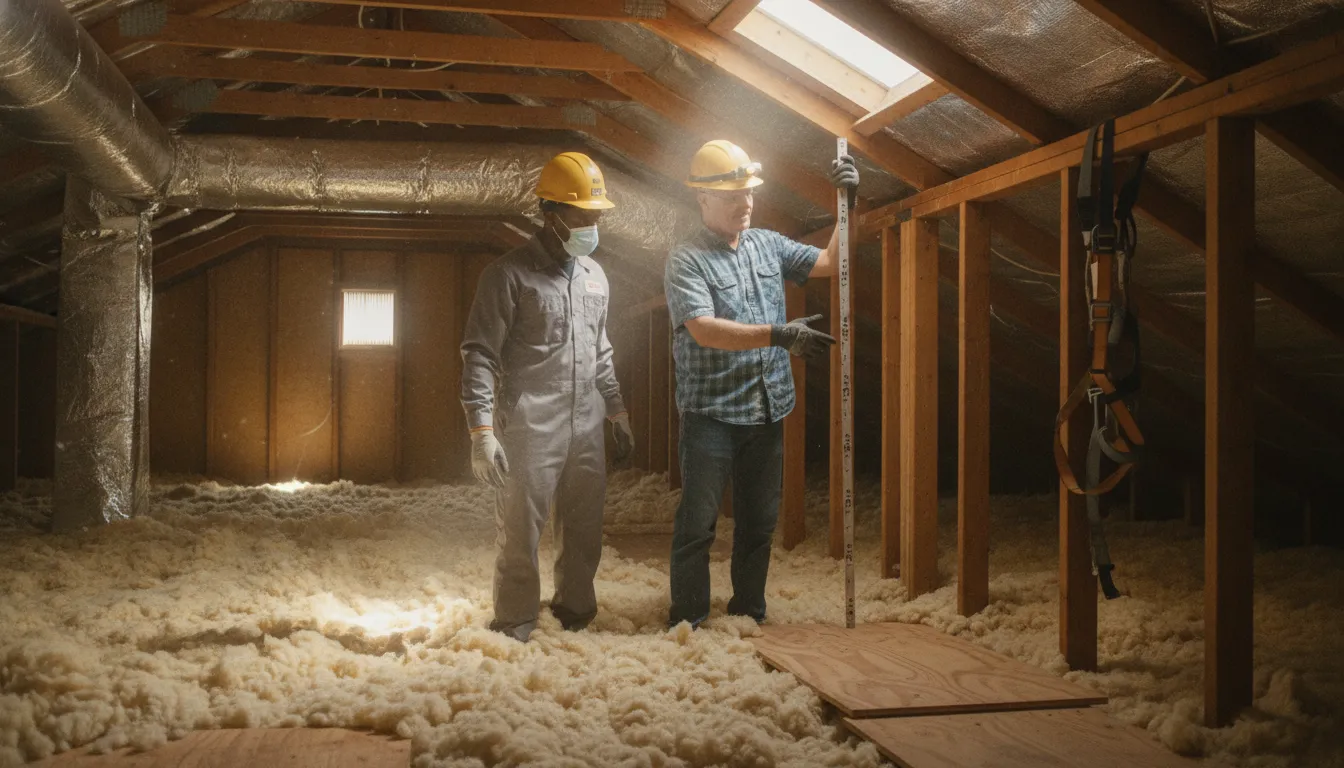
When a Houston home feels drafty in winter, hard to cool in summer, or expensive to keep comfortable, the problem may involve more than one weak spot. Weatherization looks at the home as a system, from air leaks and insulation to health and safety concerns.
A weatherization assistance program generally helps eligible households improve home energy efficiency while supporting health and safety, often through an assessment and locally delivered improvements. The U.S. Department of Energy explains the program's purpose and national framework at Energy.gov. Eligibility, available measures, provider capacity, and current application steps can vary, so Texas homeowners should verify details with the appropriate state or local administrator.
Understanding who administers the work and how eligibility is determined makes the next question easier: what can the program actually do for a home. And where do insulation and air sealing fit?
Book Now or Get Quote: (713) 909-0390
What does the weatherization assistance program do?
The Weatherization Assistance Program (WAP) is a public energy-efficiency program designed to help eligible low-income households improve home performance while protecting health and safety. The U.S. Department of Energy describes it as the nation's largest residential whole-house energy-efficiency program. Its purpose is broader than adding insulation alone: the work looks at how the home operates as a system and where improvements may provide the most useful benefit. DOE explains the program's purpose and national scope.
In Texas, the Texas Department of Housing and Community Affairs (TDHCA) says the program is intended to help low-income customers control energy costs through weatherization materials and education. The stated goal is to reduce the energy-cost burden through energy efficiency. That public-program mission should not be confused with a private contractor's regular home-improvement service. WAP rules, available measures, funding, and approval decisions are handled through the program's official administration and local providers.
A whole-house review, not a single repair
Weatherization may address several parts of a home's energy performance. Depending on the assessment and current program rules, that can involve air leakage, insulation, ducts, heating or cooling equipment, and health or safety concerns. The goal is to identify work that fits the home's needs and the program's requirements, rather than promise the same project for every household.
That assessment-led approach matters in Houston homes, where heat, humidity, uneven temperatures, and air leakage can interact. A home may need attention in more than one location, and the most visible problem is not always the most important one.
Who delivers the work?
DOE distributes core funding to states, tribes, and territories, which then work with local organizations to deliver services. Those organizations may use their own crews or private contractors. In Texas, TDHCA says WAP is administered through subrecipients that collectively cover all 254 counties. For that reason, homeowners should start with the official Texas guidance and confirm the current local provider, application process, capacity, and covered work. Neither this overview nor a private insulation company can determine whether a household qualifies or whether a specific improvement will be approved. Review TDHCA's Texas WAP information for the official program boundary and current guidance.
Who may qualify for weatherization assistance?
Eligibility for the Weatherization Assistance Program (WAP) depends on current federal guidance, Texas rules, and the local provider handling applications. Meeting a general guideline does not guarantee approval. So treat the following as a starting point and confirm the details with the Texas Department of Housing and Community Affairs or the provider serving your county.
Under DOE guidance, households at or below 200% of the federal poverty income guidelines may be considered eligible. A household receiving Supplemental Security Income may also qualify under DOE guidelines. Some states or territories may instead use a Low Income Home Energy Assistance Program standard based on 60% of state median income. Texas administrators determine which current rules apply, including how household income is counted and what documents are accepted.
Homeowners and renters may apply. Priority may be given to households with older adults, a member with a disability, children, high energy use, or a high energy burden. These priority categories can affect how applications are handled, but they do not replace the local eligibility review. A local provider generally reviews the application and income information before deciding whether the household is income eligible.
Renters should ask about property requirements early. Weatherization work cannot begin until the provider works with the renter and landlord to obtain permission. The property may also need to be suitable for the proposed improvements and able to benefit from weatherization measures. That determination is made through the program's process, not by a private insulation company.
Capacity matters, too. Even an income-eligible applicant may be placed on a waitlist, depending on local demand, available funding, and provider workload. Ask the current administrator about intake status, expected timing, required paperwork, and whether the program is accepting applications. For Greater Houston households, verify the latest Texas guidance before relying on an older online article or an income threshold from another state.
What improvements can a Texas weatherization program include?
A Texas weatherization assistance program generally starts with an assessment, not a preset shopping list. An energy audit reviews the home's efficiency and looks for air leaks, inefficient equipment, and other conditions that may affect performance. The home must be able to benefit from weatherization measures, and installed measures must meet program energy-savings goals. Current details should always be confirmed with the Texas Department of Housing and Community Affairs or the local provider.
Depending on the assessment, the work may address several parts of the building envelope and its mechanical systems. That whole-home approach matters in Texas, where adding insulation in one area may not solve comfort problems caused by gaps, duct losses, or inefficient heating and cooling equipment. The TDHCA lists the following categories of possible work in its Texas Weatherization Assistance Program guidance.
| Measure. | What it addresses. | Why assessment matters. |
|---|---|---|
| Caulking and weather-stripping. | Small openings around joints, doors, and windows that can allow unwanted air movement. | The auditor can identify where sealing is needed and avoid treating areas that require a different repair. |
| Ceiling, wall, and floor insulation. | Heat transfer through parts of the home's thermal boundary. | The assessment helps identify missing, inadequate, or uneven insulation and the locations where added material may help. |
| Building-envelope repairs. | Holes and other gaps that connect the conditioned space to the outside. | Sealing the right pathways supports the home's overall envelope instead of masking the source of leakage. |
| Duct work. | Problems in the system that distributes conditioned air through the home. | Testing and inspection can show whether duct-related work is relevant to the home's actual performance. |
| Heating and cooling system work. | Inefficient equipment that may need a tune-up, repair, or replacement. | Equipment work should be tied to documented conditions and program requirements, not assumed from age alone. |
Insulation is only one part of that picture. Homeowners who want to understand the thermal boundary can review where to add home insulation, then ask the authorized program provider which measures, if any, are appropriate for the property. A listed measure is not a promise that every home will receive it.
How do you apply for a weatherization assistance program in Texas?
Applying for a weatherization assistance program in Texas usually starts with the state resource directory. Not a direct application to the Texas Department of Housing and Community Affairs (TDHCA). TDHCA explains that assistance and funds go to local provider organizations, and that it does not accept applications from individuals. Use the steps below to find the right starting point and set realistic expectations.
- Start with TDHCA Help for Texans. Open the TDHCA Help for Texans page and select the type of help you need. Enter your city or county to see organizations that may be able to help in your area. This is the appropriate first stop for current Texas program information, including guidance for households in Greater Houston.
- Identify a local provider. Review the organizations returned for your location and contact the provider directly using the current information shown in the directory. Texas administers the program through local subrecipients that collectively cover the state's counties, but the provider serving your area may change. Do not assume that a provider listed today has open intake.
- Ask about current intake and capacity. Confirm whether the provider is accepting applications, what eligibility rules currently apply, and whether a waitlist is being used. TDHCA cautions that listed providers may already be at capacity and may not be able to assist everyone who contacts them. If no provider is available, TDHCA recommends checking with your local city or county for other assistance resources.
- Prepare the documentation the provider requests. Keep information about household members, income, and the dwelling available. A local provider commonly requests proof of prior-year income, such as pay stubs or Social Security payments, then determines income eligibility after receiving the application and income information. The exact documents and process belong to the provider, so ask before gathering or submitting anything. If you rent, ask what landlord permission is required before work can begin.
- Allow the home assessment and follow the provider's instructions. If your application advances, the provider may schedule an energy auditor to review the home. Texas describes an energy audit as a review that can identify air leaks and inefficient appliances. The home must be able to benefit from weatherization measures, and the provider determines what, if anything, is appropriate. Keep copies of communications and wait for the provider's direction about next steps.
While you verify public-program availability, you can also learn practical ways to improve home energy efficiency. That educational information is separate from the public assistance application and does not determine eligibility or guarantee program services.
How do insulation and air sealing fit into weatherization?
Air sealing and insulation address different parts of the same building-envelope problem. Air sealing limits uncontrolled movement of outdoor air through cracks, gaps, and penetrations around the home. Insulation slows heat transfer through ceilings, walls, and floors, helping the indoor temperature stay more stable. A home can have plenty of insulation and still feel uncomfortable if air is moving around it. It can also have sealed gaps but insufficient insulation, allowing heat to pass through the envelope.
That distinction matters during a weatherization assessment. Texas describes an energy audit as a review that can identify where air leaks may be occurring and where other efficiency problems exist. The assessment is meant to guide the work, rather than treat every home as if it needs the same package of improvements. Depending on the findings and the applicable program rules, measures may include caulking, weather-stripping. Patching holes in the building envelope, adding ceiling, wall, or floor insulation, and addressing ductwork. The home must be able to benefit from the proposed weatherization measures, and installed measures must meet applicable energy-savings goals. Review the Texas program guidance for current details.
For Houston-area homes, comfort context is especially important. Greater Houston's hot Gulf Coast climate can put long, demanding cooling seasons at the center of a homeowner's concerns. An assessment may therefore consider how attic heat, leakage, insulation condition, ducts, ventilation, and cooling equipment interact. Better envelope performance can support more consistent indoor temperatures and may reduce how hard a cooling system needs to work. But no single measure guarantees a specific utility-bill result. The home's design, condition, occupancy, equipment, and installation quality all matter.
Homeowners researching private improvements can learn more about air sealing your home and explore options for attic insulation in Houston. Those pages describe private-service education, not public-program eligibility or coverage. If you are applying for assistance, use the administering agency or local provider to confirm which measures, if any, are available for your home.
What if a home is not covered by public assistance?
A weatherization assistance program answers a public-program question: whether a household and property meet the current rules for help. It does not answer every home-performance question. A household may be outside the program's eligibility guidelines, a local provider may have limited capacity, or a particular improvement may not be included in the approved scope. In each case, the home may still deserve a careful look.
Separate program availability from the home's condition
Start by evaluating the house itself rather than assuming that a program decision is a diagnosis. Notice which rooms are uncomfortable, whether some areas stay warmer or cooler than others, and whether the HVAC system runs for long periods. Look for drafts around doors, windows, plumbing penetrations, recessed lights, and other openings. An energy audit can identify where air leaks may be occurring, along with other efficiency concerns. But a private evaluation can also help a homeowner organize questions when public assistance is unavailable. Texas describes an energy audit as a review that can locate air leaks and inefficient appliances. And its program guidance says a structure must be able to benefit from weatherization measures. Review the current Texas WAP guidance before treating any program detail as current.
Insulation condition, air leakage, and ventilation should be considered separately. Insulation may be thin, uneven, compressed, or damaged. Air sealing addresses unwanted openings in the building envelope. Ventilation concerns whether attic air moves appropriately and whether moisture has a safe path out. Fixing one issue does not automatically resolve the others, so a qualified professional should inspect the relevant areas and explain the recommended sequence.
Consider private help without confusing it with assistance
If public help is unavailable or does not cover the needed work, a homeowner can choose whether to seek private service. EZ Attic Insulation is a locally and family-owned company serving Greater Houston, including Tomball. Its team can discuss insulation and related home-efficiency services independently of any government program. Learn more about general insulation services, then compare the proposed scope with the home's observed comfort, leakage, insulation, and ventilation needs. This keeps the decision practical while leaving eligibility and program administration with the appropriate public agency or local provider.
What should Houston homeowners verify before starting work?
Before moving ahead, confirm that the information comes from the current program administrator or the local provider, not a social media post or a private contractor. Texas weatherization rules, provider capacity, and covered measures can change.
- Administrator and eligibility: Start with the Texas Help for Texans tool and confirm the current requirements with the organization serving your city or county. TDHCA says assistance goes to local providers and that individuals do not apply directly to TDHCA. Income, household circumstances, and priority factors may affect eligibility, but no private company can guarantee approval.
- Provider availability: Ask whether the provider is accepting requests, has funding capacity, and maintains a waitlist. A listing does not guarantee that the organization can take your home.
- Permission: If you rent, get the landlord's written permission before work begins. Property owners and managers should confirm access, resident notices, and any building-specific requirements.
- Assessment findings: Request a clear explanation of the energy audit. Ask what air leaks, insulation conditions, ducts, ventilation, or health and safety concerns were found, and which findings require attention first.
- Proposed scope: Review the exact measures, locations, materials, preparation work, and any items excluded. A home must be able to benefit from the proposed weatherization, so the assessment should drive the plan rather than a sales pitch.
- Safety and paperwork: Ask how health and safety issues will be handled, then keep copies of applications, income documents, permissions, assessment results, scope notes, and provider contacts. For independent education about Houston home energy savings, use a separate private-service source.
This checklist is for preparation only. EZ Attic Insulation does not administer the weatherization assistance program, determine eligibility, or guarantee public funding or covered work.
Call EZ Attic Insulation at (713) 909-0390 for private insulation guidance
Frequently Asked Questions
What are the requirements for weatherization assistance programs?
Requirements vary by state and provider. Common factors include household income, participation in certain assistance programs, and priority status such as an older adult, disability, children, or a high energy burden. DOE guidance commonly references households at or below 200% of federal poverty guidelines. But Texas rules and current intake decisions must be confirmed with the Texas Department of Housing and Community Affairs or the local provider. See the DOE application guidance.
Can renters apply for weatherization assistance?
Yes. Both homeowners and renters may apply under DOE guidance. A renter generally needs the landlord's permission before work begins, because improvements affect the property. Ask the local provider what documentation and owner approval are required for your home.
What improvements might a weatherization program provide?
Work is usually based on a home assessment rather than a one-size-fits-all package. Depending on the home's condition, an approved scope may address insulation, air leakage, duct performance, ventilation, or health and safety concerns. The assessment determines which measures are appropriate, and program rules can change, so do not assume a specific repair will be covered.
How do I apply for weatherization assistance in Texas?
Start with the TDHCA Help for Texans resources to identify the appropriate local provider. Ask whether the program is accepting applications, what documents are needed, and whether a waitlist applies. A provider typically reviews income information and may schedule an energy audit if the home is selected. Verify current details directly with TDHCA or the provider.
What if I do not qualify for public weatherization assistance?
Public-program eligibility does not determine whether a home needs efficiency work. You can still evaluate comfort problems, air leakage, insulation condition, and ventilation separately, then decide which improvements fit your goals and property. A private insulation professional can discuss available services, but should not represent that work as WAP-funded or guarantee public assistance.
Ready to Plan Your Home-Efficiency Next Step?
Weatherization assistance programs and private insulation services are separate paths, but both can encourage a closer look at comfort, air leakage, and insulation needs. EZ Attic Insulation can provide private guidance for your Houston-area home and explain possible next steps without determining government eligibility or claiming program participation. Call (713) 909-0390 to Book Now or Get Quote, and keep any public-assistance questions directed to the appropriate Texas program provider.