Wall Insulation for Houston Homeowners: Options and Questions
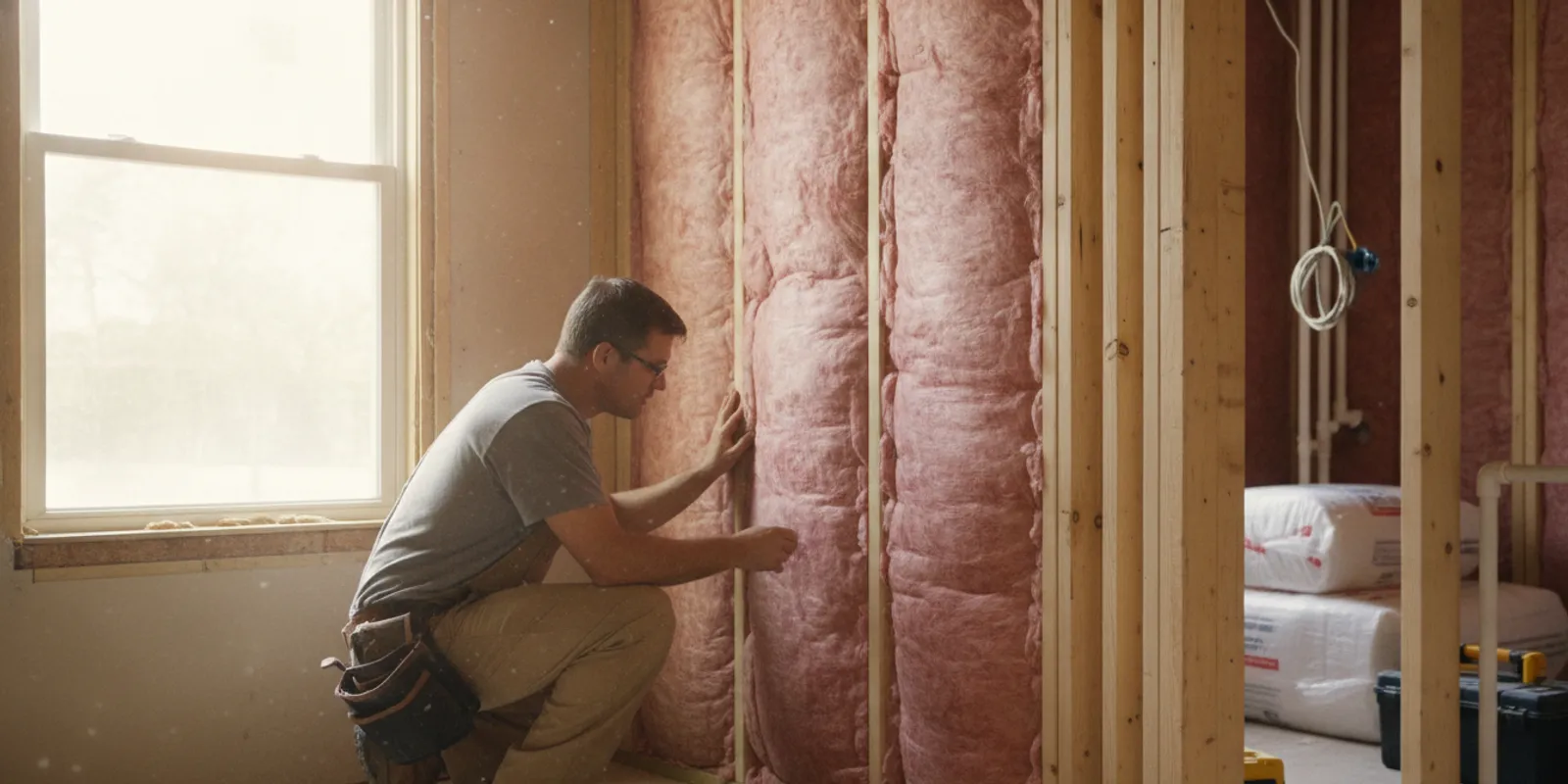
Wall insulation can slow heat movement through an exterior wall, but it is not a one-size-fits-all fix for a hot room or high energy bill. For Houston homeowners, the right answer depends on the wall assembly, existing insulation, moisture conditions, access, and what is actually causing discomfort. Texas Insulation Experts at EZ Attic Insulation help Greater Houston homeowners think through home comfort questions. Hablamos Español!
Ask our team about your home comfort concern
What can wall insulation do?
Insulation in an exterior wall slows heat transfer through the cavity. In warm weather, it may reduce the rate at which heat moves from outdoors toward conditioned rooms; during cooler periods, it may slow heat moving out. Insulation does not make cold air, repair a window, or stop every draft. The result depends on the whole building assembly, including the framing, siding or masonry, interior finish, windows, doors, air leakage, shading, and heating and cooling system.
The U.S. Department of Energy provides general homeowner information about energy efficiency and home improvements through its official website. Use trusted guidance as background, then have the actual wall construction and moisture conditions evaluated before deciding on a material or method.
A room that feels warm does not automatically need more insulation in its walls. For example, a west-facing bedroom that becomes uncomfortable in late afternoon could be affected by strong sun through windows, shading, air leaks, or system airflow, as well as wall heat transfer. If several rooms have similar problems, the cause may be at a broader part of the home's thermal boundary. Start by describing the symptom rather than choosing a product first.
When should you investigate wall insulation?
It can be reasonable to investigate when an exterior room stays noticeably warmer or cooler than similar rooms, when a remodel exposes wall cavities, or when there is evidence that an older wall may have little insulation. Age by itself is not proof: homes of similar age can have different construction and later upgrades. Look for patterns and gather information before committing to invasive work.
- Temperature differences: Note the room, time of day, weather, and whether the discomfort changes when the sun moves or a door is closed.
- Draft-like sensations: Check whether the feeling is strongest near a window, door, outlet, baseboard, or wall-to-ceiling connection. A draft points toward possible air movement, not necessarily an empty wall cavity.
- Renovation access: If drywall is already scheduled for removal, adding insulation may be easier to consider while the cavity is open. Coordinate it with the renovation plan.
- Unusual wall surfaces: A persistently hot or cold surface may be one clue, but touch alone cannot confirm what is inside the wall or identify the cause.
- Energy use concerns: Compare bills over time and consider other changes, such as weather, thermostat settings, occupancy, and equipment use. Do not attribute a bill to one wall without evidence.
Keep a short comfort log for several days. Record the time, room, outdoor conditions if known, thermostat setting, and whether blinds or doors were open. Add photographs of visible staining, damaged trim, or gaps, but do not remove electrical covers or cut into a wall to investigate. These observations help a professional ask better questions and reduce guesswork.
For context on another part of the home's thermal boundary, see our Houston attic insulation information. Attics can be more accessible to evaluate than finished walls, but the fact that one area is easier to reach does not prove it is the cause of a particular room's discomfort.
Which wall insulation options should you compare?
Common insulation approaches include fiberglass batts, loose-fill products, and spray foam. Their appropriateness depends on the cavity dimensions, whether it is open or enclosed, existing materials, wiring or plumbing, moisture behavior, and the installation plan. Product labels alone do not establish that a material will fit a particular wall or perform as intended. Use the comparison below to frame questions, not to select an option without an assessment.
| Approach | Typical access situation | Questions to ask |
|---|---|---|
| Fiberglass batts | Usually placed in open cavities, such as during construction or renovation | Will the batt match the cavity depth and width? How will gaps, compression, wiring, and obstructions be handled? |
| Loose-fill insulation | May be considered for certain enclosed cavities using planned access openings | Is this wall suitable for filling? How will the installer verify the cavity and check that material reaches the intended areas? |
| Spray foam | Applied to prepared surfaces in a cavity under product-specific conditions | What exact product is proposed? How will preparation, ventilation, curing, nearby materials, and installation conditions be managed? |
| No wall work yet | Useful when the cause or wall condition is uncertain | What further evaluation would distinguish insulation concerns from air leakage, windows, moisture, or HVAC issues? |
When comparing materials, ask about the whole wall assembly, not just the insulation. An installer should understand where the material will go, how it interacts with the existing layers, and whether the cavity can be filled consistently. If the wall is open, the work can be planned around framing and obstructions. If it is enclosed, access points and the ability to verify coverage become important parts of the discussion.
Our guide to insulation types outlines broader material differences. Wall conditions are distinct, however, so do not assume that a product or approach suited to one location is automatically suitable for another.
What should you check before enclosing a wall?
Moisture deserves attention before insulation is installed or a cavity is closed. Water staining, damp materials, musty odors, peeling finishes, or a history of leaks should be investigated. Insulation is not a remedy for an active leak, and covering a moisture problem can make it harder to notice. In a humid region such as Greater Houston, the wall's layers and exposure matter; avoid assuming that one generic wall detail fits every house.
- Describe the signs. Note where staining or dampness appears and whether it follows rain, plumbing use, or a particular season. Do not conceal or disturb suspicious materials.
- Find and address the source. A roof, window, plumbing, drainage, or exterior issue may need attention before insulation work. The source should be identified rather than simply covered.
- Confirm what is inside. Ask how the installer will determine cavity depth, framing, existing insulation, and obstructions. Find out what happens if the observed wall differs from assumptions.
- Discuss safety and preparation. Ask how electrical wiring, plumbing, openings, furnishings, and occupied rooms will be protected and handled.
- Document the plan. Get the material, wall locations, access method, preparation, cleanup, repairs, and exclusions in writing before work begins.
Ask whether the work includes air sealing or only insulation. They address related but different issues: insulation slows heat transfer through materials, while air sealing targets pathways that allow air to move. The source and location of an air leak should be identified, and any proposed sealing should be compatible with the assembly and required ventilation. A proposal that uses the word “insulation” does not necessarily include sealing, drywall repair, painting, or leak repair.
How does wall insulation differ from attic work and air sealing?
Wall cavities, attic floors, and air-leakage pathways are different project areas. Finished walls can require openings or renovation access, while attic access may be more direct in some homes. Air sealing focuses on gaps and connections rather than filling a cavity. One project is not automatically the best choice for every home; select the next step based on evidence about the specific comfort issue and existing conditions.
| Project area | What it addresses | Decision to make |
|---|---|---|
| Exterior wall cavity | Heat transfer through the wall assembly, subject to the material and coverage | Can the wall be inspected and treated reliably with the proposed access? |
| Attic insulation | Heat transfer at the attic boundary, depending on where the home's thermal boundary is located | Does the attic condition relate to the observed problem, and is it the appropriate priority? |
| Air sealing | Air movement through identifiable gaps and connections | Where are the leakage paths, and is sealing included in the written scope? |
| Window or equipment evaluation | Potential comfort factors outside the wall cavity | Could sun exposure, window condition, airflow, or HVAC operation better explain the symptom? |
When the concern is whole-home comfort, our Houston home energy savings guide offers additional ideas to consider. If the question is specifically about attic insulation, review the service information and consider whether an attic evaluation addresses the actual symptom before prioritizing harder-to-access walls.
How can you compare proposals fairly?
Compare the work described, not just the material name or total amount. A clear proposal lets you see whether two providers are discussing the same rooms, access approach, preparation, and finish work. Wall projects can differ significantly in scope even when both estimates use the same broad term.
- Area and quantity: Which walls and rooms are included? How will the area be measured, and are interior or shared walls excluded?
- Existing conditions: What was verified about cavity depth, existing material, moisture, and obstructions? Which assumptions could change the plan?
- Installation method: Is the wall open or enclosed? If openings are needed, where will they be and how will their location be chosen?
- Protection and cleanup: How will floors, furnishings, and occupied spaces be protected? What cleanup is included?
- Repair boundaries: Are access-hole patching, texture, painting, trim, or exterior repairs included or excluded?
- Quality checks: How will the installer confirm the intended areas were treated and explain any inaccessible cavities?
- Change process: How will unexpected wiring, damage, wet materials, or a different wall construction be documented before the scope changes?
Ask for written answers rather than relying on a verbal description. If one proposal includes patching and another excludes it, or if one covers fewer walls, the totals are not directly comparable. Review the proposed outcome, not only the product. For information on how EZ Attic Insulation approaches projects, see our project process; you can also read why homeowners choose EZ Attic while evaluating providers.
What is EZ Attic Insulation's current service focus?
It is important to confirm scope before making plans. EZ Attic Insulation's current service focus is attic insulation removal and blow-in; wall insulation is a separate type of project, so this guide should not be read as a promise that wall installation is available. Contact the company to confirm whether it can help with your particular request or clarify an appropriate next step. The company is locally and family-owned, serves Greater Houston, and is 100% certified and insured. Its stated price match guarantee is framed around value and quality, rather than simply choosing the lowest bid.
For the company's current service information, visit the insulation services page. Its homeowner guides can also help you prepare questions about other areas of the home. Improve energy, comfort, and value with EZ Attic Insulation by starting with a clear description of the problem and confirming what work is in scope.
Get in touch to discuss your home's insulation questions
Common questions about wall insulation
Can wall insulation make a Houston room cooler?
It may slow heat moving through an exterior wall, but it cannot guarantee a particular room temperature. Sun through windows, air leakage, shading, ducts, and HVAC operation can also affect comfort, so identify the likely cause before choosing a project.
Can insulation be added without removing all the drywall?
Some approaches may use planned access openings in finished walls, while others need an open cavity. Whether that is appropriate depends on the construction and whether the installer can verify coverage. Ask where openings would go, what is included in their repair, and how unexpected obstructions will be handled.
Should every exterior wall be insulated?
Not automatically. Existing insulation, wall condition, moisture, access, and the homeowner's goals all matter. An assessment should explain why specific walls are included and whether a different issue may be the better priority.
Does wall insulation fix a draft?
Not by itself in every case. A draft suggests air movement, which may come from gaps around windows, doors, outlets, or connections. Insulation and air sealing are different tasks; ask whether both were evaluated and which is included.
What should I do if I see a damp spot on an exterior wall?
Document its location and timing, and arrange to identify the source before enclosing the cavity. Insulation should not be treated as a fix for a leak or ongoing moisture. Ask the relevant qualified professional to assess the wall condition and required repairs.
Talk with a Texas insulation expert
For homeowners in Houston, Sugar Land, The Woodlands, Pearland, Katy, Cypress, Spring, Humble, and nearby communities, the useful next step is to describe the room, the symptoms, and any signs of moisture, then confirm whether the requested work fits the company's current service scope. EZ Attic Insulation is locally and family-owned, and Hablamos Español. Call (713) 909-0390 to talk through your next step.