Spray Foam Insulation Houston TX: Open vs Closed Cell
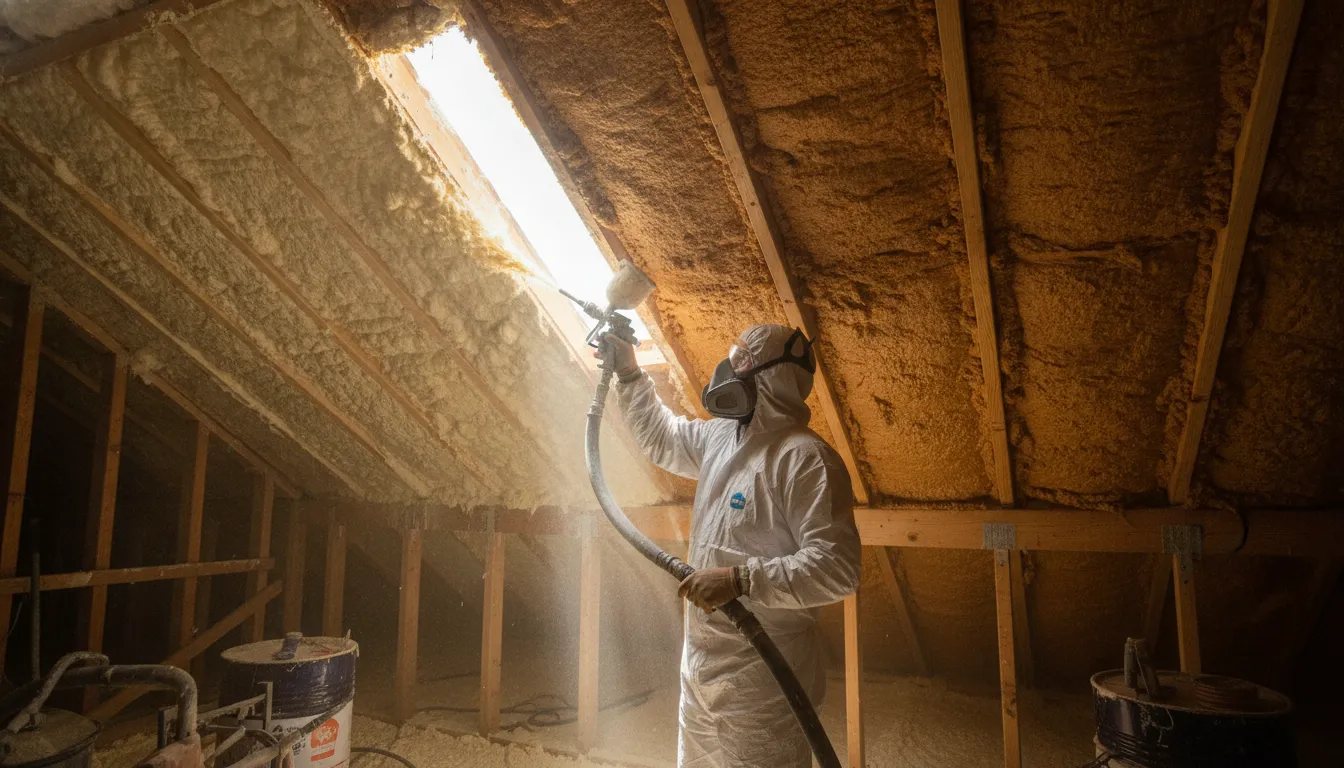
Spray Foam Insulation Houston TX: Open vs Closed Cell
Houston homes face a demanding combination of heat, humidity, and air leakage. If your attic feels like an oven, rooms stay uncomfortable, or your cooling system runs for long periods, the right insulation decision starts with the entire building assembly. Spray foam insulation Houston TX homeowners choose should match the roofline, wall cavity, moisture exposure, available depth, and comfort goal.
Book Now or Get a Quote: Call (713) 909-0390 for a Houston spray foam insulation recommendation.
Open-cell and closed-cell foam are not interchangeable products. Open-cell foam is lighter and expands more, while closed-cell foam is denser and provides a higher R-value per inch. Both can reduce unwanted air movement when installed correctly, but the better option depends on where the material will go and how the assembly handles heat and moisture. This guide explains the differences before you compare an attic insulation types guide for Houston homeowners or request an inspection.
What Is the Difference Between Open-Cell and Closed-Cell Spray Foam?
Open-cell and closed-cell spray foam are both polyurethane products, but their cell structure changes how they perform. Open-cell foam has a softer, less dense structure that expands substantially after application. That expansion can help fill irregular cavities and provide sound attenuation. Closed-cell foam has a denser, more rigid structure. It generally offers a higher R-value per inch and greater resistance to water absorption and vapor movement.
The distinction matters in Houston because a roofline, interior wall, rim joist, and garage separation wall do not face the same conditions. A deep, dry cavity may have room for open-cell foam. A shallow cavity or moisture-sensitive assembly may benefit from the performance characteristics of closed-cell foam. The material with the higher rating is not automatically the right choice for every location.
| Feature | Open-cell foam | Closed-cell foam |
|---|---|---|
| Structure | Less dense and softer, with substantial expansion. | Denser and more rigid after curing. |
| R-value per inch | Lower than closed-cell foam, so more cavity depth may be needed. | Higher than open-cell foam, useful where depth is limited. |
| Air sealing | Can form an effective air barrier with suitable thickness and coverage. | Can form an effective air barrier while adding a denser layer. |
| Moisture behavior | Allows some vapor movement and needs careful placement in moisture-sensitive areas. | Offers greater resistance to water absorption and vapor movement. |
| Common reason to consider it | Large dry cavities, irregular voids, and sound control. | Limited depth, selected moisture exposures, and added rigidity. |
EPA guidance describes these basic product differences, but material selection still requires an assembly-level review. The installer should inspect the substrate, identify water intrusion, consider ventilation, and specify the required thickness. Foam should not cover an unresolved roof leak or conceal damaged sheathing. Preparation is part of the insulation decision, not an optional step after the product has been chosen.
For homeowners comparing spray foam with fiberglass, batts, or radiant barrier work, the broader professional attic insulation service page is a useful next reference. It keeps the decision focused on the home's needs rather than on one material's marketing label.
Is Spray Foam Insulation Houston TX Homes Worth the Extra Cost?
Spray foam can be worth considering when air leakage is a major comfort problem, the assembly contains difficult-to-seal gaps, or available cavity depth is limited. It combines insulation with air sealing, so a properly detailed application can address more than heat transfer alone. That does not mean spray foam is the best investment for every Houston home. The value depends on the condition of the existing insulation, the source of the discomfort, the work scope, and the quality of installation.
The first question should be whether the home has a clear building-envelope problem. Uneven room temperatures may come from attic bypasses, duct leakage, inadequate insulation, solar heat gain, HVAC issues, or several conditions at once. Adding foam without identifying the main source can lead to an expensive project that does not solve the homeowner's actual complaint. A careful inspection should precede a recommendation.
When the premium may make sense
Closed-cell foam may be considered where higher R-value per inch or greater moisture resistance is important. Open-cell foam may fit larger, dry cavities where expansion, coverage, and sound attenuation are useful. Either product can be considered for air-sealing details when the substrate and thickness are appropriate. The choice should be explained in terms of the roof or wall assembly, not simply described as an upgrade from ordinary insulation.
EZ Attic Insulation reports potential savings of up to 15% on heating and cooling costs for attic insulation improvements. That is a qualified potential result, not a promise for every spray foam project. Actual performance depends on existing insulation, ductwork, air leakage, HVAC condition, thermostat settings, weather, and installation quality. A homeowner should compare the expected improvement with the specific deficiencies found during the inspection.
When another insulation approach may fit better
If the attic is already reasonably air sealed and has sufficient depth, blown-in fiberglass or another insulation method may meet the goal. This can be a better fit when the home needs added thermal resistance without the same material choice. If the roof deck has moisture damage, that problem must be corrected before any insulation covers the assembly. If the work would change attic ventilation, the contractor should explain the design and any required adjustments before installation.
A useful comparison includes preparation, air sealing, specified thickness, cleanup, ventilation planning, and the material itself. Comparing only a square-foot number can hide meaningful differences in scope. Homeowners can review the company's spray foam insulation services information while preparing questions for an inspection.
Where Does Spray Foam Work Best in a Houston Home?
Spray foam is most useful where air movement, irregular geometry, or moisture exposure make conventional insulation difficult to detail. Common locations include rooflines, attic transitions, rim joists, selected wall cavities, and some garage separations. The correct location and foam type depend on the complete assembly. A product that works well in a dry interior wall may not be the right answer for a moisture-exposed roof or foundation area.
Rooflines and attic transitions
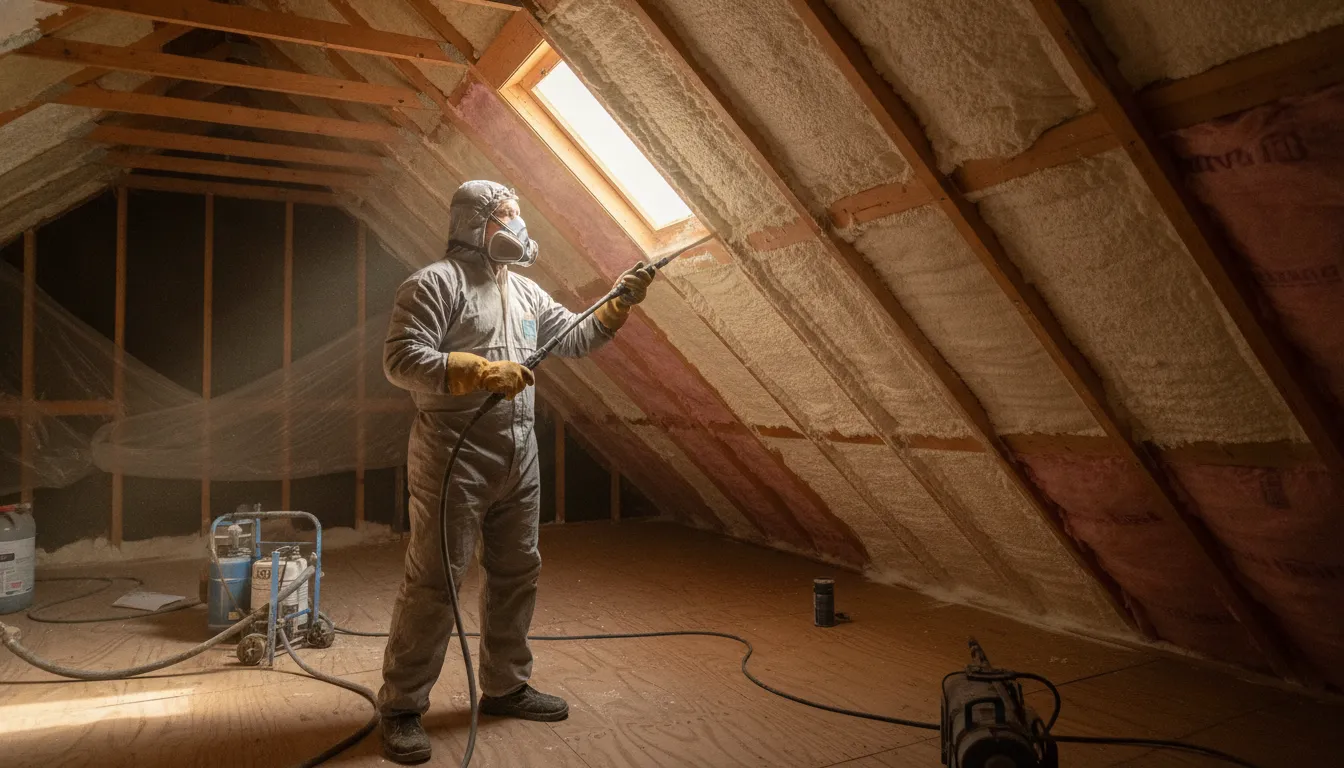
Roofline applications can create a more continuous air barrier between the attic and living space. They may help at framing transitions, gable ends, awkward corners, and areas around ducts or other penetrations. The installer must detail the edges and transitions, rather than spraying only the easiest open surfaces. The roof deck, soffit areas, vents, and any recessed fixtures should be reviewed before work begins.
Moving the insulation boundary from the attic floor to the roofline can also change how the attic behaves. The contractor should explain the ventilation approach, equipment requirements, and any re-entry guidance. Spray foam should never be used to cover water intrusion instead of repairing the source.
Rim joists, walls, and garages
Rim joists sit where the foundation, floor framing, and exterior walls meet. Their irregular joints can allow air movement, making them a location where detailed air sealing may provide value. Open wall cavities may also be considered during renovation when reducing air leakage or adding sound control is part of the project.
Garage-adjacent walls and ceilings deserve extra care because access, air movement, and surrounding materials affect the scope. A contractor should evaluate the shared assembly and identify any moisture or damage before applying foam. This is also a good time to compare spray foam with the broader home attic insulation options instead of assuming one product belongs throughout the house.
Moisture-sensitive areas
Closed-cell foam is generally the stronger candidate for selected areas where moisture exposure is a significant design concern. Open-cell foam permits more vapor movement and therefore needs more careful placement in assemblies where humidity or water could affect performance. Neither product replaces roof repairs, drainage corrections, or a ventilation plan. EPA material guidance explains why the product types should be evaluated differently.
High-pressure, two-component spray foam also requires trained professionals and specialized equipment. The installation plan should cover substrate condition, temperature, lift thickness, ventilation, curing, and cleanup. These details are part of a safe, durable result.
How Much Does Spray Foam Insulation Cost in Houston?
There is no single spray foam price for every Houston home. The project scope changes with the area being insulated, the required thickness, the foam type, the condition of the substrate, access, preparation, and cleanup. A roofline project, rim-joist detail, and open wall cavity can have very different labor and material requirements even when the measured area appears similar.
The most useful estimate identifies what is included. Ask whether the proposal covers removal of damaged or loose material, air sealing. Surface preparation, specified foam thickness, ventilation planning, protection of nearby equipment, cleanup, and inspection of transitions. If a quote does not describe these items, the numbers are difficult to compare fairly.
What changes the project scope?
Square footage is only one variable. Framing, corners, knee walls, low clearance, limited access, and penetrations can increase the time required for preparation and application. Open-cell and closed-cell foam also use different material volumes and have different performance characteristics. The correct thickness should be connected to the assembly and the project goal, not selected only to reduce the initial price.
Existing conditions matter just as much. Roof leaks, wet sheathing, pest damage, debris, or unsafe access should be addressed before the foam is installed. Ducts, wiring, vents, and attic equipment may affect how the crew works. A clear written scope protects the homeowner from comparing an application-only price with a more complete project.
EZ Attic Insulation offers a Price Match Guarantee under its stated policy. That guarantee should be understood as a value and quality commitment, not as a promise that every project will be the cheapest option. Homeowners can use the Houston attic insulation cost guide for planning context, then request a project-specific inspection and estimate.
For a second perspective on material selection, review the complete attic insulation types guide. It can help you compare spray foam with other approaches before deciding which questions to ask about your own home.
How Long Does Spray Foam Insulation Last in Houston?
Spray foam does not have one guaranteed expiration date for every Houston building. When it is installed at the specified thickness, remains protected within a sound assembly. And is not exposed to unresolved water problems, it can continue performing for a long time. The practical durability question is whether the foam was correctly selected, prepared, applied, and protected from the beginning.
Spray foam is not expected to settle in the same way loose-fill materials can. However, foam that is thin, uneven, poorly bonded, or installed over a problem surface may underperform immediately. Insulation performance depends on consistent coverage, air sealing, and the condition of the entire assembly. A calendar estimate cannot replace those installation requirements.
What can affect long-term performance?
Roof leaks, remodeling, HVAC changes, disturbed surfaces, and new penetrations can affect the assembly after installation. Houston's heat and humidity make moisture management especially important. If a roof or wall system changes, the original ventilation and moisture assumptions may no longer apply. Inspect the area after major roof work or a known leak, and ask a qualified professional to review any visible damage, gaps, or disturbed foam.
EPA guidance for professional spray foam insulation contractors emphasizes the importance of training and appropriate application practices. The U.S. Department of Energy also explains that air sealing and correct installation help insulation perform as intended. These sources reinforce a simple point: product durability and building performance depend on workmanship and moisture control, not just the foam label.
EZ Attic Insulation can help homeowners evaluate the attic or other target area before choosing a material. A review of the roofline, cavity depth, air leakage, moisture exposure, and ventilation plan creates a more useful long-term decision than selecting foam based on R-value alone.
Which Spray Foam Type Should Houston Homeowners Choose?
Choose open-cell foam when the assembly has suitable depth, remains dry, and benefits from expansion, coverage, or sound attenuation. Consider closed-cell foam when limited depth, higher R-value per inch, or greater resistance to water absorption and vapor movement is more important. The final recommendation should come from the assembly's conditions, not from a one-size-fits-all rule.
Before approving work, ask the installer to explain the target area, foam type, thickness, air-sealing details, preparation, ventilation plan, and cleanup. Ask what happens if the inspection finds a leak or damaged substrate. If you are comparing options, connect the recommendation to a specific comfort or energy problem in the home.
The Houston spray foam insulation service page provides a starting point for contacting EZ Attic Insulation. The company's team is 100% certified and insured, and the business serves Greater Houston from its Tomball base. Homeowners who prefer Spanish can also ask for bilingual service: Hablamos Espanol!
- Check the roofline, wall cavity, or rim joist for moisture and damage.
- Compare open-cell and closed-cell performance for that specific assembly.
- Confirm thickness, air sealing, ventilation, preparation, and cleanup in writing.
Ready to compare your options? Book Now or Get a Quote by calling (713) 909-0390.
Frequently Asked Questions
Is open-cell or closed-cell foam better for a Houston attic?
Neither type is best for every Houston attic. Open-cell foam may fit a deep, dry assembly where expansion and sound attenuation matter. Closed-cell foam may fit a shallow or moisture-sensitive assembly where higher R-value per inch and greater moisture resistance are important. A professional inspection should evaluate the roofline, substrate, ventilation, and required thickness.
Does Houston humidity change which spray foam I should choose?
Humidity makes moisture planning more important, but it does not automatically determine the foam type. Closed-cell foam offers greater resistance to water absorption and vapor movement. Open-cell foam permits more vapor movement and requires careful placement. Roof leaks and other water sources should be corrected before either product is installed.
How much does spray foam insulation cost in Houston?
The cost depends on area, thickness, foam type, access, preparation, air sealing, and cleanup. A roofline application and a rim-joist project can have different scopes. Ask for a written estimate that identifies the material, specified thickness, preparation, ventilation plan, and included cleanup so competing proposals can be compared fairly.
How long does spray foam insulation last?
Properly installed spray foam can provide durable insulation for a long time, but there is no single guaranteed lifespan for every home. Coverage, thickness, substrate condition, moisture control, and later building changes all matter. Inspect the area after roof work, leaks, remodeling, or any event that could disturb the assembly.
Can homeowners install high-pressure spray foam themselves?
High-pressure, two-component spray foam requires specialized equipment, careful mixing, suitable conditions, and professional safety practices. DIY application can create coverage, thickness, ventilation, or curing problems. Homeowners should use a qualified contractor who can evaluate the assembly and explain preparation, application, ventilation, and re-entry requirements.
Book Now or Get a Quote: Call (713) 909-0390 to discuss spray foam insulation for your Houston home.