R-Value for Attic Insulation Houston Texas Home Guide
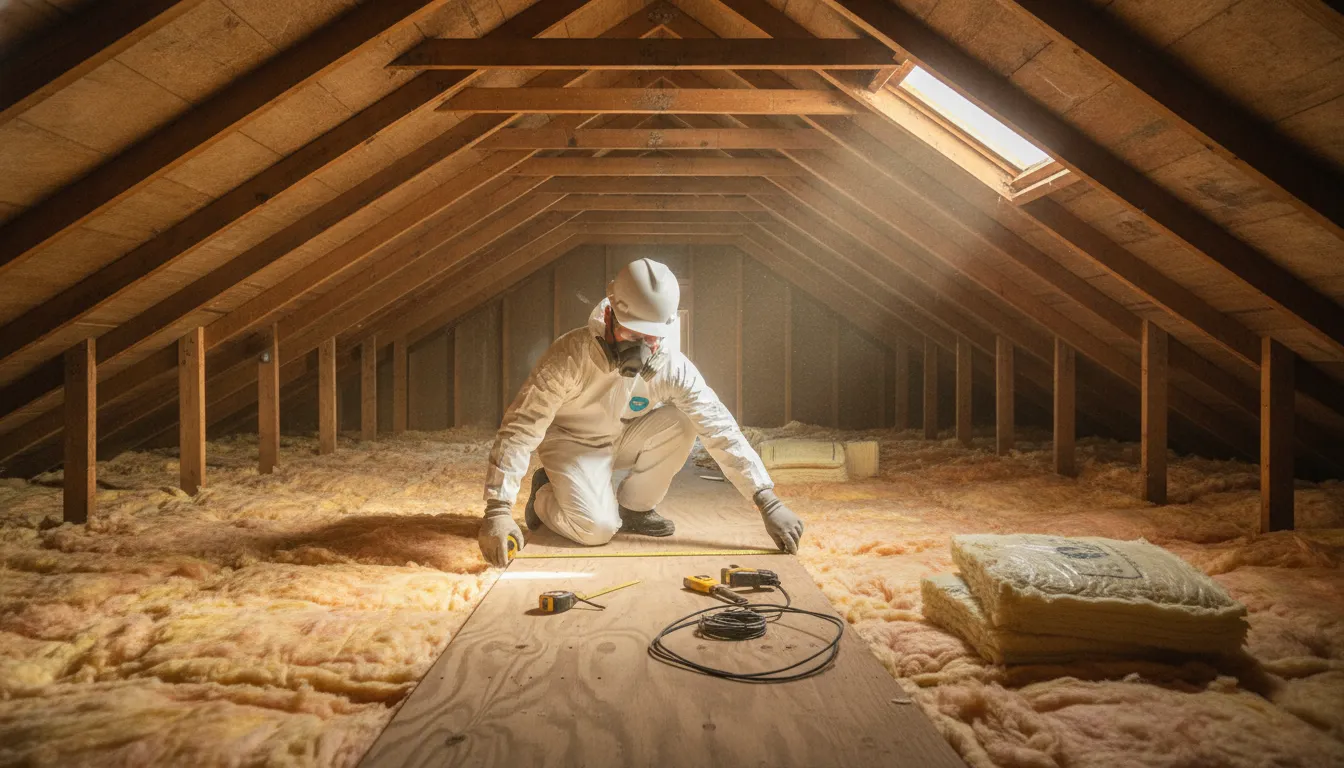
Homeowners searching for the r-value for attic insulation Houston Texas homes need can use R-38 to R-60 as a practical starting range, not a promise for every house. The right improvement depends on insulation type, existing depth, coverage, and condition.
Book Now or Get a Quote - Call (713) 909-0390
This guide connects Houston's climate, your attic's current condition, and the insulation options that can support better comfort.
R-value is only one part of an efficient attic. A safe inspection should also look for thin spots, settled material, air leaks, equipment clearance, and areas where insulation has been displaced. This guide explains how to evaluate those factors without treating a general recommendation as a one-size-fits-all prescription. For a broader overview of materials and installation approaches, read Attic Insulation Types: The Complete Guide for Houston Homeowners.
What Is R-Value for Attic Insulation Houston Texas, and Why Does It Matter?
R-value measures how strongly insulation resists conductive heat flow. A higher R-value generally slows heat transfer more effectively, although installed performance also depends on material, thickness, density, coverage, and condition. For Houston homeowners, EZ Attic Insulation treats that resistance as one part of managing heat through the ceiling during the area's long, hot cooling season.
Think of R-value as a measure of resistance, not a promise of a specific indoor temperature or utility-bill reduction. Heat naturally moves from a warmer area toward a cooler area. In summer, a roof and attic can become much hotter than the rooms below. Without enough insulation, more of that heat can move through the ceiling and increase the work required from the air conditioner.
Insulation slows that transfer. It does not make the attic cold, and it cannot correct every energy problem by itself. Duct leakage, gaps around penetrations, air leaks at the attic hatch, old windows, HVAC condition, and thermostat settings can all influence comfort. That is why an attic assessment should consider the whole ceiling plane instead of focusing only on a depth measurement.
What factors determine installed R-value?
- Material: Fiberglass, spray foam, batts, and other insulation materials have different thermal characteristics.
- Thickness: A thicker layer can provide more resistance when it is installed correctly and remains evenly distributed.
- Density: Loose-fill material must be installed at the appropriate density. Settling can change the final depth and coverage.
- Condition: Compression, moisture, gaps, displacement, and damaged areas can reduce the value of an otherwise adequate-looking layer.
- Installation quality: Continuous coverage matters. Insulation should not be treated as a substitute for sealing openings or maintaining required clearances.
Two attics can have similar-looking insulation depths and still perform differently. One may have consistent coverage and a well-sealed attic hatch. The other may have bare edges, settled sections, and several openings around plumbing or wiring. The practical question is not simply how many inches are visible. It is whether the material and installation provide the resistance and coverage the home needs.
The U.S. Department of Energy and Energy Star both emphasize that climate, existing insulation, and home conditions matter when determining an appropriate upgrade. Use those recommendations as a starting point, then confirm the condition of the specific attic before selecting a material or adding depth.
What Does R-Value for Attic Insulation Houston Texas Mean for Your Home?
Energy Star guidance for Houston's hot-humid Climate Zone 2 lists R-49 when an attic is uninsulated and R-38 when about 3 to 4 inches of insulation are already present. EZ Attic Insulation uses those figures as a starting reference based on existing conditions, not as a substitute for checking coverage, material, settling, and safety.
Houston is classified in IECC Climate Zone 2, a hot and humid climate. That climate makes attic heat control especially important during the long cooling season. Energy Star's insulation guidance is useful because it separates a completely uninsulated attic from one that already has a partial layer.
For an uninsulated attic, the cited guidance recommends adding R-49. If an attic already has approximately 3 to 4 inches of insulation, the recommendation is to add R-38. These numbers should be read as guidance for the amount to add, not as a guarantee that every home will have the same finished depth or result.
- No insulation: Energy Star lists R-49 as the add-to recommendation for a Zone 2 attic.
- About 3 to 4 inches already present: Energy Star lists R-38 as the add-to recommendation.
- Uneven or settled material: The existing condition should be evaluated before new insulation is distributed over it.
- Air leaks and penetrations: Sealing and insulation address different pathways, so both may need attention.
Homeowners may see general advice describing R-30 as a minimum reference or R-38 to R-60 as a common project range. That language can be useful for orientation, but it should not override the home's starting condition or the source guidance. A professional assessment can determine whether the attic needs additional material, removal and replacement, targeted correction, air sealing, or a combination of steps.
Read the Energy Star insulation R-value guidance for the underlying recommendation. It is also helpful to record the approximate existing depth and material before discussing an upgrade, as long as the attic can be inspected safely.
How Can I Check the R-Value of My Houston Attic Insulation Safely?
A homeowner can document insulation type, approximate depth, thin spots, and visible gaps from a safe access point, but those observations do not produce an exact R-value by themselves. Material, density, settling, and installation condition all matter. EZ Attic Insulation recommends stopping if the attic has unsafe flooring, exposed wiring, extreme heat, pests, or unfamiliar equipment.
A basic visual check can help you describe the attic to an insulation professional. It cannot turn one ruler measurement into a precise performance rating. Loose-fill fiberglass and other blown materials can settle, while batts can be compressed or installed with gaps. Spray foam requires a different evaluation because it is applied to a surface and may also affect air movement.
- Start at the access point. Wear appropriate protective clothing and use a stable ladder. Avoid stepping between ceiling joists unless a safe service platform or walkway is present. Attic drywall is not a walking surface.
- Identify the general material. Loose-fill looks like a loose layer of fibers or small pieces. Batts look like blankets or strips. Spray foam appears as a hardened foam layer on a surface. Do not pull apart an unfamiliar material just to identify it.
- Measure without compressing the insulation. If the area is safe to reach, place a ruler or measuring stick lightly on top of the material. Take several readings from accessible areas. Never kneel on the insulation or press it down to make the measurement easier.
- Look for inconsistent coverage. Note thin areas, bare sections, displaced material, and places where insulation has settled. Edges, corners, attic hatches, and areas around stored items often deserve attention.
- Observe penetrations from a safe distance. Look for openings around plumbing, wiring, ducts, recessed fixtures, and the attic hatch. Do not touch electrical components, HVAC equipment, ductwork, or unfamiliar pipes.
- Record comfort symptoms. Note rooms that stay hot, ceilings that feel warm, unusually long cooling cycles, or seasonal bill changes. These clues can help, but they do not prove that insulation is the only cause.
- Arrange a professional assessment. Share your observations and photographs taken from a safe location. A qualified installer can evaluate material, coverage, air movement, equipment clearance, and the additional R-value appropriate for the home.
Safety comes first in a Houston attic. Summer temperatures can become dangerous quickly, and attics may contain sharp fasteners, exposed electrical hazards, pests, unstable surfaces, or contaminated material. If the inspection requires crawling across insulation, moving heavy objects, or working near wiring, stop and ask a professional to continue the evaluation.
For related material-selection questions, compare the options in EZ Attic Insulation's Houston attic insulation types guide. The goal is not to choose a product from a label alone. It is to understand the starting point and then plan continuous, safe coverage.
What Are the Signs Your Attic R-Value Is Too Low?
A low or uneven attic R-value can contribute to hot ceilings, room-to-room temperature differences, longer air-conditioning cycles, and higher cooling demand during Houston's hottest weather. These signs can also result from duct problems, air leakage, windows, or HVAC issues. A complete attic assessment is more reliable than diagnosing the insulation from one symptom.
Hot ceilings and uneven rooms
Rooms directly below the attic may feel warmer than the rest of the home, especially upstairs bedrooms and spaces beneath a roofline. A ceiling that feels unusually warm can indicate heat transfer, although surface temperature alone cannot identify the exact cause. Compare patterns across rooms and note whether the discomfort is strongest during sunny afternoons.
Longer or more frequent cooling cycles
If the HVAC system runs for long periods during hot weather, the attic may be contributing to the cooling load. Heat entering through the ceiling is one possible factor. Duct leakage, equipment condition, air infiltration, and thermostat settings can produce similar symptoms, so an insulation upgrade should be planned with those factors in mind.
Higher cooling bills
Rising bills can accompany increased cooling demand, but they are not proof of a low R-value. Weather, electricity rates, occupancy, equipment efficiency, duct performance, and thermostat settings all affect the result. EZ Attic Insulation's verified guidance allows for savings of up to 15% on heating and cooling costs, but that is not a guaranteed result for every home.
Visible gaps or settled insulation
Look for areas where the insulation layer is visibly lower, missing, compressed, or pushed aside. A thick section in one part of the attic does not compensate for bare or thin areas elsewhere. Continuous coverage across the ceiling plane is more useful than a single deep pile of material.
Air sealing is another important consideration. Insulation slows heat transfer through the ceiling, while air sealing addresses uncontrolled air movement through gaps and penetrations. The two measures can work together, but one does not automatically replace the other.
If you are seeing these warning signs, document what you can safely observe and schedule an assessment. An experienced local team can help distinguish low insulation from related attic or HVAC conditions. You can also review home attic insulation services before deciding what type of inspection or improvement is appropriate.
How Should You Evaluate R-Value for Attic Insulation Houston Texas?
Blown-in fiberglass, batts, spray foam, and radiant barrier can play different roles in a Houston attic. No material automatically delivers a finished R-38 to R-60 result without the right thickness, density, placement, and installation quality. The attic's layout, existing material, air-sealing needs, ventilation, and safe clearances should guide the selection.
The best choice depends on the job, not just the product name. A broad, open attic floor may call for a different approach than a tight area with irregular framing. Existing material may be kept, corrected, or removed depending on its condition. The following comparison focuses on fit and installation considerations rather than unsourced prices.
| Type | Potential fit | Important considerations |
|---|---|---|
| Blown-in fiberglass | Often suited to adding broad coverage across an open attic floor and filling irregular areas. | Depth and density must be appropriate. Settled or uneven existing material should be evaluated, and air sealing remains a separate concern. |
| Batt insulation | Can fit accessible areas with consistent dimensions when batts can remain at their intended thickness. | Compression, gaps, seams, edges, and penetrations can reduce the quality of the installation. |
| Spray foam | May suit assemblies or surfaces where conforming coverage and air-movement control are part of the plan. | The roof assembly, ventilation, existing materials, and application strategy require careful evaluation before installation. |
| Radiant barrier | May complement a broader heat-management plan in a hot attic. | It is not a replacement for an attic insulation layer or for sealing air leaks. Layout and existing conditions determine whether it is useful. |
When comparing materials, ask how the installation will reach the intended R-value, how existing insulation will be handled, and how the crew will maintain clearances around fixtures and equipment. Also ask whether the scope includes checking gaps and penetrations. These questions are more useful than choosing based on a material name alone.
Homeowners who are considering blown-in fiberglass can review blown-in fiberglass insulation in Texas. If the project calls for another material, see the company's pages for fiberglass roll and batt insulation or spray foam insulation services. The right selection should follow an evaluation of your home rather than a generic promise.
EZ Attic Insulation is locally and family owned in Texas, 100% Certified & Insured, and BBB A+ accredited. The company serves homeowners across Greater Houston and can help assess whether additional insulation, correction of coverage, air sealing, or another attic improvement fits the home's condition.
Book Now or Get a Quote - Call (713) 909-0390
Frequently Asked Questions About Houston Attic R-Value
What R-value is recommended for an attic in Houston, Texas?
Energy Star guidance for Houston's hot-humid Climate Zone 2 lists R-49 when an attic is uninsulated and R-38 when about 3 to 4 inches of insulation are already present. The correct project scope still depends on material, coverage, settling, air leaks, and safe attic conditions.
Is R-30 enough for an attic in Houston?
R-30 can be a useful reference point, but it is not automatically the best finished target for every Houston attic. Many projects evaluate a higher range, often R-38 to R-60, when the attic has room for additional insulation. An assessment should confirm the starting condition before material is added.
Why does attic R-value matter in Houston?
R-value measures resistance to conductive heat flow. A higher value generally slows heat transfer more effectively. In Houston's hot cooling season, adequate attic insulation can reduce the rate at which outdoor heat moves through the ceiling, which may support more consistent comfort.
How much can attic insulation affect Houston energy bills?
The result varies with existing insulation, air leakage, ductwork, windows, HVAC condition, weather, and household use. EZ Attic Insulation's verified claim is savings of up to 15% on heating and cooling costs, but no fixed result should be promised for every home.
What are signs that my attic insulation R-value is too low?
Possible signs include hot ceilings, uneven room temperatures, long cooling cycles, and higher cooling demand during peak summer weather. Because duct and air-sealing issues can create similar symptoms, measure the attic condition and evaluate the home as a system.
Get a Houston Attic R-Value Assessment
Your attic's best R-value target depends on what is already there and how the insulation is performing. EZ Attic Insulation can help you understand the material, coverage, and improvement options for your Houston-area home. The team is 100% Certified & Insured and BBB A+ accredited.
Hablamos Espanol!