Professional Dryer Vent Cleaning for Houston Homeowners
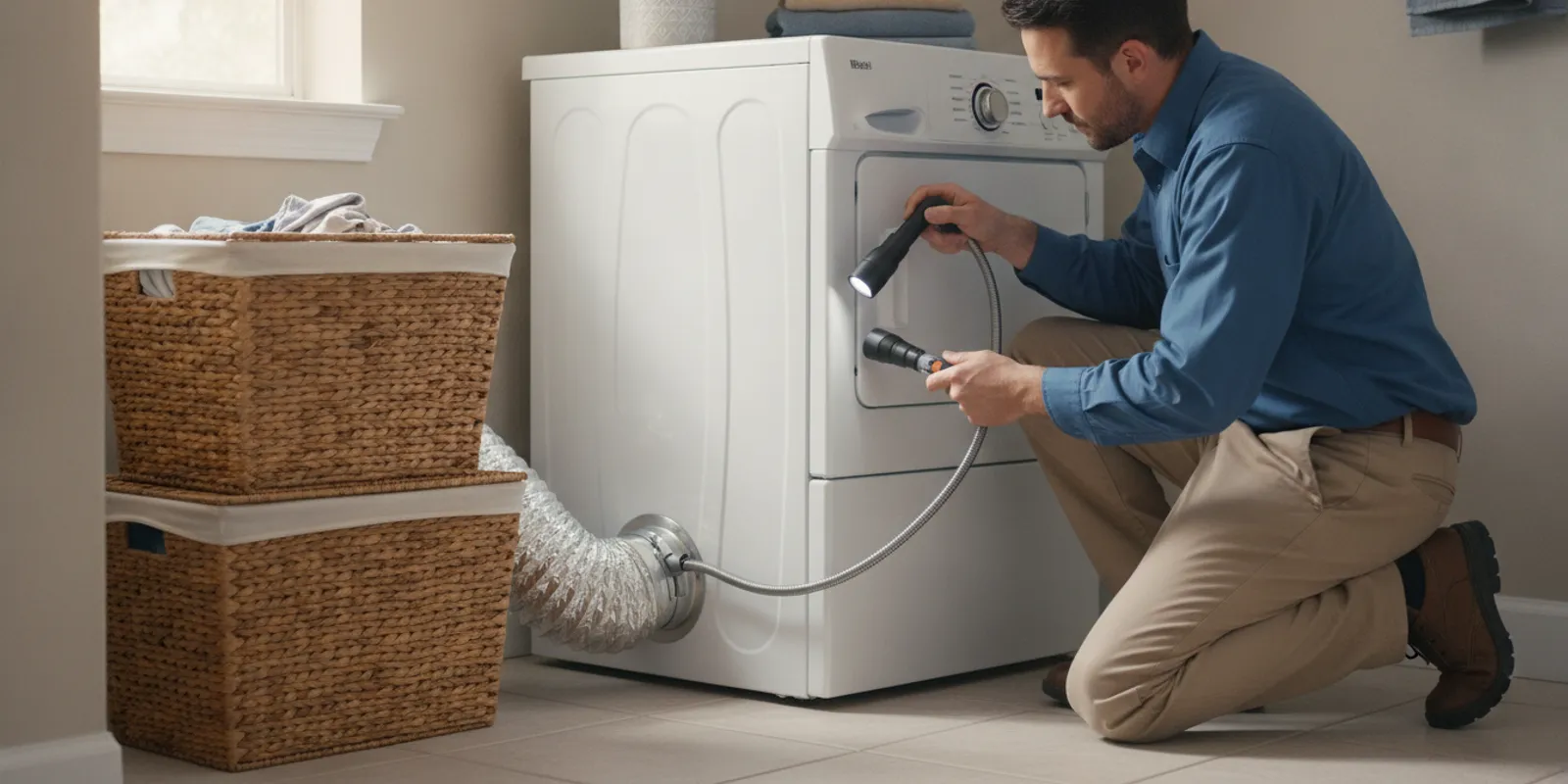
When clothes need extra cycles or the laundry area feels hotter than usual, restricted exhaust airflow may be one possible cause. Professional dryer vent cleaning clears lint and debris from the route that carries moist air outdoors, but it is not a repair for every dryer problem. This guide explains what a careful visit can cover, what homeowners can check safely, and what to ask before arranging service in Greater Houston.
Contact the team with your home-service question
What does professional dryer vent cleaning include?
A clothes dryer moves warm, damp air through an exhaust duct and out through an exterior termination. Lint can collect along that route, with buildup often harder to notice around bends, transitions, or a long concealed section. Professional cleaning is intended to remove accumulated material from the accessible exhaust pathway. The exact scope depends on the layout and the access available at the home.
A useful first step is to understand the route, not to assume that every dryer has the same configuration. The connection may lead directly through an exterior wall, or the duct may travel through a wall, floor, ceiling, or other concealed space before it exits. Ask the provider to explain which parts they can reach and which are included in the agreed service.
- Discuss what you have noticed. Describe longer cycles, changes in airflow, unusual heat, or odors, and say when the change began.
- Identify the dryer connection and outlet. A technician should determine the accessible route and locate the exterior termination, when safely reachable.
- Remove lint from the agreed duct path. The tools and method should suit the duct material and layout rather than forcefully scraping or damaging it.
- Check the result and restore connections. Ask what airflow check is performed and whether the dryer connection is put back securely.
- Explain visible concerns. If a duct looks crushed, disconnected, or damaged, ask for a clear description and next steps rather than assuming cleaning alone resolves it.
Cleaning is different from servicing the dryer appliance. It does not by itself diagnose a failed heating component, electrical issue, sensor, or other internal fault. It also should not be assumed to include duct repair, replacing a damaged exterior hood, or moving an appliance in a tight space. Clarify those boundaries before work begins. If you are reviewing a provider's approach to other home projects, the company's service process information can help you prepare questions about how a scope is explained.
Which signs may point to restricted airflow?
A single symptom does not prove that lint is blocking a vent. Changes can have several causes, including the load, settings, maintenance needs, or a dryer fault. A pattern of symptoms is still worth investigating, particularly if the dryer has become noticeably different from its usual performance.
- Clothes remain damp after the cycle that normally dries a similar load.
- A load takes longer than usual, or you find yourself running the same items through another cycle.
- The dryer cabinet or laundry room feels hotter than you normally expect during operation.
- The outdoor vent flap appears not to move while the dryer runs, if it can be observed safely from the ground.
- Lint collects near the connection or exterior outlet, beyond the routine lint-screen cleaning.
- The appliance stops mid-cycle or displays an airflow-related alert.
- You notice a burning odor, smoke, or another urgent warning sign.
If there is smoke or a strong burning smell, stop using the dryer. Do not keep running cycles to see whether the condition clears. If there is an immediate danger, leave the area and contact emergency services; otherwise, arrange appropriate professional evaluation before using the appliance again. The U.S. Fire Administration provides general home fire-safety information through its official fire-safety resources; consult current guidance for your situation.
For less urgent symptoms, begin with simple observations. Note which settings and load sizes are involved, whether the issue occurs with every load, and whether the dryer was recently moved. Check the lint screen and follow the appliance maker's care instructions. Keep the space around the dryer clear. Avoid reaching into a concealed duct or taking apart an outlet or appliance if you do not know how it is installed.
How can you compare service options?
Service descriptions can sound similar even when the scope differs. Compare what is actually included, how the route will be accessed, and what happens if a technician finds a defect. A clear explanation of limitations is more useful than a broad promise to clean the entire system without describing what that means.
| Option | What it generally covers | What to confirm |
|---|---|---|
| Routine lint-screen care | Removing lint from the screen and accessible area as directed for the appliance | What does the maker recommend for this dryer model? |
| Professional vent cleaning | Cleaning the exhaust route within the agreed access and service scope | Which sections are included, how will the route be accessed, and what check follows? |
| Vent repair or replacement | Addressing a damaged, crushed, disconnected, or unsuitable duct component, if offered | Is repair separate from cleaning, and what specific condition was identified? |
| Appliance diagnosis | Evaluating internal dryer components or operating faults | Does the provider service the appliance, or should an appliance technician inspect it? |
Use the table to decide what question fits your symptom. For example, if a vent route is clear but clothes still take too long to dry, ask whether an appliance diagnosis is more appropriate. If a duct is visibly damaged, ask whether repair is needed before normal use resumes. The right next step depends on the actual finding; cleaning is not a substitute for every type of inspection or repair.
Consider a homeowner who notices towels taking two cycles but ordinary shirts still drying normally. That detail is useful: load size, fabric, and settings can affect drying time, so the symptom does not establish that the vent is blocked. The homeowner can note when the towels were washed, check that the lint screen is cared for as the maker directs, and report whether the issue repeats. A technician can then assess the vent scope and explain whether the observed condition supports cleaning, repair, or a different evaluation. This kind of specific account helps keep the appointment focused and avoids treating a single slow load as proof of a particular fault.
Also confirm that you are discussing the correct system. Dryer exhaust removes moist air and lint from a clothes dryer. Heating and cooling ducts distribute conditioned air through a home. The company's page on air duct cleaning describes a separate subject, and its service information is another place to review current home-service details. Ask directly whether a provider currently handles the specific work you need; do not infer availability from a general service description.
What should you ask before arranging a visit?
Before setting an appointment, ask questions that make the scope and expectations concrete. You can use this checklist during a call or when comparing written descriptions:
- What exact sections will you clean? Ask whether the route from the dryer connection to the exterior termination is included and identify any section that cannot be reached.
- How will you access the vent? Find out whether the dryer must be moved, whether access panels are involved, and what you should clear before arrival.
- What methods and tools will you use? Ask how the approach is suited to the material and bends in your duct, and how damage will be avoided.
- What checks are included afterward? Ask how the technician will assess airflow and confirm that connections have been restored.
- What happens if you find a defect? Find out whether the work pauses while the issue is explained, and whether any repair is separately scoped.
- Is the concern possibly inside the appliance? A provider should distinguish vent cleaning from diagnosis of dryer components and suggest the appropriate next kind of evaluation when needed.
- What should I do before arrival? Confirm whether to clear the laundry area, provide exterior access, or leave the appliance in a particular state.
- Do you serve my address and offer this specific work now? Confirm your location in Greater Houston and current service availability rather than assuming from a general webpage.
If you are researching home comfort work more broadly, the company information and Houston homeowner guide cover other home topics, not a substitute for confirming a dryer-vent scope. For location context, you can also review the Houston service-area information. Contact the company to ask which current options fit your address and question.
How can you prepare for a service visit?
A little preparation makes it easier to access the appliance and discuss what changed. Move laundry baskets, detergents, and other items away from the dryer. If the outdoor vent is behind a locked gate or in an area that needs permission to enter, arrange access before the appointment. Keep children and pets away from the work area while tools are being used.
Write down the symptoms before they are easy to forget. A useful note might say: “The towels needed an extra cycle three times this week; the dryer is in the same position; no odor noticed.” That gives a technician a clearer starting point than “it does not work well.” Include when the issue began, whether it affects all types of loads, and whether the vent or dryer was recently moved or repaired.
Do not run repeated cycles to reproduce a serious warning sign. If there is no urgent odor or smoke, mention the symptom and let the qualified provider advise whether the appliance should remain off before the visit. Do not disconnect gas or electrical components unless you are qualified and the appliance instructions direct you to do so. If you rent or share responsibility for the property, confirm who is authorized to approve access or repairs.
After work, ask the technician to summarize what was reached and cleaned, whether any visible damage or restriction was noted, and what still needs attention. Ask for the recommendation in plain language. If a concern lies beyond the work performed, such as an appliance fault or hidden duct damage, ask which qualified trade should assess it rather than treating an unrelated service as a complete diagnosis.
How is dryer vent cleaning different from air duct cleaning?
These services concern separate pathways. The dryer exhaust route carries moisture and lint from the clothes dryer to the outdoors. HVAC ducts move heated or cooled air through a home. Cleaning one system does not automatically clean, inspect, or improve the other.
That distinction matters when you describe the problem. If clothes are taking extra cycles, explain the dryer symptom and ask about the exhaust route. If the concern is dust or airflow from a supply register, describe the heating and cooling system instead. The company's homeowner guides and its separate air-duct overview can help clarify the terminology, but confirm the present service scope before booking.
Frequently asked questions
How often should a dryer vent be cleaned?
There is no single interval that suits every household and vent layout. Use the appliance maker's instructions, consider how often the dryer is used, and respond to changes such as longer drying time or unusual heat. Ask a qualified provider to consider the route and your use rather than relying on an unexplained calendar recommendation.
Can I clean the full vent myself?
You can perform routine lint-screen care according to the appliance instructions. A long or concealed duct can be difficult to reach, and unsuitable tools may damage it or leave sections uncleaned. If you cannot access the full route safely or are uncertain about the installation, ask a qualified provider what the work would include.
Will cleaning fix clothes that take too long to dry?
It may address the problem if restricted airflow from lint buildup is a contributing cause. It will not fix a broken dryer component, incorrect settings, or every other possible issue. If the symptom remains after the exhaust route has been evaluated, ask whether an appliance technician should inspect the dryer.
Should I keep using the dryer if I smell burning?
No. Stop using it, and do not run another cycle to test the smell. If there is smoke or immediate danger, leave the area and contact emergency services. Otherwise, have the appliance and vent concern assessed appropriately before resuming use.
Does dryer vent cleaning include HVAC duct cleaning?
No. One service concerns the dryer's exhaust path; the other concerns ducts used to distribute heated or cooled air. State which system is causing concern and ask for the exact service scope.
Call (713) 909-0390 to ask about your service question
Talk with a Texas insulation expert
Contact the team to confirm current service options
EZ Attic Insulation serves Greater Houston homeowners, and Hablamos Español! Share what you have noticed and confirm whether an available service fits your concern before scheduling.