"Insulation for Mobile Homes in Houston: What Homeowners Should Know"

Insulation for mobile homes deserves a home-by-home look. A manufactured home may have a shallow roof cavity, an enclosed floor system, or ducts routed through a space that is difficult to reach. In Houston, long cooling seasons make comfort and energy use important concerns, but the right next step depends on the home's construction, condition, and access, not its label alone.
Request an inspection to discuss your home's insulation needs.
What is different about insulation for mobile homes in Houston?
People often use “mobile home” to describe a home built in a factory and transported to its site. “Manufactured home” is the current common term for homes built to federal manufactured-housing standards. Older mobile homes and newer manufactured homes can have very different layouts, insulation levels, and access points. Additions, repairs, and remodels can change them further.
That means a recommendation for one house may not fit another, even if both look similar from outside. A conventional attic may have open framing and straightforward access. A manufactured home's roof assembly might have limited clearance, concealed cavities, or features that make entry difficult. The floor may be insulated from below, enclosed by a belly board, or altered by later work. Duct locations also vary.
Research on manufactured housing has documented how inadequate insulation can contribute to energy burdens and make it harder for cooling equipment to keep a home comfortable. A study of housing and energy security in Vermont describes this issue among mobile homes, while a journal review discusses insulation challenges in mobile-home cooling. Those findings help explain why insulation condition matters, but they do not identify the right installation method for a specific Houston home. Read the Dartmouth discussion of housing and energy security and the journal article on mobile-home benefits and challenges.
Where should homeowners look first for insulation for mobile homes in Houston?
Think of the home as a system rather than assuming that every room needs the same fix. Start by noting where comfort problems occur, then determine which part of the building separates that area from the outdoors or an unconditioned space. The three common places to consider are the roof or ceiling, the floor, and the ducts.
Attic, roof, or ceiling
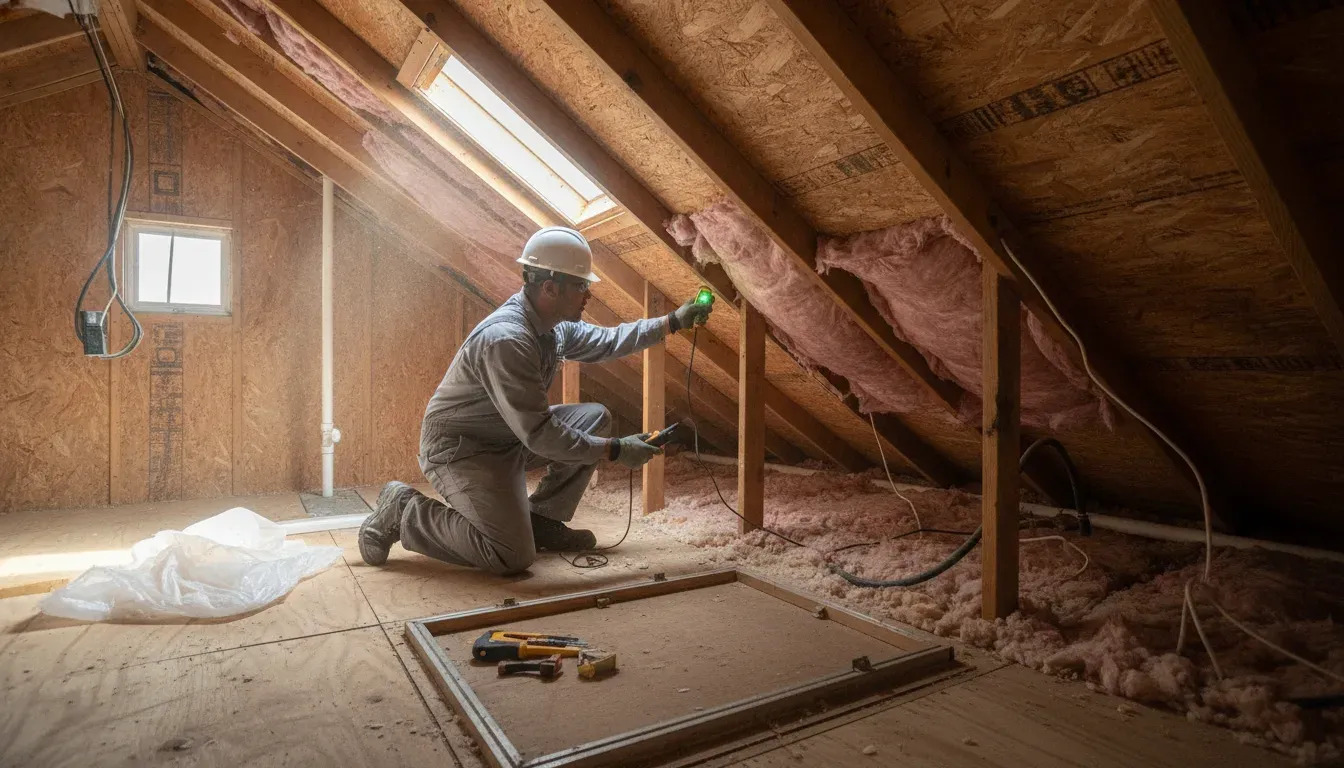
In a home with an accessible attic, the ceiling insulation may be visible from the hatch. Look for areas that seem sparse, compressed, disturbed, or uneven, and note whether the insulation appears damp or dirty. Do not step onto ceiling material; it may not support your weight. If access is tight, there is no safe walkway, or the assembly is enclosed, leave the inspection to a qualified professional.
Some manufactured homes have little conventional attic space. Their roof construction can differ from a site-built home, so advice to simply add a thick layer over the ceiling may not apply. Before work is planned, someone needs to understand the roof assembly, available clearance, ventilation details, and how the insulation can be installed without blocking important openings or creating moisture concerns.
If the home does have a suitable attic, the existing insulation's material and condition matter. A professional may need to identify whether it is loose-fill, batts, or another material; whether it is clean and dry; and whether removal or preparation is needed before new insulation is added. EZ Attic Insulation focuses on attic insulation removal and blow-in installation. The company describes its attic insulation process and blown-in fiberglass insulation service online. A site assessment helps determine whether that work fits the actual attic configuration.
Floor and under-home areas
A cold or hot floor can prompt questions about insulation below the home, but the underside is not always exposed or easy to inspect. Some homes have insulation and a protective covering below the floor framing. That covering may be damaged, patched, or difficult to access. Plumbing, wiring, supports, and the home's ground clearance can also affect what work is practical.
Check from a safe position around the perimeter for visible damage, sagging material, openings, or signs that animals have disturbed the underside. Do not crawl beneath a home if clearance is limited, the structure is unstable, or there may be exposed wiring or pests. A contractor who does not evaluate this type of assembly should say so clearly rather than assume an attic-only approach will address a floor problem.
Also consider whether the discomfort is truly coming from the floor. Drafts at doors, windows, or utility penetrations can feel similar. A room's sun exposure, air movement, and the condition of its ducts may also affect comfort. Record where and when the problem occurs so an inspection can focus on useful clues instead of guessing.
Ducts and air delivery
Ducts may run through an attic, an under-floor cavity, or another enclosed area. If ducts pass through a hot or unconditioned space, their insulation and connections are worth assessing. A room that receives little conditioned air could point to an airflow or duct issue rather than a lack of insulation in the room's ceiling or floor.
Do not assume that adding insulation around a duct fixes every comfort issue. The duct's location, visible condition, connections, and airflow all matter. Likewise, duct insulation and whole-attic insulation are different projects. For a basic comparison, see the company's attic insulation types guide and attic insulation service.
How do the main insulation areas compare?
This table is a starting point for organizing questions, not a diagnosis or a promise that a particular option is suitable. Access and construction can change what is possible.
| Area | What to observe | What affects the next step |
|---|---|---|
| Attic, roof, or ceiling | Visible coverage, condition, access, and signs of disturbance | Roof design, cavity depth, existing material, ventilation, and whether removal or preparation is needed |
| Floor or underside | Visible gaps, damaged covering, sagging material, or animal disturbance | Clearance, belly-board condition, plumbing and wiring, supports, and safe access |
| Ducts | Duct location, visible insulation, connections, and rooms with weak airflow | Whether ducts are in an unconditioned area, their accessibility, and whether airflow also needs attention |
| Rooms and openings | When and where discomfort occurs; drafts around openings | Sun exposure, air leakage, window and door condition, and whether symptoms point to another cause |
Why does access matter before an insulation upgrade?
Access is not a minor scheduling detail. It can determine whether an area can be inspected, whether old material can be removed, and whether a proposed installation can reach the intended cavity. A visible attic hatch does not mean the full roof space is accessible. Low clearance, framing, stored belongings, wiring, or a narrow opening may limit what can be seen and done.
Manufactured homes can also have enclosed assemblies that are not designed for routine entry. A floor cavity may be covered by a protective membrane, while a roof assembly may have limited depth or no conventional attic. Opening or disturbing an assembly without a clear plan can create new problems or damage components. Ask the inspector to explain where they can look and what remains hidden.
Before an appointment, clear a safe path to the attic access if there is one, and point out any known roof leaks, past repairs, or areas where animals may have entered. Do not remove a belly covering, cut into a ceiling, or pull apart insulation to make the inspection easier. Share photos or records of previous work if they are available, but do not treat an old report as proof of today's condition.
It can help to separate three questions: Is the existing insulation damaged or inadequate? Is there a safe and practical way to reach the target area? And is insulation the likely solution to the comfort problem? A sound recommendation addresses each question. For example, if only one room is uncomfortable, ask whether the professional will also consider duct delivery, drafts, and sun exposure rather than assuming the entire home needs the same upgrade.
This careful approach is especially useful when the home has been remodeled, moved, or repaired over time. The current arrangement may not match the original plans. A project-specific assessment can clarify the boundaries of the work and help homeowners avoid selecting a material based only on a generic description of mobile homes.
What should you check before choosing insulation?
Try this practical sequence before committing to materials or a method:
- Identify the home and its changes. Note its approximate age if known, whether it is a manufactured home, and any additions, roof changes, or major repairs. Share what you know; do not guess if records are unavailable.
- Describe the comfort problem. List the rooms affected, the time of day, and whether the issue is seasonal or constant. Mention high cooling demand, drafts, or a room that never seems to reach a comfortable temperature.
- Look only where it is safe. Use an accessible attic hatch or view the underside from a safe location. Do not enter cramped cavities, disturb unknown material, or walk on an unsupported ceiling.
- Ask what part of the assembly will be evaluated. Clarify whether the assessment covers the attic alone or also considers floors and ducts. An attic inspection is not a complete inspection of every component in the home.
- Ask how the proposed work fits the construction. A useful explanation should connect the recommended material and method to the home's actual access, existing insulation, and assembly. Ask what areas are outside the scope.
- Confirm preparation and follow-up. Ask whether existing material must be removed, how access will be protected, and what conditions would change the plan. Keep a written description of the work for comparison.
For a wider overview of insulation materials and their typical uses, visit the company's guide to attic insulation types. Regional and construction details still matter. Texas A&M's Real Estate Research Center has discussed insulation levels in Texas-built manufactured homes, illustrating why it is useful to distinguish a home's design and location when thinking about insulation. Its figures should not be treated as a specification for every home or an automatic recommendation for yours. Read the Texas A&M manufactured-homes discussion.
Can Houston's climate change the decision?
Yes. Houston homeowners often run cooling equipment for long stretches, and the roof can be exposed to strong sun. Insulation can slow heat transfer, but comfort also depends on air movement, windows, shade, equipment operation, and duct condition. If one bedroom stays warm while other rooms feel comfortable, the pattern may call for a broader look than simply increasing insulation in one place.
Humidity is another reason to avoid a one-size-fits-all approach. Moisture concerns should be identified before materials are covered or new work begins. If you notice a leak, damp insulation, staining, or a musty odor, resolve the source of moisture and get the affected assembly assessed. Adding insulation without understanding the condition underneath can hide a problem rather than solve it.
Manufactured homes in Texas do not all share identical insulation levels or construction. The Texas A&M resource above notes ranges for newer Texas-built homes, but the home's age, layout, and current condition remain essential. Keep any guidance specific to the home, not just to the climate.
When should you ask for a professional assessment?
Get help when the insulation is concealed or hard to reach, when you see possible moisture or pest damage, or when you cannot tell whether the issue is in the attic, floor, or ducts. An assessment is also useful before planning work on an unusual roof or floor assembly. A qualified professional should explain what they can inspect, what they cannot access, and whether the requested project is within their service scope.
EZ Attic Insulation serves Greater Houston and focuses on attic insulation removal and blow-in installation. It is locally and family-owned, and states that it is 100% certified and insured. Its team can explain whether an attic-focused assessment is relevant to the concern; an attic service should not be presented as a floor or duct solution when those areas have not been evaluated. Learn more about why homeowners choose EZ Attic Insulation.
When comparing recommendations, ask for a clear explanation of the area being addressed, the proposed work, and any assumptions about access or existing materials. The company also offers a price-match guarantee; discuss the details of any competing written proposal during the inspection rather than relying on an unsupported comparison. Hablamos Español! Homeowners can ask questions in Spanish when arranging the next step.
Call EZ Attic Insulation to discuss an attic assessment for your home.
Frequently asked questions
Can I add attic insulation to any mobile home?
Not necessarily. Roof design, cavity depth, access, existing materials, and ventilation details can affect whether and how attic work is appropriate. Have the specific assembly assessed before choosing an approach.
Should I insulate the floor or the attic first?
There is no universal order. Start with the home's symptoms and an inspection of the areas that can be safely accessed. The best next step depends on where the heat transfer or comfort problem is occurring and what work is feasible.
Will attic insulation fix a room that feels too warm?
It may help if attic heat transfer is part of the cause, but it is not a guarantee. Duct airflow, air leakage, windows, sun exposure, and cooling-system operation can also affect a room's temperature.
Does a mobile home's age tell me what insulation it needs?
Age can be useful background, but it is not enough to select materials or a method. Past repairs, additions, current condition, and access can all change what is suitable.
Plan a project-specific next step
Because mobile and manufactured homes vary, start with a clear description of the comfort issue and an assessment of the relevant areas. EZ Attic Insulation can help Houston homeowners determine whether an attic insulation evaluation fits their needs; ask about the home's construction and access when scheduling.
Call (713) 909-0390 to discuss your home's attic insulation and arrange the right next step.