Indoor Air Quality Services in Houston: What Helps?
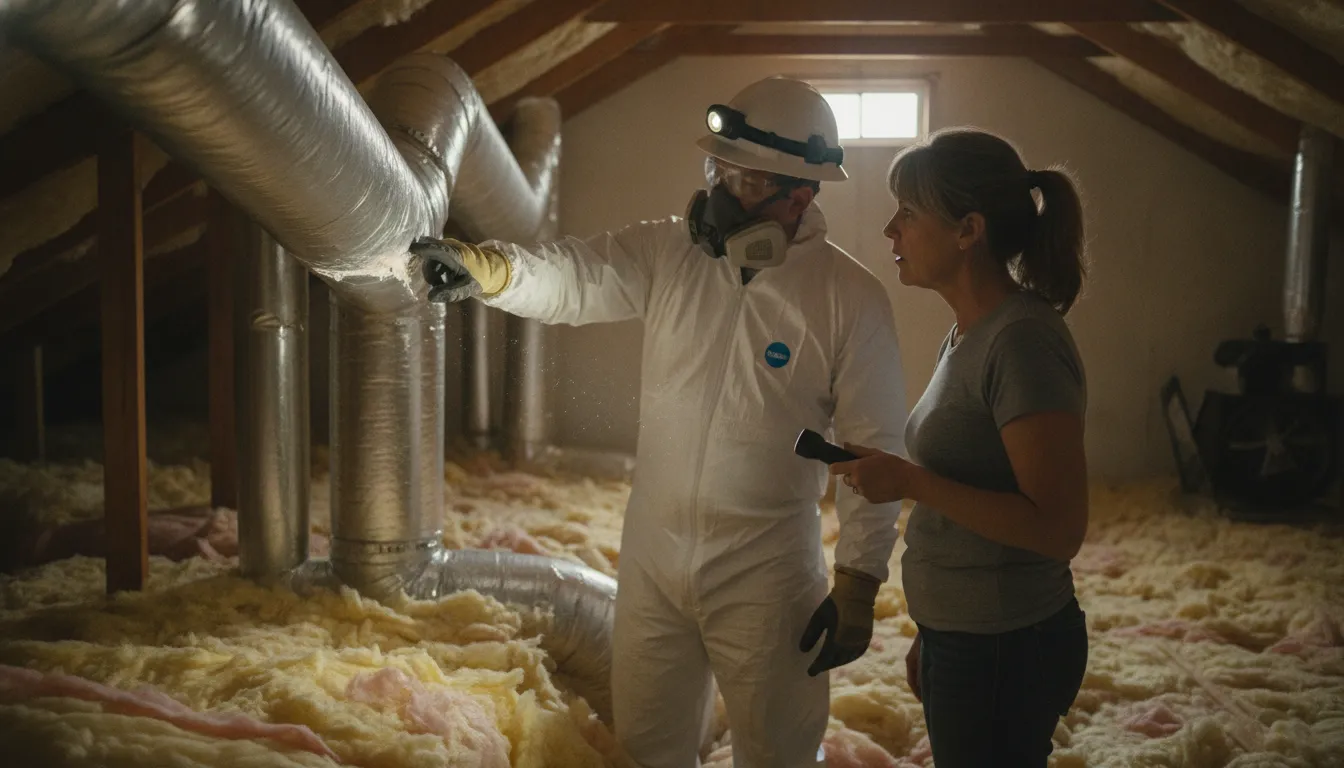
Houston air problems have multiple causes. Dust that returns quickly, uneven rooms, or stale air after a summer day may involve the attic, ductwork, or ventilation. The challenge is identifying the right next step.
Call EZ Attic Insulation at (713) 909-0390 to discuss the right next step for your home.
Indoor air quality services address the conditions that affect the air inside your home, including pollution sources, ventilation, filtration, and airflow. The right service may be insulation work, air duct cleaning, or ventilation improvements, depending on what an inspection finds.
These services are not medical or laboratory testing, and one option does not solve every comfort concern. The EPA organizes indoor air quality improvements around source control, improved ventilation, and air cleaners or filtration, with source control often the most effective starting point. Understanding those categories makes it easier to connect a dusty attic, restricted airflow, or excess moisture with a practical next step.
What Are Indoor Air Quality Services?
Indoor air quality refers to the air within and around a building, especially as it relates to the health and comfort of the people who live there. For a Greater Houston homeowner, indoor air quality services are practical evaluations and improvement work focused on how air moves through the home. They also consider where unwanted pollutants may enter and how the home manages ventilation and filtration. The right next step depends on the home's condition, not on a one-size-fits-all promise. The EPA's definition of indoor air quality provides useful context.
Three basic ways to improve indoor air
The EPA groups indoor air quality improvements into three basic strategies:
- Source control: Identify and reduce or remove the source of indoor pollution. The EPA says this is usually the most effective approach.
- Improved ventilation: Manage the exchange of indoor and outdoor air so the home can address issues related to stale air and comfort when appropriate.
- Air cleaners and filtration: Use suitable filtration or air-cleaning equipment to help manage particles already in the air.
These strategies can overlap, but they are not interchangeable. Sealing or addressing a source may be more useful than adding filtration when the source itself remains active. Ventilation may be relevant when the home needs more outdoor-air exchange, while filtration addresses air passing through the selected filter or cleaner. EPA guidance on improving indoor air quality explains the relationship between these approaches.
What a home service can and cannot tell you
Home-service guidance can help identify building conditions and possible service directions, such as source control, ventilation improvements, or filtration support. It is not a medical diagnosis, a laboratory analysis, or a guarantee that one service will resolve a health concern. If someone has persistent symptoms or needs clinical testing, consult an appropriate medical professional. A home assessment should stay focused on the property, its airflow, and practical conditions that may affect comfort.
How Can You Tell When Indoor Air Quality Needs Attention?
Indoor air concerns often show up as patterns around the house rather than one obvious failure. You may notice dust returning soon after cleaning, persistent odors, rooms that feel stuffy, uneven temperatures, excess moisture, or weak airflow from certain vents. These clues deserve attention, but they do not prove that one specific service or cause is responsible.
For example, an odor may relate to a source inside the home, duct conditions, ventilation, or moisture. Uneven comfort can involve insulation, duct performance, air leakage, or equipment. Most forced-air heating and cooling systems do not mechanically bring fresh air into the house. According to the EPA, so a home can have conditioned air moving without receiving enough outdoor-air exchange. The EPA explains that bringing in more outdoor air can help control pollutants, odors, temperature, and humidity, but the right approach depends on the home's condition.
Look for patterns before choosing a service
Pay attention to when the issue appears and where it is strongest. Dust concentrated near specific registers may point toward an airflow or duct question. Moisture near bathrooms, the attic, or other areas calls for careful inspection rather than a quick assumption. If you are noticing signs your air ducts need cleaning, that is a reason to ask for an evaluation, not proof that duct cleaning is the complete answer.
A professional inspection can help match the next step to the evidence. Depending on the findings, that may involve duct cleaning, insulation work, air sealing, ventilation improvements, or a recommendation to address another source first. Treating the clue without checking its cause can leave the original comfort or air-quality concern unresolved.
Which Indoor Air Quality Services Fit Your Home?
Indoor air concerns can come from different parts of a home. Dust in the ductwork, heat loss around attic assemblies, and inadequate ventilation may look similar from the living room, but they call for different inspections and service directions. A measured assessment is more useful than assuming one service will solve every comfort or airflow concern.
| Homeowner concern | Possible contributing area | Service direction | What not to assume |
|---|---|---|---|
| Dust or debris appears to circulate when the HVAC system runs. | Ductwork, registers, or HVAC components may need inspection. | Consider a professional air duct cleaning service. The scope may include duct and HVAC inspection, dust and debris removal, sanitization, system testing, and maintenance guidance. | Visible dust does not prove that duct cleaning is the only needed service or guarantee a health outcome. |
| Rooms feel hotter, colder, or less comfortable than expected. | Attic insulation, air leakage, or duct temperature loss may contribute. | Review attic insulation upgrade options and inspect related duct conditions. Insulation and duct insulation can help limit unwanted temperature transfer. | Adding insulation alone does not automatically correct ventilation, duct defects, or every source of uneven comfort. |
| Odors, stale air, or moisture persist indoors. | Outdoor-air exchange, bathroom or kitchen exhaust, or a moisture source may need attention. | Evaluate ventilation and source control. Ventilation is a distinct strategy from insulation and duct cleaning, and the appropriate approach depends on the home's layout and condition. | An odor is not a diagnosis, and more ventilation is not always the first or only step. |
The goal is to match the service to the observed condition. Insulation focuses mainly on the building envelope and temperature performance, duct cleaning focuses on accessible HVAC air-distribution components, and ventilation focuses on exchanging indoor and outdoor air. These services can complement one another, but they should not be treated as interchangeable.
Can Air Duct Cleaning Improve Indoor Air Quality?
It can be a useful part of an indoor air quality plan when dust. Debris, or buildup inside the ductwork is contributing to poor airflow or recurring household dust. A professional service should begin with an inspection of the ductwork and HVAC equipment, rather than assuming cleaning is the answer. The scope may include dust and debris removal, sanitization, system testing, and maintenance guidance. Learn more about EZ Attic Insulation's professional air duct cleaning service.
Cleaning may be relevant after renovation work, when visible debris is present, or when a home has persistent dust and airflow concerns. It may also be worth discussing for households with pets, allergies, or respiratory concerns. These are reasons to request an inspection, not proof that duct cleaning will resolve a health issue. Indoor air quality concerns can have multiple causes, including filtration, moisture, ventilation, insulation, and the condition of the HVAC system.
EZ Attic Insulation's customer guidance suggests considering duct cleaning every two to three years, or more often in homes with pets, allergies, or respiratory conditions. That is company guidance, not a universal schedule. The right interval depends on the home's condition, occupancy, renovation history, and HVAC maintenance.
Filter care remains important between professional visits. The CDC advises using pleated HVAC filters and following the manufacturer's instructions for replacement or asking a professional for help. A clean filter supports filtration, but it does not replace an inspection when ductwork or equipment needs attention. Together, appropriate filter maintenance and correctly matched indoor air quality services can help homeowners make a practical next-step decision without treating one service as a universal cure.
How Do Ventilation and Air Sealing Work Together?
Air sealing and ventilation solve different parts of the same home-comfort problem. Sealing uncontrolled leaks can help keep conditioned air where it belongs, but a tighter home still needs a deliberate way to manage fresh air, moisture, and indoor pollutants. The U.S. Department of Energy defines ventilation as the exchange of indoor and outdoor air and notes that inadequate ventilation can trap pollutants and moisture in an otherwise insulated. Airtight house.
- Identify leaks and moisture sources. Start with an inspection of the attic, ductwork, plumbing penetrations, recessed lights, and other transitions between living areas and unconditioned spaces. Check that kitchen and bathroom exhaust vents discharge outdoors, not into the attic. DOE recommends sealing air-leakage spots and warns that insulation alone cannot prevent moisture problems. Read the DOE home ventilation guidance.
- Control the source first. Address the condition creating the concern before adding more airflow. This may mean correcting a duct or exhaust-vent issue, managing moisture at its source, or sealing a pathway that allows attic air and dust to enter the home. Source control is often more direct than trying to dilute every pollutant with additional outdoor air.
- Improve ventilation where appropriate. After leaks are addressed, determine whether spot exhaust or a controlled whole-home approach fits the house. DOE says controlled ventilation may be needed after air sealing to prevent stale air and indoor pollutant buildup. Ventilation should be planned for the home's layout and condition, not added as a one-size-fits-all fix.
- Reassess comfort and airflow. Check whether rooms feel more balanced, humidity is better managed, and odors or dust concerns have changed. For more context on how these choices relate to attic work, see this attic ventilation and insulation guide. That reassessment helps determine whether the next step is additional air sealing, ventilation work, insulation, or another inspection.
When Does Attic Insulation Become Part of an Indoor Air Quality Plan?
Attic insulation deserves an assessment when it is visibly dusty, outdated, disturbed, or potentially contaminated. In those situations, the question is not simply whether to add more material. A professional may first need to evaluate the existing insulation, the attic floor, air leaks, moisture pathways, and the condition of nearby ductwork. Removing dusty or contaminated insulation can prepare the space for new insulation and may improve air quality, but it is not a guarantee of a specific health result.
Removal is different from adding insulation
Adding insulation is generally intended to improve thermal performance. Removal is a separate step that clears material that may no longer be suitable before the attic is cleaned, inspected, and re-insulated. A new layer should not be treated as a solution for every attic problem. If insulation is wet, compressed, displaced, or affected by an unknown source, that condition should be understood before replacement.
Once the attic is ready, blown-in fiberglass may serve as a thermal barrier that helps cover gaps and cracks. Homeowners can review attic insulation upgrade options to understand how an insulation project may fit their home. For a broader comparison of materials, see this guide to Houston attic insulation types.
Ventilation still matters
Insulation and ventilation perform different jobs. The U.S. Department of Energy advises that kitchen and bathroom exhaust vents should lead outdoors, not into the attic, where moisture can create problems. An attic assessment should therefore consider where air and moisture are moving, not just how much insulation is present. Correcting a ventilation or exhaust issue may be necessary before, during, or after insulation work. The right plan depends on the home's condition and should distinguish insulation, air sealing, ductwork, and ventilation concerns rather than assuming one service addresses them all.
What Should Houston Homeowners Do Next?
Start with an inspection, not a guess. Dust, stale odors, uneven temperatures, excess humidity, or weak airflow can point to several different conditions. The right response may involve duct cleaning, insulation work, air sealing, or ventilation. A visible symptom alone does not prove which service your home needs.
Ask the inspector to look at the attic, ductwork, vents, and accessible HVAC components. Discuss where the problem appears, when it is most noticeable, and whether the home has recent changes such as remodeling, insulation work, or moisture concerns. This creates a more useful decision path than treating every indoor comfort issue the same way.
If ducts contain visible dust or debris, a professional cleaning assessment may make sense. If attic insulation is dusty, outdated, or in poor condition, removal and replacement may deserve attention. If the home has trapped moisture or limited fresh-air movement, ventilation and air-sealing conditions should be reviewed together. Each service has a different purpose, and one may not replace another.
EZ Attic Insulation is locally and family-owned in Tomball and serves homeowners throughout Greater Houston. The team can help explain practical options without presenting the visit as medical testing or promising a universal fix. Hablamos Espanol!
Call EZ Attic Insulation at (713) 909-0390.
Frequently Asked Questions
How can I test my house for air quality?
Start with an inspection of likely sources and airflow paths, including ducts, filters, attic insulation, moisture areas, and exhaust vents. A home service inspection can help identify conditions that may need cleaning, air sealing, insulation work, or ventilation. Formal sampling may be appropriate for a specific concern, but EZ Attic Insulation is not a medical provider or air-quality testing laboratory.
How do you tell if you have poor indoor air quality?
Recurring dust, persistent odors, damp areas, uneven temperatures, or weak airflow are reasons to investigate, but they do not prove one specific cause. Most forced-air heating and cooling systems do not mechanically bring fresh air into the home, according to the EPA: EPA guidance on improving indoor air quality. An inspection helps match the concern to the right next step.
Can I test indoor air quality myself?
You can check accessible filters, look for visible duct debris or moisture, and confirm that kitchen and bathroom exhaust fans vent outdoors. Replace filters according to the equipment manufacturer's instructions. The CDC advises using pleated HVAC filters and following those replacement instructions: CDC home ventilation guidance. These checks are useful, but they cannot diagnose every indoor-air concern.
Should I choose duct cleaning, insulation, or ventilation?
The right service depends on the home's condition. Duct cleaning may fit visible debris or buildup. Insulation may help when attic materials are dusty or inadequate. Ventilation may deserve attention when moisture or stale air is not being managed. These services address different conditions, so an inspection is the best starting point rather than assuming one service solves every comfort concern.
Schedule a Practical Indoor Air Quality Review
Indoor air quality concerns can have more than one possible cause, from dusty ductwork to attic insulation or ventilation issues. A practical review can help connect the signs in your Houston-area home with the next service worth considering, without guessing at a one-size-fits-all solution.
Call EZ Attic Insulation at (713) 909-0390 Our team can help.