How to Know If Your Dryer Vent Is Clogged
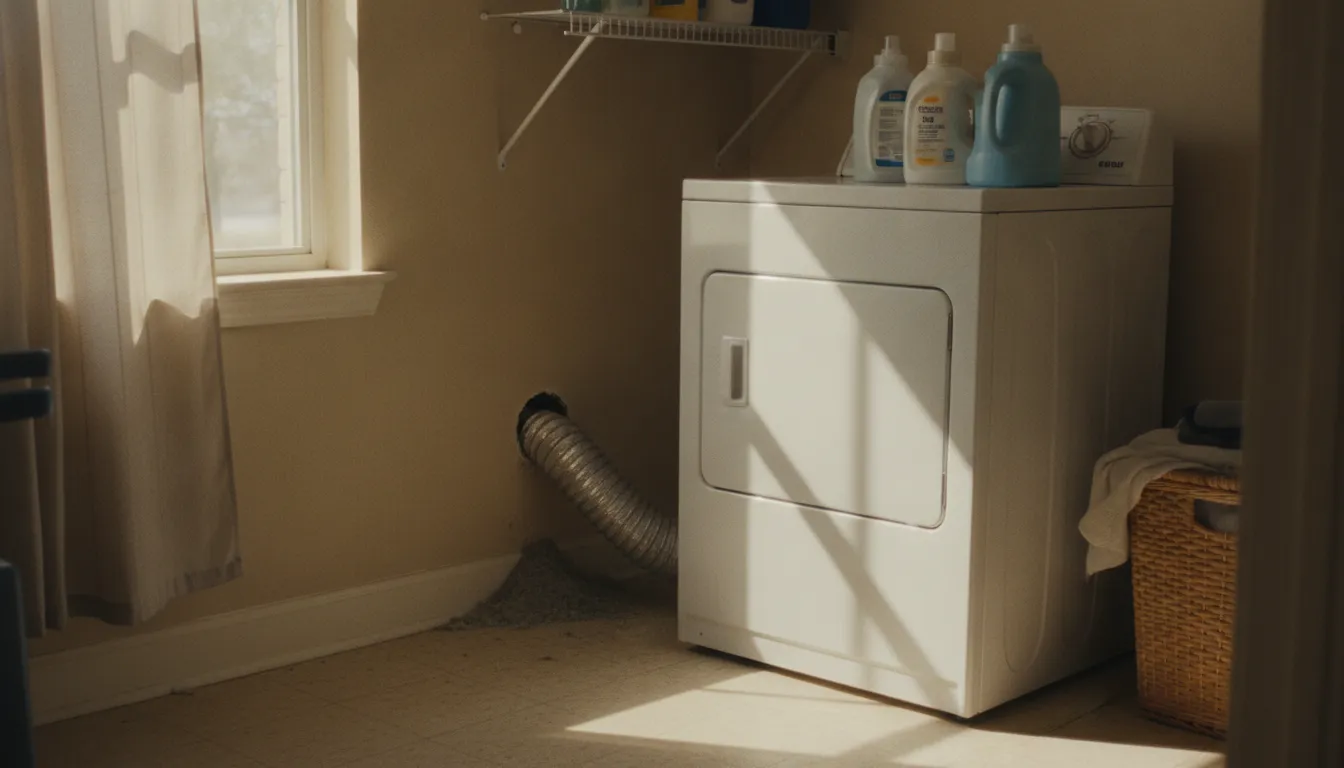
A dryer that used to finish a towel load in one cycle and now needs a second pass is telling you something specific. Learning how to know if your dryer vent is clogged starts with that change, not with a guess about the machine itself. The lint screen only catches part of what a load sheds. The rest travels through the duct toward the outdoor dryer vent box. When that path narrows, clothes stay damp, the cabinet runs hotter, and the outdoor flap may barely move.
One slow load is not proof of a clog. A heavy towel load, a higher heat setting, or a drum packed to the door can stretch a single cycle on its own. Look for a pattern across ordinary loads, then check the places you can see without pulling the dryer away from the wall. If you smell something burning or you see smoke, stop the dryer and leave it off.
Book dryer vent cleaning if the checks below point to a blocked exhaust. A short home check comes first, so you can describe what changed when you call.
How to know if your dryer vent is clogged
Start with the last few ordinary loads, not a special one. A queen comforter, a soaked beach towel, or a drum packed to the door will take longer even when the vent is clear. Compare loads that used to finish on the same setting. If those ordinary loads have stretched over the last few weeks, the vent deserves a closer look before you replace the dryer. A slow change across ordinary laundry is a stronger signal than one oversized Saturday load.
Then look at four places, in this order. Each check takes about a minute, and none of them requires tools or a ladder.
- Drying time on a familiar load, such as a mixed weekday basket.
- Heat at the cabinet top and in the laundry room after a normal cycle.
- Lint at the screen, behind the dryer, and at the exterior outlet.
- The outdoor flap while the dryer is running, viewed from the ground.
A clog is likely when two or more of those checks have changed and the laundry routine itself has not. A single odd load is a weak clue. Write down what you see before you call. A short note on drying time, heat, lint, and the flap gives the visit a clearer starting point.
EZ Attic Insulation is a locally and family-owned Texas company. The crew is certified and insured. Houston homeowners can call (713) 909-0390. Hablamos Español! The same crew that handles attic insulation also cleans residential dryer vents, so a laundry airflow problem does not require a separate trade.
Treat the four checks as a sequence rather than a scavenger hunt. Drying time shows whether moisture is leaving the drum. Cabinet heat shows whether that moisture is backing up as temperature. Lint location shows whether debris is staying at the screen or traveling farther down the run. The outdoor flap shows whether air is actually leaving the house. Two changes in that sequence are more persuasive than any single complaint about a slow machine.
What a normal dryer cycle should do
A clear vent lets hot, moist air leave the drum and exit outdoors. Clothes finish dry enough to fold, the cabinet stays warm without feeling painful to touch, and the laundry room does not turn into a steam room. Outside, the vent flap should lift or flutter while the dryer runs, and the air coming out should feel warm and moist rather than still. That outdoor movement is the simplest proof that the exhaust path is open.
The lint screen is not the whole system. Clean it before every load, then look at how much it collects. A screen that stays almost empty after a fluffy load can mean lint is passing the screen and packing into the duct. A screen that is packed solid after one towel load is normal for that fabric. The useful clue is a change from your usual amount, not a single number. Compare this week with last month, not with a brand-new machine.
Gas and electric dryers both need that outdoor path. A gas dryer also needs a clear route for combustion byproducts. Do not treat a hot laundry room as a comfort problem that a fan will solve. The first question is whether the dryer can still exhaust outdoors. If the room heats only while the dryer runs, and cools once the cycle ends, that heat is coming from the appliance rather than the attic.
Keep a simple baseline for a week if you are unsure. Note the setting, the type of load, and whether it finished dry. Two or three normal baskets that each need a restart are more useful than one difficult Saturday of towels. That note also helps later, when you decide whether the vent or the machine is the real problem. A written baseline also keeps you from arguing with memory after a hot afternoon of laundry.
Which indoor clues are strong and which are weak
Strong clues appear on loads you already know. Weak clues can come from the fabric, the setting, or a one-time mistake. Use the table as a filter before you assume the duct is blocked.
| What you notice | How strong a clue it is | What else it can mean |
|---|---|---|
| A familiar load needs a second cycle. | Strong when it repeats. | A soaked or oversized load, or a low-heat setting. |
| Cabinet top is too hot to rest a hand on. | Strong. | A blocked internal screen or a dryer fault. |
| Burning smell or visible smoke. | Urgent. Stop the dryer. | Scorched lint, a belt, or an electrical fault. |
| Almost no lint on a clean screen. | Moderate. | Low-lint fabric, or lint bypassing the screen. |
| Musty smell only on towels. | Weak by itself. | Clothes left wet in the drum. |
| One slow cycle after a move or a new hose. | Moderate. | A kinked transition hose or a crushed elbow. |
Clothes that stay damp in the middle of the drum, while the edges dry, often point to poor tumbling or an overloaded basket. Clothes that stay damp all the way through, load after load, fit a vent that cannot dump moisture. Heat that builds in the room, not just inside the drum, fits the same picture.
A burning smell is not a clue you should test with another cycle. Stop the dryer, unplug it if you can do that safely, and do not restart it to see if it clears. The U.S. Fire Administration reports that failure to clean was the leading factor in home clothes dryer fires from 2018 to 2020, at 31 percent. Lint is fuel. A hot cabinet together with a burning smell is a reason to stop, not a reason to finish the basket.
How to check the outdoor vent without a ladder
Go outside while a normal load is running and stay on the ground. Find the vent hood on the wall nearest the laundry room. The flap should open and move. Warm, moist air should come out. If the flap sits still, sticks half open, or has a lint beard around the opening, airflow is restricted.
Do not climb onto the roof to inspect a roof termination, and do not remove the hood cover while the dryer is running. A ground-level look is enough for this check. Birds, leaves, and a stuck damper can block the outlet even when the indoor lint screen looks fine. In Houston, humidity keeps lint damp longer, so a flap that looks only slightly dirty can still be stuck nearly shut.
Also look at the short hose behind the dryer if you can see it without moving the machine. A crushed vinyl hose, a sharp kink, or a hose that has slipped off the wall fitting can imitate a clog. That short hose is not the full vent run. A clean-looking first foot does not prove the path through the wall or the attic is open. If the outdoor hood looks wrong, leave the cover on and book a cleaning rather than prying it off.
Listen as well as look. A clear vent usually lets the dryer settle into a steady hum. A restricted vent can sound as if the blower is working harder, and the cabinet may tick as it heats and cools. Sound alone is a weak clue. Pair it with a flap that does not move or a load that will not dry. If you cannot see the exterior hood from the ground, skip it and rely on the indoor checks instead of climbing.
When a slow dryer is not a clogged vent
A clog is the common answer, but it is not the only one. Rule out the easy mismatches first so you do not pay for a cleaning the house does not need.
Check the lint screen housing, not only the screen. A film of dryer-sheet residue can coat the screen and restrict airflow even after you empty the lint. Wash the screen with mild soap and water if water beads on it instead of passing through. Confirm the cycle is not set to low heat or air fluff. Confirm the load is not packed so tightly that air cannot move through the clothing.
A new transition hose is another frequent false alarm. White vinyl flex hose is a poor dryer exhaust. The ribs catch lint, and a long stretched run can leave the dryer unable to push air even when the rest of the duct is open. Rigid metal is the safer transition. If the dryer was fine until someone replaced that short hose, the hose is the first thing to question.
A heating element, a gas valve, a belt, or a moisture sensor can also stretch drying time. Those faults are appliance repairs rather than vent cleaning, and EZ Attic Insulation does not repair dryers. The practical split is straightforward. If the outdoor flap still moves well and the cabinet is not running hot, ask an appliance technician about the dryer. If the flap is sluggish, lint is collecting at the outlet, or the laundry room is unusually hot, clear the vent path first.
Diameter and route can cause the same symptoms as lint. A duct that is too small, too long, or full of sharp turns cannot move enough air even when it is clean. That is a sizing question, not a clog question. If the dryer has dried poorly since the day it was installed, read the dryer vent size guide before you assume a fresh lint clog. A vent that used to work and has slowly gotten worse is the pattern this check is built for.
What to do the day you confirm a problem
Once two or more checks line up, stop experimenting. Extra cycles will not burn off the moisture safely. Do not push a leaf blower or a shop vacuum into the duct. Those shortcuts can pack lint deeper or leave a bend completely untouched. Cleaning the lint screen and wiping the flap are fine. Opening the full run is a different job.
Turn the dryer off if you smelled burning. For a gas dryer, leave the gas supply alone unless you already know the shutoff and can reach it safely. Then book a residential cleaning. EZ Attic cleans dryer vents for Greater Houston houses. The service is for homes, not commercial buildings or apartment complexes.
Before the visit, note what you observed: which loads take longer, whether the cabinet runs hot, what the outdoor flap does, and whether anyone recently changed the hose. That note keeps the appointment focused on the vent rather than a general laundry complaint. You can request the work through the quote form or call Houston at (713) 909-0390. The crew is certified and insured.
While you wait, keep using the lint screen and avoid back-to-back marathon cycles if the cabinet is already running hot. Do not tape over the outdoor hood or stuff a sock in a drafty flap. Blocking the outlet on purpose makes the next load more dangerous, even when the laundry room feels less humid.
This check is separate from whole-home ductwork. A dusty supply vent in the hallway is an air duct cleaning question, not a dryer exhaust question. If the dryer is fine and the rooms feel dusty when the air conditioner runs, start with when air ducts need cleaning instead of treating the laundry vent as the cause. Choosing who should do the work, and what a visit includes, lives on the hire guide for dryer vent cleaning, not in this check.
Call (713) 909-0390 to book a residential dryer vent cleaning in Houston. Have your notes on drying time, cabinet heat, and the outdoor flap ready before you call.
Frequently asked questions
How to know if your dryer vent is clogged after one slow load?
One slow load is not enough. Repeat the check on an ordinary mixed load. If that ordinary load also needs a second cycle, the cabinet runs hotter than usual, or the outdoor flap barely moves, treat the vent as restricted.
Does a clean lint screen mean the vent is clear?
No. The screen only catches lint that reaches it. Lint can still collect in the duct, at an elbow, or at the outdoor hood. A screen that suddenly stays bare can even mean lint is bypassing it.
Should I keep drying clothes if I smell burning?
No. Stop the dryer and leave it off. A burning smell can mean lint is already hot enough to scorch. Do not run another cycle to test it. If you see smoke or the smell is strong, leave the area and call emergency services.
Can I tell from the outdoor flap alone?
A flap that does not move during a normal cycle is a strong clue, especially when you can feel little or no warm air. Still pair it with an indoor clue, such as longer drying or extra cabinet heat, before you assume the whole run is packed.
Is a clogged dryer vent the same as dirty air ducts?
No. The dryer vent is a separate exhaust from the laundry appliance to the outdoors. Air ducts move heating and cooling air through the house. A dryer problem does not mean the HVAC ducts need cleaning, and dusty rooms do not prove that the dryer vent is blocked.
Book a dryer vent check in Houston
If familiar loads take longer, the cabinet runs hot, or the outdoor flap sits still, you already know enough to stop guessing. EZ Attic Insulation can clean the residential dryer vent and confirm the exhaust path. The team is certified and insured, locally and family owned, and ready for Houston-area homes. Hablamos Español!
When the checks agree, book dryer vent cleaning or call (713) 909-0390. A certified, insured crew can clear a residential vent and confirm the exhaust path.