How Long Does Attic Insulation Last in Texas Homes?
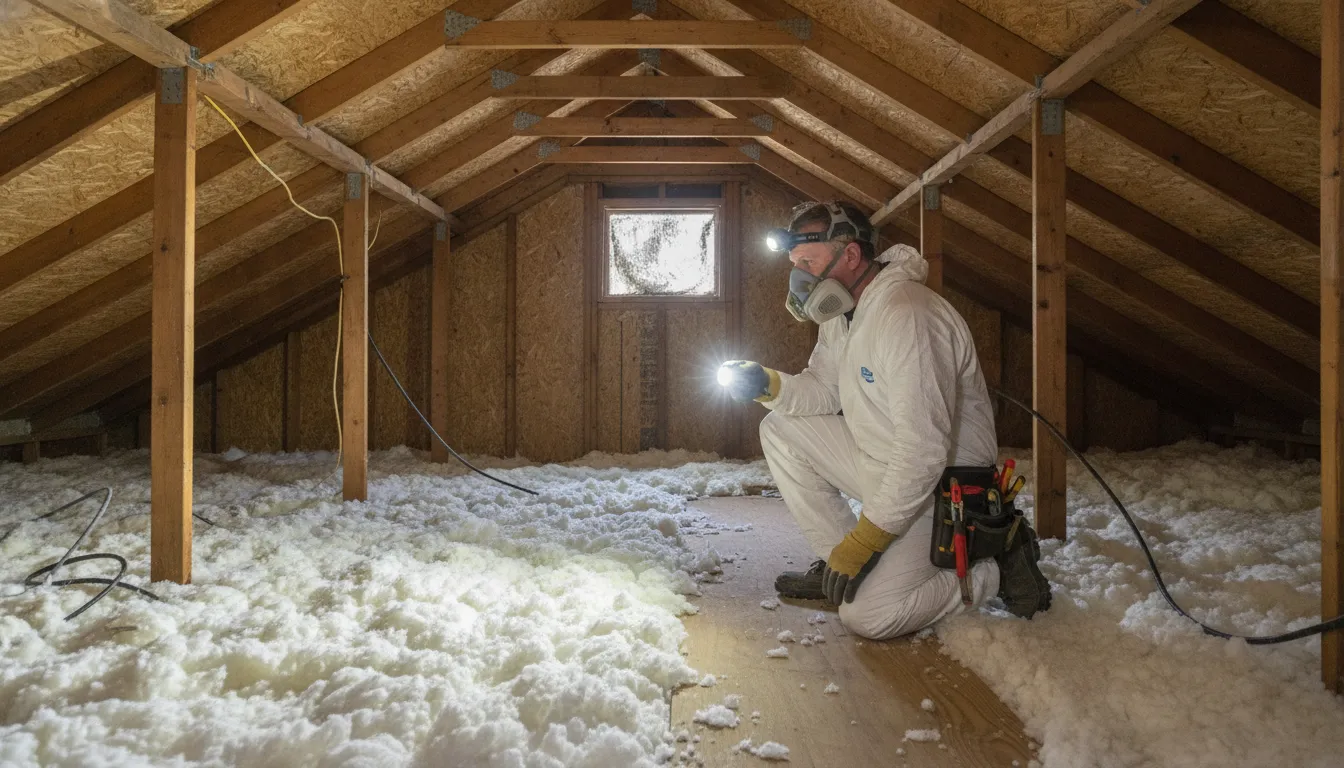
For most Houston homes, attic insulation can remain useful for many years. There is no universal expiration date. The better answer to how long does attic insulation last in Texas depends on material, installation quality, coverage, moisture, settling, ventilation, and pests. For a broader material overview, see EZ Attic Insulation's Attic Insulation Types guide.
Book Now or Get a Quote: Call (713) 909-0390 for an attic insulation inspection.
Short answer: Attic insulation can perform for many years when it stays dry, clean, and evenly distributed. Houston homeowners should judge insulation by its condition and coverage, not age alone. Settling, wet areas, contamination, gaps, and persistent hot rooms can justify an inspection sooner.
That distinction matters in Greater Houston. Long cooling seasons, intense attic heat, humidity, roof leaks, and air movement can affect an insulation system before the material appears old. This guide explains what influences service life, what to look for, and when topping off or replacing insulation is the more practical next step.
How Long Does Attic Insulation Last in Texas for Houston Homes?
Attic insulation does not fail on a specific birthday. A dry attic with consistent coverage may keep supporting comfort for decades. An attic exposed to water, pests, repeated disturbance, or poor airflow can lose performance much earlier. The insulation may still be visible, but it may no longer provide a continuous thermal layer.
Material type affects expected service life. Fiberglass batts and blown-in fiberglass can remain useful for many years when they stay dry and retain their intended coverage. Cellulose can also provide long-term coverage, but moisture and settling can change its condition. Spray foam depends heavily on adhesion, continuity, substrate preparation, and the condition of the roof assembly around it.
These are general expectations, not guarantees. A professional should inspect the actual attic before recommending removal, replacement, or additional material. The decision should account for:
- Whether insulation is clean and dry.
- Whether coverage is even across the attic floor or roof assembly.
- Whether batts are compressed or loose-fill material has settled.
- Whether roof, plumbing, or ventilation issues have introduced moisture.
- Whether pests have disturbed or contaminated the material.
- Whether rooms are comfortable and the home is reasonably efficient.
That material comparison is only the starting point. The condition of the insulation in your home determines whether it needs attention.
Why age is only one part of the answer
Material lifespan and performance lifespan are not the same thing. Insulation can remain physically present while gaps, thin spots, compression, or contamination reduce the protection it provides. Conversely, older insulation that is clean, dry, and evenly installed may not need immediate removal.
Homeowners should also consider what has happened in the attic since installation. Roof repairs, electrical work, storage, duct projects, and repeated foot traffic can disturb coverage. A visual check after a major project can reveal a problem that an installation date cannot.
Does Texas Heat and Humidity Shorten Insulation Lifespan?
Texas heat and humidity do not automatically make insulation expire, but they can make attic problems more consequential. Houston attics regularly face high heat during long summers. Moisture can enter through roof leaks, plumbing leaks, condensation, or uncontrolled air movement. Together, these conditions can affect coverage, surrounding materials, and indoor comfort.
Heat increases the load on the home's cooling system. If insulation is thin or uneven, more heat can move through the ceiling into living areas. Humidity can create a separate concern when warm, moist air reaches a cooler surface. Repeated moisture exposure may compress insulation or create an environment where mold concerns develop.
Common Houston conditions that reduce performance
- Roof leaks: Water can wet or stain insulation and damage the roof assembly beneath it.
- Plumbing leaks: Pipes and equipment near the attic can introduce moisture that is easy to miss.
- Condensation: Moist air meeting a cooler surface can create recurring dampness.
- Poor air movement: An attic that cannot manage heat and moisture may stay hotter or damper.
- Settling and disturbance: Loose-fill material can develop low areas after time or attic work.
- Pest activity: Nesting and traffic can flatten material, create gaps, and leave contamination.
Do not cover wet or visibly contaminated insulation with a fresh layer. The moisture source or pest entry point needs attention first. Otherwise, new material can conceal an active problem and make a later inspection more difficult.
Houston homeowners should look at the entire attic system rather than insulation in isolation. Air sealing, ventilation, roof condition, ductwork, and insulation coverage all influence comfort. Adding insulation can help when coverage is inadequate, but it cannot correct a roof leak or an unresolved moisture source.
How Long Does Attic Insulation Last in Texas When It Is Blown-In Fiberglass?
Blown-in fiberglass can remain useful for many years in a Houston attic when it is dry, clean, and evenly distributed. Its practical lifespan depends on coverage and condition more than a fixed calendar. A newer installation can perform poorly if it was disturbed or exposed to moisture. An older installation may continue to help if it remains intact and properly distributed.
Blown-in fiberglass consists of loose fibers placed across an attic area. Over time, material may settle or shift. Work in the attic can also create thin spots near access openings, walkways, equipment, and repair areas. Even a small uncovered section can weaken the consistency of the thermal layer.
What settling looks like
Look for low areas, exposed decking, visible gaps, and sections that are noticeably thinner than nearby coverage. Do not assume every low area means the entire attic needs removal. A professional can determine whether the existing insulation is clean and dry, whether it can be redistributed, and whether compatible material can restore coverage.
Settling can also be a symptom of another issue. A roof repair may have disturbed the material. Stored items may have compressed it. A service technician may have created a path through it. Finding the cause helps prevent the same problem from returning after a top-off.
When blown-in fiberglass needs more than a top-off
Additional material may not be the right answer when the existing layer is wet, mold-affected, or heavily contaminated. It may also be unsuitable when the existing layer is difficult to separate from a damaged attic assembly.
The first step should be identifying and correcting the source of the damage. Depending on the findings, affected material may need removal before new insulation is installed.
For homeowners considering this material, blown-in fiberglass insulation in Texas should be evaluated according to the home's layout, existing coverage, access, and moisture history. A condition-based inspection gives a more useful answer than a generic lifespan estimate.
What Are the Signs Your Attic Insulation Needs Attention?
Comfort changes and visible attic conditions can reveal declining insulation performance. You do not have to wait for an official replacement date. If one or more of the following signs appears, an inspection can help determine whether the issue is a small coverage correction or a larger attic problem.
- Uneven or compressed coverage: Low areas, flattened batts, and gaps can leave parts of the ceiling less protected.
- Exposed decking or ceiling surface: Bare sections may show that insulation has settled, shifted, or been removed.
- Water stains or damp material: Staining can point to a roof leak, plumbing issue, or condensation.
- Musty odors: A persistent odor can signal a moisture concern that should be investigated carefully.
- Pest evidence: Droppings, nesting, tracks, odors, or damaged material may indicate contamination.
- Rooms that stay hot: Persistent hot spots may relate to insulation, air leakage, ducts, ventilation, windows, or another building condition.
- Unexpected comfort or efficiency changes: A home that becomes harder to cool deserves attention even if the insulation looks familiar.
Do not climb into an attic or disturb suspicious material if the area is unsafe. Wiring, unstable surfaces, heat, pests, and contaminated insulation can create hazards. A qualified inspection can assess coverage and help identify whether the next step is repair, redistribution, a top-off, or replacement.
How Long Does Spray Foam Insulation Last in Texas?
Spray foam insulation does not have one guaranteed expiration date either. Its useful performance depends on whether the foam remains attached, continuous, dry, and properly applied. The roof deck, framing, penetrations, and transitions around the foam matter as much as the foam itself.
What to check in an older spray foam installation
- Adhesion: Foam should remain bonded to the intended surface without visible separation.
- Continuity: Gaps around framing, corners, penetrations, and transitions can create air paths.
- Moisture: Roof leaks, condensation, or damp surrounding materials need investigation.
- Physical condition: Damage, deterioration, or movement in the roof assembly can affect the insulation system.
- Ventilation strategy: The attic assembly should manage air and moisture as a complete system.
Separation from the roof deck is not a problem to hide with another layer. It may indicate a surface preparation issue, movement, moisture, or another condition that needs evaluation. If the roof has leaked or the attic has developed a musty odor, find the source before deciding on additional foam.
Homeowners comparing options can review spray foam insulation services, but a professional recommendation should follow an assessment of the existing assembly. The right question is not only how old the foam is. It is whether the system still provides a continuous, well-attached, and appropriate barrier for the home.
Should You Replace or Top Off Attic Insulation?
The choice between topping off and replacing insulation depends on condition, coverage, and the cause of the problem. If existing material is clean, dry, and stable but too thin or uneven, adding compatible material may improve coverage. If the insulation is wet, contaminated, heavily damaged, or hiding an active issue, replacement may be more appropriate after the cause is corrected.
Use this decision framework as a starting point.
| Inspection finding | Likely direction | Reason |
|---|---|---|
| Clean, dry material with thin or settled areas | Top off or redistribute | Existing material may remain useful if coverage can be restored. |
| Wet material or active moisture source | Correct the source first | New insulation should not conceal continuing water or condensation. |
| Visible mold concern or extensive water damage | Evaluate affected material for removal | Damaged insulation may require more than added coverage. |
| Pest nesting, droppings, or contamination | Address pests and damaged material | Covering contamination does not solve the entry point or cleanup need. |
| Large gaps or widespread compression | Use a broader corrective plan | Extensive unevenness can reduce the value of a small patch. |
| Unclear depth or coverage | Measure and inspect before choosing | A visual guess may not show the full condition of the attic. |
Air sealing and ventilation should be considered alongside insulation. A top-off may improve thermal coverage, but it is not a substitute for correcting uncontrolled air movement, roof damage, or moisture. Likewise, replacement should not begin until the attic is ready to receive new material.
When you want a condition-based recommendation, EZ Attic Insulation can inspect the attic and explain the available path. The company is 100% certified and insured, locally and family owned, and serves homeowners across Greater Houston.
Book Now or Get a Quote: Call (713) 909-0390 to discuss attic insulation options.
Frequently Asked Questions
How long does attic insulation last in Texas?
There is no single expiration date. Attic insulation can perform for many years when it remains dry, clean, and evenly covered. Houston heat, humidity, settling, moisture, and pests can reduce performance sooner, so condition matters as much as installation age.
Does attic insulation go bad over time?
It can lose effectiveness without suddenly expiring. Loose-fill material may settle, batts may compress, and moisture or pests may damage the coverage. If the insulation is still clean and dry, a top-off or redistribution may help. If it is wet or contaminated, the attic needs a more complete evaluation.
When should attic insulation be replaced?
Consider replacement when insulation is wet, heavily damaged, contaminated, mold-affected, or no longer provides consistent coverage. Correct the moisture or pest source first. Clean, dry insulation with limited thin spots may only need additional compatible material after an inspection.
How often should you inspect attic insulation?
Check the attic every few years and sooner after a roof leak, plumbing issue, storm damage, renovation, or noticeable change in comfort. Look for stains, exposed areas, settled material, pest evidence, and musty odors. A professional can assess conditions that are difficult or unsafe for a homeowner to inspect.
Ready to Check Your Attic Insulation?
Do not replace attic insulation based on age alone. An inspection can show whether your Houston home needs a top-off, targeted correction, or a larger replacement plan. EZ Attic Insulation serves Greater Houston homeowners with attic insulation options and practical guidance.
Hablamos Español!
Book Now or Get a Quote: Call (713) 909-0390 for your attic insulation inspection.