How Does an Attic Fan Work in a Houston Home?
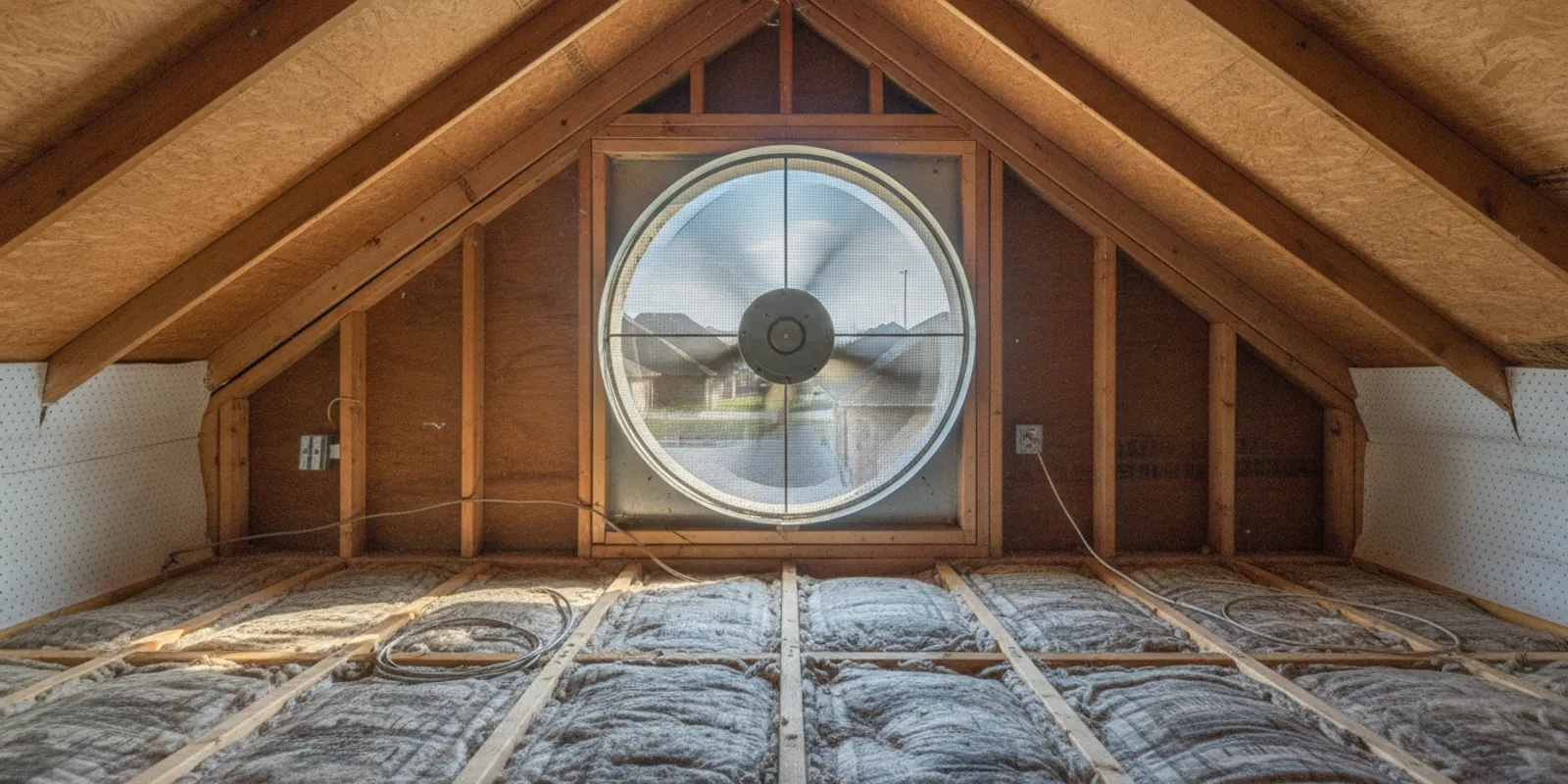
When a Houston attic stays hot long after the sun moves off the roof, homeowners often ask: how does an attic fan work, and could one help? An attic fan moves air out of the attic through an exterior opening. It does not cool living rooms like an air conditioner. The key is understanding where replacement air enters and whether the whole route is clear.
Ask about your attic ventilation options
How does an attic fan move air?
An attic fan is an exhaust device. When its motor runs, its blades push attic air outdoors through a roof or gable opening. The air that leaves must be replaced by air entering elsewhere. In a typical vented attic, that incoming air is meant to come through intake vents along the eaves or soffits, then travel across the attic toward the exhaust point.
Think of the arrangement as a route with three parts: an intake, an open path through the attic, and an exhaust. The fan creates movement at the exhaust end, but it cannot create a complete route by itself. If intake vents are blocked by debris, paint, insulation, or another obstruction, replacement air may not enter as intended. If another opening offers an easier path, airflow can take that route instead.
This is why a fan's size or apparent strength is not the only question. Placement, vent locations, obstructions, attic partitions, and the home's ceiling boundary can all affect the path. A fan can be operating while the overall arrangement still needs attention.
What happens when the fan runs?
- A control starts the unit. Depending on its design, a fan may use a thermostat, manual switch, or another control. Follow the unit's instructions; do not bypass controls.
- The blades move air outward. A motor turns the fan, which exhausts attic air through an exterior vent.
- Replacement air enters. Outdoor air comes through available openings. A well-planned vented attic has appropriate intake openings for this purpose.
- Air crosses the attic. If the route is open, incoming air moves toward the exhaust opening and replaces some of the air that has left.
In everyday terms, the fan does not make heat vanish. It exchanges some attic air for outdoor air. The result depends on whether air can enter and move through the space. A blocked intake, disconnected airflow route, or competing vent arrangement can change how the system behaves.
A powered roof fan and a gable fan use an electric motor. A solar attic fan also uses a motor, powered by a solar panel when operating conditions allow. A passive roof or ridge vent has no motor; air moves through fixed openings in response to natural conditions. These are different equipment approaches, but all ventilation plans depend on the attic's overall configuration.
What can an attic fan address—and what can it not?
A fan's direct job is to exhaust attic air. It does not add insulation, seal openings between the home and attic, fix duct issues, or replace cooling equipment. Those distinctions matter when the complaint is a room that stays warm, uneven temperatures between floors, or an air conditioner that seems to run often.
For example, imagine a west-facing upstairs bedroom that gets uncomfortable late in the day. The attic may be warm, but the room's experience can also relate to heat moving through the ceiling, gaps at fixtures or access panels, duct conditions, or the cooling system. Installing a fan without identifying the relevant issue might not address the cause. A useful evaluation separates ventilation questions from insulation coverage, air leakage, and HVAC concerns.
Insulation and ventilation have different roles. Insulation slows heat flow through the ceiling assembly; ventilation moves air through an attic designed to be vented. One does not replace the other. A Lawrence Berkeley National Laboratory literature review on sealed and insulated attics discusses how attic performance depends on the details of the assembly. For more on the ventilation side, see our guide to attic fan installation and ventilation.
That distinction is especially practical in Houston, where hot, humid weather can make an attic feel oppressive. The feeling alone does not tell you whether the fan, intake route, insulation, or another part of the home needs attention. Note the symptoms and ask for the system to be considered as a whole.
Why do intake and exhaust need to work together?
Exhaust capacity alone is not a complete ventilation plan. Each volume of air pushed out must be replaced, and the replacement route affects where air comes from. If designed intake vents are too limited or obstructed, air movement may be restricted or may occur through unintended openings. A review should consider the location and condition of both intake and exhaust vents rather than focusing only on the fan.
Insulation at the eaves deserves attention because it can cover or obstruct an intake path if it is placed incorrectly. Do not push insulation aside or insert tools into a vent to investigate. A qualified person can check whether the intake route remains open and how it connects with the rest of the attic. If the attic also needs insulation attention, review the company's home attic insulation options as a separate part of the assessment.
Consider a simple example: a home has a fan near one end of the attic, several visible soffit vents, and a section of insulation piled tightly against the eaves. From the ground, it may look as though vents are present. But the important question is whether the air can pass through those openings into the attic. Counting visible vents does not establish that the route is clear or suitable.
Another home might have an existing passive vent near the fan. That does not automatically mean the fan is unsuitable, nor does it prove the layout is correct. The professional needs to understand how openings interact and whether the intended airflow path makes sense for that roof and attic. Avoid making changes based on a rough vent count or a guess.
What can you safely check before asking about a fan?
You can gather useful observations without climbing onto a roof or stepping into an unsafe attic. The goal is to describe what you notice—not to diagnose a ventilation system from a distance.
- Note room patterns. Write down which rooms feel warm, what time of day the problem appears, and whether it changes with weather or air-conditioning operation. A single room that is uncomfortable may point to a different set of questions than a whole upper floor.
- Observe visible vents from the ground. Note whether you can see soffit, gable, or roof vents and whether anything appears damaged or covered. Do not climb a ladder or roof to get a closer look.
- Record fan symptoms. If a fan is audible from a safe location, note unusual rattling, a new vibration, or silence when you expect it to run. Sound alone cannot confirm whether it is working properly.
- Look only from a safe attic-access position. If you can see into the attic without entering or putting weight on ceiling drywall, note obvious obstructions. Stop if the access area is hot, cramped, unstable, or difficult to reach.
- Gather home details. The roof shape, visible vent locations, attic access, insulation coverage, and approximate age of an existing fan can help an assessor understand the situation.
- Describe the concern precisely. Say whether you are asking about attic heat, a fan that no longer runs, a noisy unit, or a warm room. These are related but not identical questions.
Do not open electrical equipment, work on wiring, reach into a moving fan, or bypass a thermostat. Roof work carries fall risks, and attic spaces can contain hazards that are difficult to judge from the access opening. Leave fan installation, electrical connections, and roof access to qualified professionals.
How do attic fan options compare?
| Option | How it moves air | Questions to consider |
|---|---|---|
| Powered roof fan | A motor exhausts attic air through a roof opening. | Is the location appropriate? Is there a suitable intake route and electrical supply? |
| Powered gable fan | A motorized fan exhausts air through an opening at the gable end. | Does the attic layout allow airflow from intake vents toward that location? |
| Solar attic fan | A solar-powered motor exhausts air when operating conditions allow. | How do available sunlight, unit placement, and the intake route fit this home? |
| Passive roof or ridge vent | Air moves through fixed openings without a powered fan. | Are the intake and exhaust openings arranged as a coherent system? |
This table compares basic operating approaches, not their suitability for a particular house. A solar-powered unit still needs an intake path, and a powered fan still needs a considered location. Roof construction, existing openings, wiring, and how the attic is divided all affect the decision. You can read about the company's attic solar fan installation service if that option is among those you want to discuss.
What should you ask during a ventilation assessment?
A useful assessment should explain the route, not just point to a fan. Ask what openings serve as intake, where air is expected to leave, and whether anything appears to obstruct that path. If a fan is already present, ask whether the control, location, and surrounding vent arrangement have been considered together.
It is also reasonable to ask what the proposed work is intended to address. Is the concern the operation of an existing fan, an unclear intake route, or a broader ventilation question? If your main issue is a warm room or high cooling demand, explain when it happens and ask whether insulation, air leakage, ducts, or HVAC operation should be evaluated separately. Clear scope helps you understand what a proposed change can and cannot accomplish.
Before agreeing to any installation, seek an explanation of the planned location and how replacement air will reach the attic. Ask what existing openings will remain in use and whether any changes to the roof or wiring are involved. You do not need to select equipment based solely on a hot-day impression or a neighbor's setup; two homes can have different roof layouts and airflow routes.
EZ Attic Insulation is a locally and family-owned Texas home efficiency company serving Greater Houston. The company is 100% Certified & Insured. To learn how an attic review may fit into the work, see the attic insulation process, or browse the attic tips and guides for related homeowner information. Hablamos Español!
Explore attic fan installation and ventilation options
Frequently asked questions
Does an attic fan cool my house?
No. An attic fan exhausts attic air; it does not cool rooms like an air conditioner. Any effect on indoor comfort depends on the home's complete ventilation arrangement and other factors such as insulation, air leakage, ducts, and cooling equipment.
Can an attic fan work without intake vents?
The fan must have replacement air as it exhausts attic air. Without a suitable, clear intake route, airflow may be restricted or come through openings that were not intended as the main intake. Have the whole layout checked instead of judging by the fan alone.
Should I run an attic fan all day?
There is no one schedule that fits every fan and home. Follow the unit's instructions and have its controls and intended operation reviewed if you are unsure. Do not bypass a thermostat or other control to force it to run.
Can I install an attic fan myself?
Installation may involve roof work, electrical connections, and changes to a ventilation arrangement. Falls and electrical hazards are serious. Do not take on work beyond your safe access and skills; use a qualified professional for installation and wiring.
What if my attic fan runs but the upstairs is still warm?
A running fan does not prove that the airflow route is suitable or that ventilation is the source of the comfort problem. Note when and where the room gets warm, then ask for ventilation to be distinguished from insulation, air leakage, duct, and HVAC questions.
Talk with a Texas insulation expert
If you want to understand how your attic fan, intake vents, and insulation fit together, share what you have noticed and ask about an appropriate next step. EZ Attic Insulation serves homeowners across Greater Houston and can discuss attic ventilation options. The right decision starts with understanding the complete attic system, not simply adding a fan because the space feels hot.