Duct Insulation in Houston: Benefits, Options, and When It Helps
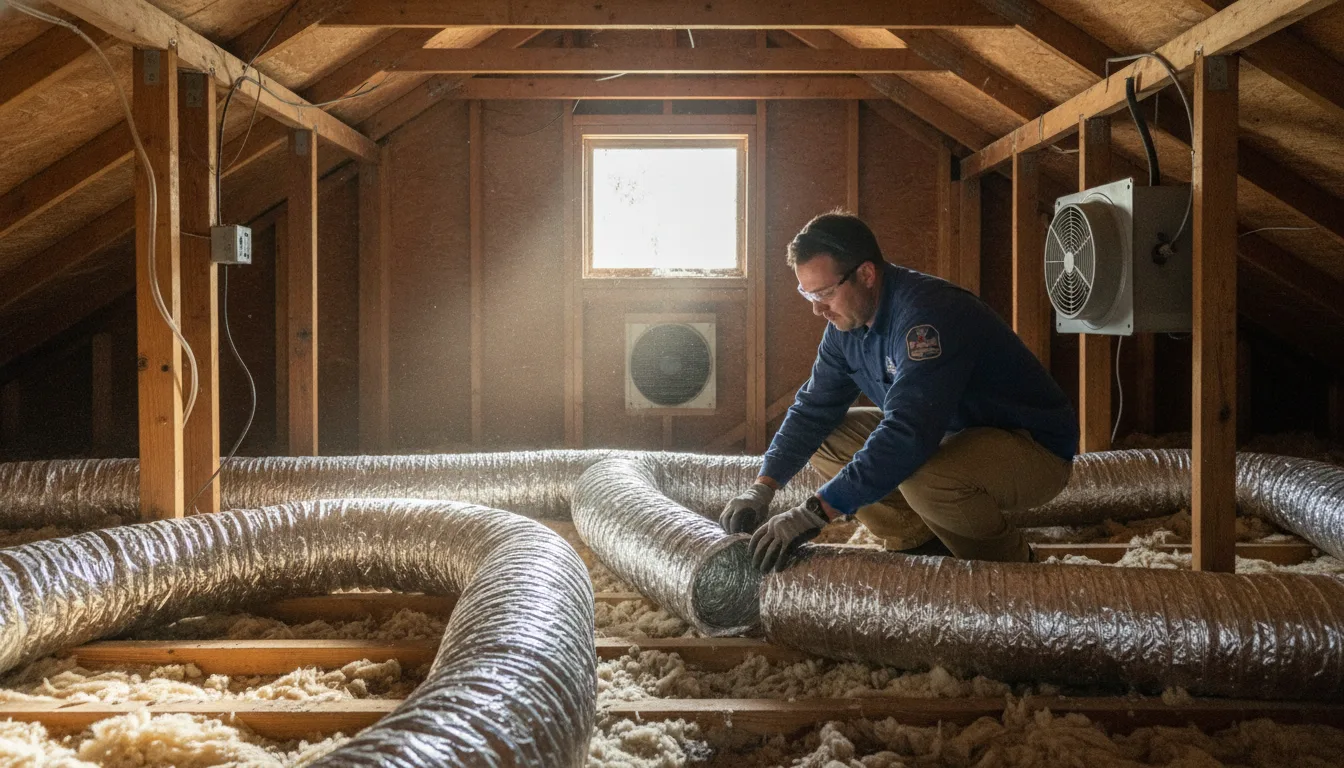
In a Houston home, the ductwork may travel through one of the hottest spaces in the building: the attic. Duct insulation helps slow heat transfer around those ducts so conditioned air can reach rooms more consistently. It can be useful, but it is not the same as cleaning the ducts or adding insulation across the entire attic. The right next step depends on the duct material, existing insulation, air leaks, moisture, and the symptoms you notice indoors.
What Is Duct Insulation?
Duct insulation is a thermal layer installed around heating and cooling ducts to reduce heat gain or heat loss as air moves between the HVAC equipment and the rooms in a home. In a Houston attic, the layer helps separate conditioned air from extreme attic temperatures. The insulation does not clean dust from the duct interior, repair every air leak, or replace insulation across the whole attic.
Most residential ductwork is flexible duct, sheet metal, or a combination of materials. Some systems already have an insulated outer jacket. Others may have compressed, torn, wet, or missing insulation. The condition of that exterior layer matters because a duct can still move air while losing temperature through its surface or leaking air through a joint.
Why Can Duct Insulation Matter in Houston?
Duct insulation can matter when ducts pass through a hot attic, garage, crawl space, or another area that is not part of the conditioned living space. The larger the temperature difference between the air inside the duct and the surrounding space, the more opportunity there is for heat transfer. Insulation is one part of a duct system evaluation, alongside sealing, support, airflow, and moisture control.
Houston conditions make this evaluation especially practical. Long cooling seasons, high outdoor heat, and attic temperatures that rise well above the living area can expose weak spots in the duct system. A room that feels warmer than the rest of the house may have several possible causes, including an undersized supply register, a closed damper, a crushed flex duct, a leak, poor insulation, HVAC performance, or a building-envelope problem. Duct insulation should be selected only after those possibilities are considered.
ENERGY STAR explains that sealing and insulating ducts can improve comfort and efficiency, and notes that leaky ducts can reduce heating and cooling efficiency by as much as 20 percent. Read the ENERGY STAR guidance on duct sealing and insulation benefits for the source context. That figure is not a promise of savings for every Houston home. It shows why a measured inspection is more useful than assuming the visible duct jacket is the only problem.
What Problems Can Duct Insulation Help Address?
Duct insulation is most relevant when the duct surface is exposed to a hot or unconditioned space and the insulation layer is missing, damaged, compressed, or inadequate for the system. It may support more stable supply-air temperatures and reduce the effect of the surrounding attic on the duct. It is not a universal answer to every comfort or energy complaint.
- Hot or cold ducts in an unconditioned area: Ducts running through a hot attic can gain heat before cooled air reaches a room.
- Compressed insulation: A crushed jacket may provide less coverage than intended and can leave portions of the duct exposed.
- Torn or missing outer insulation: Damaged insulation can reduce thermal protection and leave the duct vulnerable to further wear.
- Uneven room temperatures: Duct insulation may be part of the answer when other airflow and equipment checks also support that conclusion.
- Condensation concerns: In humid conditions, a cold duct surface can create moisture risk if the insulation and vapor control are not appropriate. Moisture should be assessed rather than covered up.
These clues do not prove that duct insulation is needed. A professional should look for air leakage, disconnected sections, poor support, blocked returns, airflow restrictions, and moisture damage before recommending a scope of work.
What Are the Main Duct Insulation Options?
The best option depends on the existing duct construction, access, condition, code requirements, and the reason the work is being considered. The following categories help homeowners understand a conversation with an HVAC or insulation professional without treating one material as the right answer for every property.
External duct wrap or jacket repair
External insulation is installed around the outside of a duct or used to repair a damaged jacket. It is intended to improve the thermal separation between the duct and the surrounding space. The installer must maintain continuous coverage without crushing flexible ductwork or blocking access to service points. Any seams, fasteners, and vapor-control details should be suited to the location and material.
Insulated flexible duct replacement
When flexible duct is badly compressed, torn, wet, contaminated, or poorly supported, adding more insulation may not correct the underlying problem. In those cases, replacement of the affected section may be considered. The decision should account for the duct path, connections, airflow, support, and the source of any moisture or damage.
Sheet-metal duct insulation
Sheet-metal ducts can conduct heat readily when they pass through an unconditioned area. An external insulation system may be considered, provided the surface is clean, dry, accessible, and appropriate for the selected product. The installation should not hide active leaks, corrosion, or a condition that requires duct repair first.
Air sealing and insulation as a combined scope
Insulation slows heat transfer, while air sealing addresses unwanted movement of air through joints, seams, boots, or penetrations. A duct can have good surface insulation and still lose conditioned air through a leak. Conversely, sealing a joint does not automatically solve heat transfer through an under-insulated duct. An assessment should separate these jobs so the homeowner knows what each recommended step is intended to fix.
How Is Duct Insulation Different From Whole-Attic Insulation?
Duct insulation protects the duct surface. Whole-attic insulation is installed across the attic floor, roofline, or another defined part of the building envelope to reduce heat flow between the home and the attic. The two can support the same comfort goal, but they affect different surfaces and should not be treated as interchangeable.
| Question | Duct insulation | Whole-attic insulation |
|---|---|---|
| Primary target | The duct surface and its thermal exposure | The attic boundary and heat flow through the building envelope |
| Typical clue | Damaged jacket, exposed duct, or temperature loss along an attic run | Thin or uneven attic coverage, heat entering through the ceiling, or an attic upgrade plan |
| What it does not fix alone | Open duct leaks, blocked airflow, or a failing HVAC component | A torn duct, disconnected joint, or poor register airflow |
| Inspection focus | Duct material, joints, insulation continuity, support, and moisture | Coverage depth, air sealing, ventilation, access, and the ceiling or roofline assembly |
Some homes need one scope, while others need coordinated work. For example, improving attic insulation may reduce the attic heat load without correcting a crushed supply duct. Repairing a duct jacket may protect one run without addressing insufficient insulation across the rest of the attic. A written assessment should identify which condition is present and what result each recommendation is intended to achieve.
EZ Attic Insulation has a verified attic insulation service page for Texas homes. That page is useful when the concern extends beyond one duct run and into the overall attic assembly. It should not be read as proof that every duct-insulation installation is included in the same service scope, so confirm the recommended work before scheduling.
What Should Houston Homeowners Inspect Before Choosing a Solution?
Before choosing duct insulation, gather observations that help separate a duct problem from a broader comfort problem. Do not enter an unsafe attic or disturb insulation, wiring, or HVAC equipment if access is difficult. A professional inspection can document the condition without relying on a guess from one warm room.
- Map the comfort complaint: Note which rooms are too warm, when the problem occurs, and whether the issue changes with sun, outdoor temperature, or HVAC runtime.
- Look at accessible duct surfaces: Check for visible gaps, sagging, crushed sections, exposed inner duct, torn jackets, or insulation that has pulled away.
- Check for moisture clues: Stains, damp insulation, corrosion, or recurring condensation need a source investigation before new material covers the area.
- Ask about airflow: Weak supply airflow can come from restrictions, disconnected sections, balancing issues, filters, equipment, or duct design, not only from insulation.
- Separate cleaning from repair: Dust at a register or poor indoor air quality may lead to a duct-cleaning question, while temperature loss at an attic run may lead to a duct-insulation question.
- Request a defined scope: Ask whether the recommendation is for sealing, insulation repair, duct replacement, whole-attic insulation, cleaning, or a combination, and what observation supports it.
These steps are designed to improve the quality of the conversation, not to turn a homeowner into an HVAC technician. In an occupied Houston home, comfort symptoms can overlap. A clear scope protects the homeowner from paying for a material that does not address the actual cause.
Is Duct Insulation the Same as Air Duct Cleaning?
Duct insulation and air duct cleaning address different conditions. Duct insulation concerns the thermal layer around the duct and how the duct performs in its surrounding space. Air duct cleaning concerns dust, debris, and other material inside the air distribution system. One does not replace the other.
Cleaning may be relevant when there is a documented buildup or a specific indoor-air concern. Insulation may be relevant when the duct surface is exposed to attic heat or has a damaged jacket. Sealing may be relevant when conditioned air is escaping at a connection. Homeowners should ask which condition was observed and what the proposed work is expected to change.
EZ Attic Insulation's verified air duct cleaning service page describes its current cleaning route. If your concern is dust or the condition inside the air distribution system, start with that service conversation. If the concern is temperature loss around an attic duct, explain the symptoms and ask whether the company handles that scope or recommends the appropriate specialist.
When Should You Ask for a Duct or Attic Assessment?
An assessment is a sensible next step when uneven comfort continues after basic HVAC maintenance, when accessible duct insulation appears damaged, or when a room-specific problem returns during Houston heat. It is also worthwhile before adding material over a duct with moisture, corrosion, or a suspected leak.
Use the assessment to ask four practical questions: What condition was found? Where is it located? Which solution addresses it? How will the result be checked? Clear answers make it easier to compare recommendations without focusing on a product name alone.
For homes where the concern may include fiberglass insulation, EZ Attic Insulation also maintains a verified batt and fiberglass insulation service page. That link is relevant to whole-home or attic insulation discussions, but it is not a substitute for a duct-condition assessment.
Frequently Asked Questions About Duct Insulation
Does duct insulation make a home cooler?
Duct insulation can help reduce heat gain around ducts that run through a hot, unconditioned space, which may support more consistent supply-air temperatures. It will not correct every comfort issue. Air leaks, airflow restrictions, HVAC performance, room layout, and whole-attic conditions may also affect how cool a room feels.
Can I add insulation over a damaged duct?
New insulation should not simply cover a duct that is wet, torn, crushed, disconnected, or leaking. The damaged condition should be assessed first. Depending on what is found, the appropriate scope may involve repair, sealing, replacement, drying, or a different insulation approach.
Is duct insulation the same as duct sealing?
No. Duct insulation is a thermal layer that reduces heat transfer through the duct surface. Duct sealing addresses unwanted air movement through joints, seams, boots, or penetrations. A Houston duct system may need one, both, or neither after an inspection.
Does whole-attic insulation replace duct insulation?
No. Whole-attic insulation and duct insulation protect different parts of the home. Attic insulation addresses heat flow through the attic boundary, while duct insulation protects the duct surface. A home can need an attic upgrade, a duct repair, or a coordinated plan depending on the observed conditions.
Can air duct cleaning fix missing duct insulation?
No. Air duct cleaning removes or addresses material inside the air distribution system, while missing duct insulation is an exterior thermal condition. Cleaning may be appropriate for a documented indoor-air concern, but it does not restore a damaged or missing duct jacket.
What should I ask before scheduling duct insulation work?
Ask what condition was found, whether leaks or moisture were checked, which ducts are included, what material and coverage are proposed, and how the result will be verified. Also confirm whether the provider offers the exact scope or is recommending another qualified specialist.