Batt Insulation vs Blown-In Houston: Which Fits?
Houston homeowners comparing batt insulation vs blown-in Houston options are usually trying to solve a real comfort problem. Rooms may stay hot, temperatures may feel uneven, or the air conditioner may run longer than expected. The right choice depends on the attic layout, existing material, air leaks, and installation quality, not a product label alone.
Book Now or Get Quote: Call (713) 909-0390 for a free insulation inspection.
Quick answer: Batts can work well in clean attics with regular framing and few obstructions. Blown-in insulation can reach irregular spaces and gaps more easily. Either option can perform well when it has even coverage, proper preparation, and a plan suited to the home.
For the broader material overview, start with our attic insulation types guide for Houston homes. You can also visit the EZ Attic Insulation home page to learn about service areas. The comparison below focuses on how the two options fit real Houston attics.
What Is Batt Insulation?
Direct answer: Batt insulation is a blanket-like material supplied in rolls or pre-cut sections. It is fitted between framing members, so it works best when joist bays are regular, accessible, and free of many obstructions.
Fiberglass batts are placed between or over attic floor joists to separate conditioned rooms from the hot attic above. Each section should fit closely without being compressed, folded, or cut too short. A careful installation checks the edges, seams, corners, and areas around ducts or wiring.
Wiring, plumbing, ducts, recessed fixtures, trusses, and support posts interrupt the framing. Those areas require careful measuring and cutting. A short piece leaves a gap, while a piece forced into a tight opening can lose its intended thickness. Batts also do not seal cracks around penetrations or attic access panels by themselves.
-
Controlled placement: Each section can be positioned and checked as work progresses.
-
Good fit for regular bays: Consistent framing makes accurate fitting easier.
-
Visible installation: Seams, gaps, and compression can be inspected directly.
-
Separate preparation: Air leaks, moisture concerns, and ventilation paths still need attention.
Houston's long cooling season makes complete coverage important. A walk-through should include the attic perimeter, access opening, corners, eaves, and areas around ducts. ENERGY STAR's attic insulation guidance also emphasizes preparation and full coverage.
How Do Batt and Blown-In Insulation Compare in Houston?
Direct answer: Batt insulation is cut and fitted into defined spaces, while blown-in insulation is distributed as loose fill. Batts favor regular, open framing. Blown-in can reach around more obstructions. Both materials need correct coverage, preparation, and a quality check after installation.
The finished result matters more than the material name. A carefully fitted batt installation can perform well, and evenly distributed blown-in insulation can cover irregular spaces efficiently. Poor fitting or thin spots can reduce the value of either option.
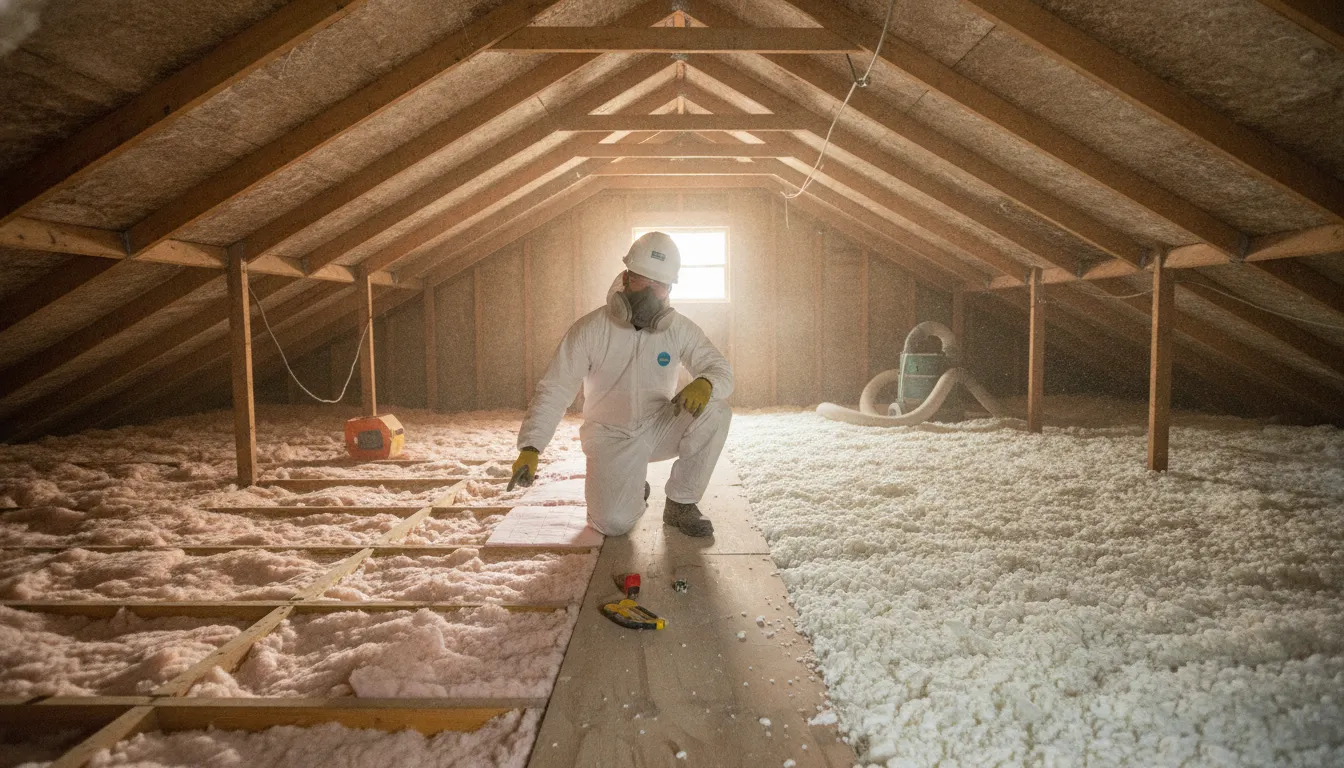
Key differences between batt and blown-in attic insulation
| Factor | Batt insulation | Blown-in insulation |
|---|---|---|
| Format | Rolled or pre-cut blanket sections. | Loose-fill material distributed across the attic. |
| Best fit | Regular framing bays with few obstacles. | Irregular spaces and crowded framing. |
| Coverage check | Inspect fit, seams, thickness, and compression. | Measure depth and look for thin or disturbed areas. |
| Air sealing | Neither product replaces air sealing or building repairs. |
Houston heat and humidity do not make one material automatically correct. They make consistent coverage and sound preparation more important. Homeowners can review EZ Attic Insulation's blown-in fiberglass service while comparing how the material would fit their attic.
When Is Batt Insulation a Good Choice?
Direct answer: Batts may be a good choice when an attic has regular joist spacing, clear access, and enough room to fit each section without compression. They are less convenient when ducts, wiring, pipes, trusses, and framing changes create many irregular spaces.
Batts can make sense when a defined area is easy to reach and inspect. An installer can trim around an obstacle, check neighboring seams, and confirm that the material stays at its intended thickness. The approach becomes harder as the number of interruptions grows.
-
Are the framing bays consistent across the attic?
-
Can the crew reach edges, corners, and the attic access safely?
-
Are existing batts dry, stable, and free from major displacement?
-
Can air leaks and ventilation paths be handled before coverage is added?
See the fiberglass batting insulation service for more information. The goal is not to force batts into every attic. It is to determine whether they can produce even, complete coverage.
Why Can Blown-In Work Well in Irregular Attics?
Direct answer: Blown-in insulation can work well in irregular attics because loose-fill material moves around joists, wires, ducts, and other obstacles. It still needs even distribution, verified final depth, open ventilation paths, and a dry attic prepared for installation.
This flexibility is useful when an attic floor contains many small spaces that would need separate batt cuts. Blown-in can also create a more continuous blanket across an open attic floor when the area is prepared correctly.
Can blown-in go over existing batts?
Sometimes. Existing batts may remain when they are dry, clean, stable, and not concealing a roof or moisture problem. An inspection should confirm that added insulation will not block ventilation. Wet, contaminated, severely compressed, or displaced material may need a different solution.
Air sealing should be considered before adding insulation. Sealing bypasses around penetrations, fixtures, and access doors helps keep conditioned air from escaping. Insulation slows heat transfer, while air sealing closes air pathways. They support each other but are not interchangeable.
What Should Houston Homeowners Compare Before Choosing?
Direct answer: Compare the complete installation scope, not only the insulation material. Attic size, access, existing coverage, air sealing, moisture conditions, ventilation, target thickness, and the final inspection all affect which option is practical for a Houston home.
-
Existing insulation: Determine whether it can remain, be supplemented, or needs attention first.
-
Attic condition: Resolve roof leaks and moisture concerns before covering them.
-
Coverage target: Confirm the planned thickness and how thin areas will be checked.
-
Access and safety: Tight entries, low clearance, and crowded spaces affect the plan.
-
Final review: Ask how the perimeter, access panel, and ventilation paths will be checked.
Loose-fill can be practical in irregular spaces, while batts can be practical in accessible, regular bays. Neither is automatically the best option for every Houston home. A useful recommendation explains preparation, air sealing, existing material, ventilation, cleanup, and final coverage checks.
What Can Affect the Final Insulation Result?
Direct answer: The final result depends on more than the insulation product. Attic preparation, access, fitting, coverage checks, air sealing, and protection of ventilation paths all affect how well the work serves the rooms below.
Two attics with the same square footage can need different plans. One may have open, regular bays. Another may have trusses, ducts, wiring, and tight perimeter areas. A material that is easy to place in the center may be difficult to install correctly at the edges.
-
Preparation: Existing moisture or damaged material should be identified before new insulation covers the attic floor.
-
Fit: Batts should fill their spaces without gaps or compression. Blown-in material should be spread evenly and checked for thin spots.
-
Air sealing: Openings around penetrations and the attic access should be addressed as part of the overall plan.
-
Ventilation: Eave and roof ventilation paths should remain open after the work is complete.
-
Documentation: The homeowner should understand the planned coverage, areas with limited access, and the final inspection process.
These checks help turn a product comparison into a practical installation decision. They also make it easier to compare two proposals fairly without relying on a material name or a single attic measurement.
How Can You Compare an Insulation Plan?
Direct answer: Compare an insulation plan by looking at the attic condition, preparation work, coverage method, access limits, and final inspection. A clear plan explains what the crew will do before material is added and how the finished work will be checked.
Start by asking what the inspection found. The answer should cover bare areas, existing material, moisture concerns, air bypasses, ventilation paths, and difficult edges. It should also explain which areas are easy to reach and which areas require a special approach. This keeps the recommendation tied to the home instead of a generic product preference.
-
Record the starting condition. Note the existing material, approximate depth, bare spots, and areas that need preparation.
-
Review the attic layout. Identify regular bays, trusses, ducts, wiring, low-clearance corners, and tight perimeter sections.
-
Separate air sealing from insulation. Confirm how openings around penetrations, fixtures, and access panels will be handled.
-
Define the coverage check. Ask how batt fit or blown-in depth will be reviewed after installation.
-
Confirm the final walk-through. Make sure the plan includes ventilation protection, cleanup, and an explanation of any limited-access areas.
This checklist helps homeowners compare the work itself. It also reduces confusion when two recommendations use different materials or describe the same attic in different ways. The strongest option is the one that addresses the actual conditions, gives the crew a safe installation path, and includes a clear review at the end.
What Does a Houston Attic Inspection Check?
Direct answer: A Houston attic inspection should review existing insulation, coverage depth, air leaks, moisture concerns, ventilation paths, framing, access, and obstructions. Those findings help determine whether batt, blown-in, or a combination can provide dependable coverage.
The inspection should begin at the attic entrance and continue across the areas that affect the living space below. Looking only near the hatch can miss thin coverage at the perimeter or a blocked ventilation channel farther away.
-
Condition: Is the existing material dry, stable, clean, and evenly distributed?
-
Coverage: Are there bare spots, thin areas, compressed sections, or exposed edges?
-
Air movement: Are there bypasses around lights, wiring, pipes, framing, or access doors?
-
Ventilation: Can eave and roof ventilation paths stay open after installation?
-
Layout: Are the spaces regular enough for batts, or do obstacles favor loose-fill?
For general service information, visit the Texas attic insulation services page. A service page describes available help. An inspection connects that help to the home's actual conditions.
Before work begins, ask how the crew will protect recessed fixtures, wiring, and ventilation openings. Also ask how the attic access will be insulated and whether disturbed areas will be restored. These details matter because a material comparison is only useful when the installation plan is safe, complete, and suited to the house. A clear scope gives you a better basis for comparing recommendations and deciding what questions to ask during the final walk-through.
Book Now or Get Quote: Call (713) 909-0390 to discuss your Houston attic insulation options.
Frequently Asked Questions
Is batt or blown-in insulation better for Houston heat?
Neither wins in every attic. Batts may suit regular, open framing, while blown-in may cover irregular spaces more completely. Installation quality, air sealing, and full coverage matter more than the product name.
Can you mix batt and blown-in insulation?
In some homes, one material can supplement another. Existing insulation should be dry, stable, and compatible with a safe installation plan. A professional should check coverage and ventilation before adding material.
Does insulation stop attic air leaks?
No. Insulation slows heat transfer, while air sealing closes pathways around penetrations, fixtures, framing, and access panels. Addressing both concerns creates a more complete attic improvement.
Should old attic insulation be removed first?
Not always. Removal depends on the material's condition, moisture or contamination, displacement, and whether it conceals a building problem. An inspection should guide the decision.
How do I compare insulation estimates?
Ask what the scope includes, such as preparation, air sealing, existing-material treatment, target thickness, ventilation protection, cleanup, and final coverage checks. Comparing those details is more useful than comparing material labels alone.
Ready to Compare Your Houston Attic?
A focused inspection can show where coverage is missing, whether existing material is usable, and which installation method fits the attic's layout. EZ Attic Insulation is locally and family-owned, 100% Certified and Insured, and serves homeowners across Greater Houston. Hablamos Espanol!
Book Now or Get Quote: Call (713) 909-0390 for your Houston insulation inspection.