Attic Insulation Removal and Replacement Cost for Houston Homeowners
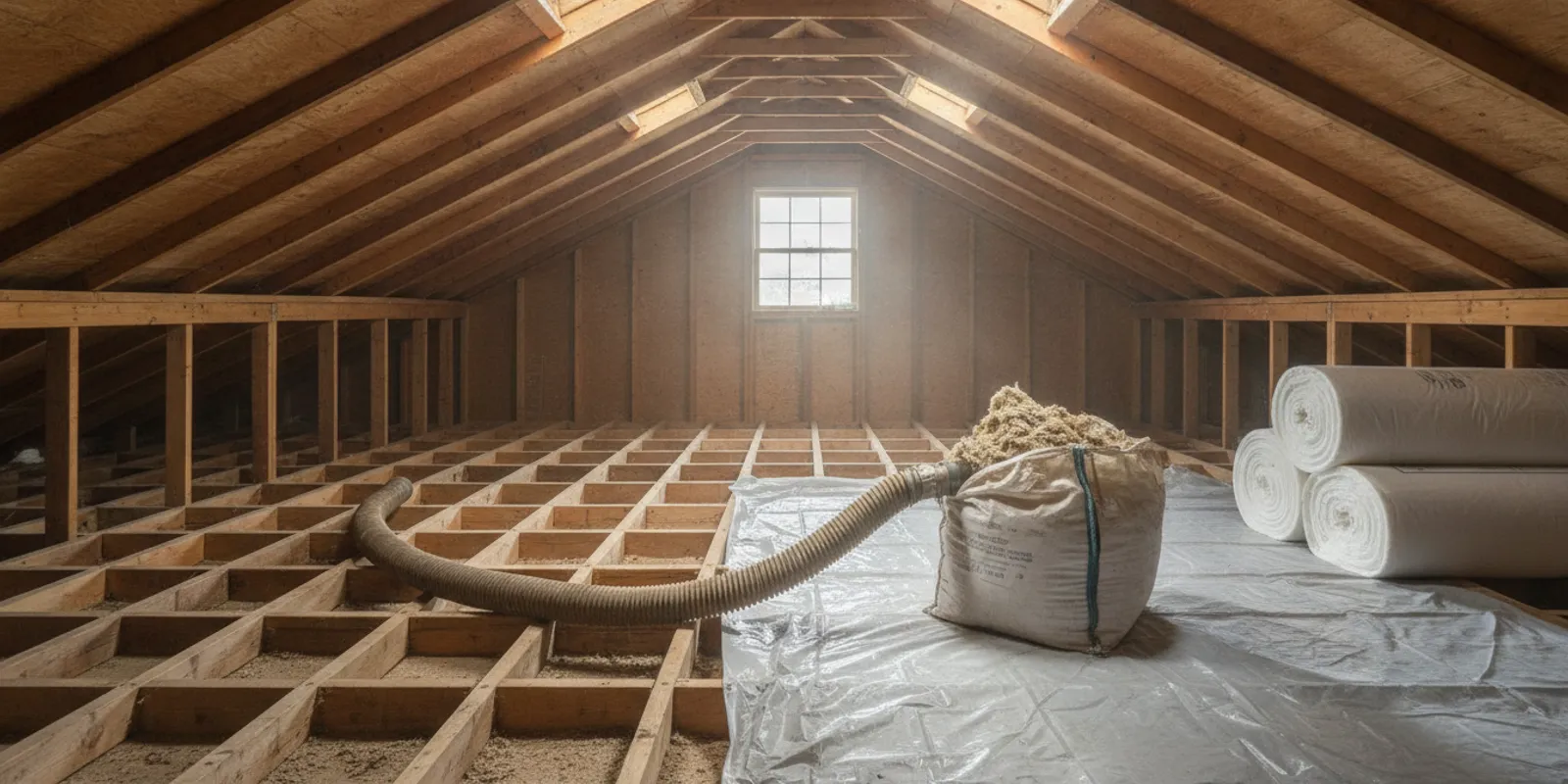
Attic insulation removal and replacement cost depends on the work the attic actually needs, not only its floor area. The amount and condition of existing insulation, the layout and access, the removal and cleanup plan, and the replacement specification all affect a project. For Houston homeowners, the clearest way to understand a quote is to look at each part of the scope and ask what the price includes.
Request an attic project quote
What goes into attic insulation removal and replacement cost?
A remove-and-replace project combines several tasks. First, the attic and existing insulation are assessed. Then the agreed material is removed and handled, the work area is prepared, and new insulation is installed to the stated coverage. Cleanup and a final check complete the work. A quote may present these as one total or separate line items, but you should be able to tell what is included.
These are the main factors that can change the amount of work:
- Attic area and configuration. A larger attic generally means more material to remove and more replacement material. Multiple sections, low clearances, steep rooflines, or a difficult hatch can add time beyond what the square footage alone suggests.
- Existing material and condition. The type, depth, and condition of insulation affect removal and handling. Compacted material, debris mixed into insulation, or areas affected by moisture may require additional assessment or a revised plan.
- Access and obstructions. Framing, ducts, mechanical equipment, wiring, and stored items can affect where a crew can move and how the attic can be reached. A proposal should account for the specific access conditions rather than assuming every attic is open and easy to work in.
- Removal and disposal. Ask whether the scope includes removal from all agreed areas, containment or protection, hauling, disposal, and cleanup. A low total may not include each of these steps.
- Replacement material and target coverage. The proposed insulation type, amount, and coverage or depth affect material needs and installation work. Ask for the specification in writing instead of relying on a general phrase such as “new insulation.”
- Preparation and separate conditions. A contractor may identify conditions that need discussion before new insulation goes in. If moisture, a roof issue, or another building concern is present, clarify whether evaluation or repair is included or outside the insulation scope.
The company’s attic insulation process is a useful place to review the overall stages and prepare questions. A site-specific assessment matters because two homes with similar layouts can have different existing materials, access challenges, and work requirements.
Why can two removal and replacement quotes differ?
A difference in totals does not automatically mean one proposal is better or worse. Contractors may be pricing different attic areas, different amounts of removal, different cleanup expectations, or different replacement specifications. Before comparing totals, check that each quote covers the same work and uses clearly described assumptions.
For example, imagine one proposal includes removal and disposal throughout the accessible attic, while another covers only a portion and lists disposal as an exclusion. The second number may look lower, but the services are not equivalent. Or one estimate may specify a new material and coverage target while another says only “blow in insulation.” Without those details, it is difficult to judge whether the finished work will meet the same plan.
Use this comparison table to organize the discussion. It is not a price list: the cost of each stage depends on the home and the agreed scope.
| Scope item | What a quote should clarify | Question to ask |
|---|---|---|
| Assessment and measurement | Attic sections, approximate area, access, and visible constraints | Which parts of the attic are included in this estimate? |
| Removal | Material and areas to be removed, plus handling method | Does removal cover all the material we discussed? |
| Disposal and cleanup | Hauling, disposal, work-area cleanup, and exclusions | Are disposal and cleanup included in the total? |
| Preparation | Any agreed steps before replacement, with limits stated | What happens if a separate attic condition is found? |
| Replacement | Insulation type, covered area, and target coverage or depth | How will the planned material and coverage be documented? |
| Protection and closeout | Protection for the home and access path, plus final review | What will be cleaned and reviewed before the crew leaves? |
A fair comparison asks each provider to clarify the same categories. Note any item marked “as needed,” “allowance,” or “not included.” Those phrases may be reasonable, but you should understand what could trigger a change and how you will be asked to approve it. The goal is not simply to find the smallest number. It is to know what work the number represents.
How should you read a written estimate?
Read the scope from beginning to end and look for specifics. The estimate should identify the areas being worked on, the work being performed, and the material planned for replacement. It should also state important exclusions or conditions that could affect the final scope. If a detail is missing, ask for clarification in writing before scheduling.
Pay particular attention to the boundary between insulation work and other repairs. An insulation estimate may not include fixing a roof leak, addressing a plumbing issue, or changing equipment or wiring. If a concern is observed, ask whether it needs to be evaluated separately and whether insulation work should wait until it is resolved. Do not assume a general cleanup or preparation line covers repairs that are not described.
It can also help to ask how changes will be handled. If more material needs to be removed than expected, or the attic contains an obstacle not visible during the initial review, ask who will explain the change, how the revised scope will be documented, and whether you will approve it before additional work proceeds. Clear expectations can prevent a surprise from becoming a disagreement.
The U.S. Department of Energy offers general homeowner energy guidance at its official website. For an insulation project, keep that general information separate from the job-specific questions: ask the contractor to describe the proposed material and coverage for your attic rather than assuming a broad recommendation is a direct specification for your home.
How can you compare quotes step by step?
Use the same checklist for every proposal. It keeps the conversation focused on the work instead of on assumptions about what a headline price covers.
- Confirm the areas. Compare which attic sections and access areas are included. Ask whether inaccessible or separated spaces are excluded.
- Confirm what stays and what goes. Ask which existing insulation is being removed, whether all of the agreed material is included, and what will happen to it after removal.
- Check preparation and protection. Make sure you understand how the home and access route will be protected, what cleanup is included, and whether any preparation is part of the estimate.
- Compare replacement details. Record the material and the planned coverage or depth for each quote. If one proposal omits these details, ask for them instead of trying to infer them from the total.
- Review exclusions and change conditions. Identify work not included and ask how the contractor will communicate additional work if the attic condition differs from expectations.
- Ask how completion is reviewed. Understand what the contractor will show or describe at closeout, including which areas were completed and what cleanup was done.
Keep a simple side-by-side note for each contractor. Write “included,” “excluded,” or “needs clarification” beside each scope item. This makes gaps visible. It is especially useful when one estimate arrives as a detailed list and another is summarized in a few lines; ask for comparable information before deciding.
For background on material options, review the guide to attic insulation types in Houston. The best choice and amount are project-specific, so use that information to frame questions, not to substitute for the specifications in your own estimate.
When is removal worth discussing instead of adding insulation?
Removing existing insulation is not automatically necessary every time a homeowner wants an upgrade. The decision depends on what is already in the attic and its condition. If material is damaged, contaminated, or otherwise unsuitable to remain, removal may be an appropriate part of the plan. In other situations, adding material over what is there may be considered. Ask the contractor to explain what was observed and why the recommended scope makes sense for those conditions.
Ask for a clear explanation rather than a blanket rule. Useful details include where the concern is located, whether it affects all attic sections or only part of the space, and what the proposed removal addresses. If a partial removal is proposed, confirm which areas are included and how the transition between treated and untreated areas will be handled. If full removal is recommended, ask what condition or project requirement supports that scope.
Take note of moisture, roof leaks, or other visible issues before new material covers the area. Insulation work is not a substitute for diagnosing an unrelated building problem. If you have concerns about airflow, the building envelope, or a separate repair, ask what is and is not part of the insulation project. The insulation services overview and the company’s homeowner guides provide related reading, while your written proposal should define the work for your property.
What can homeowners do before the assessment?
You do not need to diagnose the attic before asking for a quote. A few practical notes can help make an assessment more useful:
- Write down what prompted the project, such as uneven comfort or concern about the visible insulation. Avoid assuming a symptom has only one cause.
- Identify where the attic access is and whether it is blocked by stored belongings. Ask what should be moved before the visit.
- Share any known history of roof leaks, moisture, pest activity, or prior insulation work that may affect the area.
- Point out areas you want included and ask the assessor to identify any areas that cannot be reached or are outside the proposed scope.
- Keep a copy of each written proposal and record follow-up answers alongside it, so you can compare like with like.
For a project that is still at the research stage, use the information about EZ Attic Insulation to learn more about the company, then return to the practical details in the estimate. A provider’s credentials and service approach matter, but they do not replace a clear description of what your project includes.
What should Houston homeowners ask before choosing a contractor?
Bring these questions to the quote conversation and ask for answers that are specific to your attic:
- What did you observe that makes removal advisable for this project?
- Which attic sections are included, and are any areas inaccessible or excluded?
- What material will be removed, and are handling, disposal, and cleanup included?
- What replacement insulation is proposed, and how will the planned coverage be stated?
- How will the home and route to the attic be protected?
- What conditions could change the work or total, and will I approve a change before it happens?
- What should I move or prepare before the crew arrives?
- How will the completed areas and cleanup be reviewed?
EZ Attic Insulation serves Greater Houston homeowners with attic insulation removal and blow-in replacement. The company describes itself as 100% certified and insured and is BBB A+ accredited. Its price match guarantee is “We Match or Beat Any Competitor's Pricing”; compare the full scope and workmanship details alongside the total. Hablamos Español!
Frequently asked questions
Can I get a reliable cost from attic size alone?
Area is one factor, but it does not describe the existing material, access, removal needs, cleanup, or replacement specification. A project-specific estimate should clarify those details before you compare totals.
Does a removal quote always include disposal?
Not necessarily. Ask whether handling, hauling, disposal, and cleanup are part of the written scope. If an item is excluded, request clarification about what that means for your project.
Does every attic need all existing insulation removed?
No single answer fits every attic. The existing material and its condition should guide the recommendation. Ask the contractor to explain what they observed and why removal, partial removal, or another approach is proposed.
What should I compare if two quotes have different totals?
Compare the attic sections, removal and disposal, preparation, replacement material and coverage, protection, cleanup, and exclusions. Ask each provider to clarify missing details so the proposals describe comparable work.
Talk with a Texas insulation expert
Contact EZ Attic Insulation to discuss your attic project.
Share what you have noticed, which areas concern you, and any questions about removal or replacement so the proposed scope can be discussed clearly.