Attic Insulation Indoor Air Quality Houston: A Guide
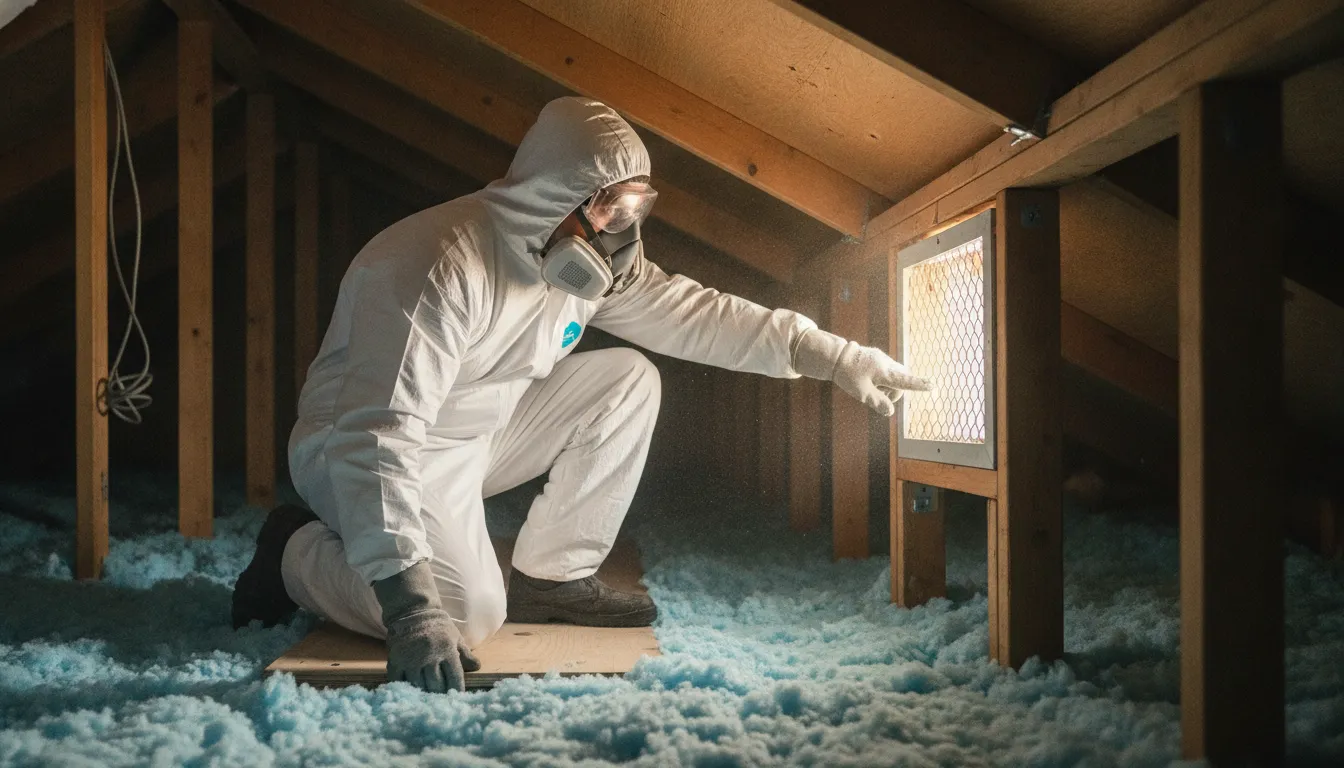
In a Houston summer, the attic is more than an energy problem. Gaps around lights, ducts, and wiring can move attic dust, odors, and moisture into living spaces. Blocked or poorly planned ventilation can worsen heat and humidity.
Book Now or Get Quote - Call (713) 909-0390. Hablamos Espanol!
Attic insulation indoor air quality houston concerns are best addressed as a system: air sealing can reduce unwanted pathways. Insulation can support more stable indoor temperatures, and ventilation must move moisture without spreading attic contaminants. These steps help, but they do not replace HVAC maintenance, source control, mold remediation, or professional indoor air quality testing.
The right approach starts with the attic's existing condition. Check for wet insulation, stains, musty odors, ceiling penetrations, and blocked ventilation routes. Understanding how these pieces work together makes it easier to choose practical improvements for your Greater Houston home.
That system-based view helps homeowners compare insulation work with the separate roles of HVAC maintenance, source control, mold remediation, and indoor air quality testing.
What Does Attic Insulation Indoor Air Quality Houston Planning Require?
When Houston homeowners search for attic insulation indoor air quality Houston solutions, they are often dealing with more than temperature. Dusty rooms, musty odors, uneven comfort, and concerns about attic moisture can all point to gaps in the home's building envelope. Insulation matters, but it works best as one part of a complete attic system that also includes air sealing and ventilation.
Insulation slows heat transfer. Air sealing addresses the openings that allow air to move between the attic and living space. Those openings can occur around recessed lights, plumbing penetrations, electrical wiring, ductwork, and other ceiling-level gaps. Sealing appropriate pathways can help limit the movement of attic dust, odors, and moisture-laden air into the rooms below. The U.S. Department of Energy Building Science Education Solutions explains why air sealing existing attics should focus on these leakage points: air sealing existing attics.
Why insulation alone is not enough
Adding insulation over unsealed gaps may improve thermal performance without addressing the air movement that carries particles or odors. It can also hide problems that should be corrected first. A sound evaluation looks for damaged or damp insulation, staining, pest contamination, disconnected ducts, and openings around attic penetrations before recommending additional material.
Ventilation is the other essential piece. In a properly designed ventilated attic, air should follow its intended path from intake areas, such as soffits, toward exhaust points. Insulation must not block those pathways. The correct installation depends on the attic's configuration, existing condition, and air-sealing needs, not simply on adding the thickest layer possible. Professional guidance on air barriers in ventilated attics explains how these details work together.
For homeowners considering home attic insulation, the practical goal is a cleaner, more controlled separation between the living area and the attic. That may include removing compromised insulation, sealing gaps, installing an appropriate material, checking distribution, and confirming that ventilation remains open. Insulation does not replace HVAC maintenance, source control, mold remediation, or professional indoor air quality testing. If persistent odors, visible moisture, or suspected mold remain after attic work, involve the qualified specialist best suited to identify the source.
Can Attic Air Leaks Bring Dust and Pollutants Into Your Home?
Yes, attic air leaks can create a pathway for dust, odors, and moisture to move into living spaces. The risk is highest where the ceiling plane has openings, such as recessed lights, plumbing penetrations, electrical boxes, whole-house fans, attic access panels, and gaps around ductwork. When the home is operating under pressure, air can move through these small openings and carry whatever is present around the attic.
This does not mean every dusty room has an attic problem. Indoor air quality depends on source control, ventilation, HVAC maintenance, moisture management, and the condition of the building envelope. The U.S. Department of Energy identifies ceiling penetrations and other openings as common air-leakage pathways in existing attics. Air sealing addresses those pathways, while insulation helps provide thermal resistance after the openings have been properly treated.
What can move through an attic leak?
Attic dust may include loose insulation fibers, settled dirt, and debris. Odors can also travel from stored materials, pest contamination, or damp areas. If moisture enters or becomes trapped, the attic may develop musty smells and conditions that require prompt investigation. These are building-condition concerns, not medical diagnoses. Strong odors, visible staining, wet insulation, or suspected mold should be assessed by an appropriately qualified specialist.
Ductwork deserves separate attention. Leaky or damaged ducts can draw air from an attic and distribute it through supply registers, especially when connections or insulation around the ducts are compromised. Cleaning may be appropriate when there is confirmed dust or buildup, but it does not repair ceiling leaks or replace source control. If duct contamination is a concern, learn more about our air duct cleaning service.
What insulation can and cannot do
Adding insulation over untreated leaks can hide problem areas without stopping airflow. A sound approach is to inspect the attic, seal relevant penetrations, address moisture or pest sources, verify duct condition, and then install or redistribute insulation as appropriate. Insulation should also be installed without blocking intended ventilation paths. The EPA recommends considering indoor air quality and source control during renovation work, rather than assuming one material solves every issue: EPA indoor air quality guidance.
For Houston homeowners, that distinction matters. Proper attic work can reduce unwanted pathways and support a more comfortable home. But it cannot clean contaminated air, remove mold, or replace HVAC and IAQ testing when those services are needed.
How Do Houston Heat and Humidity Change the Attic Equation?
Houston attics deal with intense heat, high humidity, and frequent shifts between outdoor moisture and heavily cooled indoor air. That combination makes attic insulation more than a matter of adding material to the floor. The condition of the roof assembly, air-sealing details, and ventilation paths all affect whether the attic stays dry and performs as intended. Before insulation is added or replaced, homeowners should look for signs that moisture management or airflow needs attention.
-
Trace the intended ventilation paths
Start by asking where outside air is supposed to enter and leave the attic. In a typical vented design, soffit vents provide a low intake path while high vents allow warm air to exit. Insulation should improve the thermal boundary without covering or compressing those intended openings. Ventilation baffles can help preserve the channel from the soffit into the attic, but the correct approach depends on the roof and attic configuration. The U.S. Department of Energy explains that ventilated attics require deliberate air-barrier and ventilation detailing so insulation does not block airflow: review the guidance on air barriers in ventilated attics.
-
Look for moisture warning signs before insulating
During a safe visual check, look for wet or compressed insulation, water staining on roof framing, condensation around ducts or metal surfaces, and persistent musty odors. These clues do not identify the cause by themselves. Roof leaks, plumbing issues, bathroom exhaust, duct problems, and indoor humidity can all contribute to attic moisture. The EPA recommends treating moisture control as part of durable building maintenance, not as a detail to hide under new insulation. Resolve the source and allow affected materials to be evaluated before covering the area.
-
Keep insulation clear of soffit airflow
Adding more insulation is not a substitute for correct installation. If loose-fill or batt material is pushed into the soffit intake, the attic may lose part of its designed airflow path. If air leaks around ceiling penetrations remain open, heat, odors, and moisture can still move between the attic and living space. A professional assessment should check the existing condition, prepare the work area, install the selected material, confirm even distribution, and clean up afterward. Homeowners comparing insulation services in Houston should ask how the crew will protect ventilation paths and address moisture concerns before installation.
Houston homeowners can benefit from insulation work that considers the whole attic system. It can support comfort and reduce some pathways for dust or moisture, but it does not replace HVAC maintenance. Source control, mold remediation, or professional indoor-air-quality testing when those services are needed.
Which Attic Insulation Indoor Air Quality Houston Approach Fits Your Home?
There is no universal best insulation material for every Houston attic. The right approach depends on the attic's shape, existing insulation, access, ventilation, and the amount of air sealing the home needs. A careful evaluation should identify those conditions before anyone recommends adding or replacing material.
Each option can address a different part of the comfort and efficiency picture. Insulation slows heat transfer. Air sealing closes gaps around ceiling penetrations and other openings. Ventilation protects intended airflow through the attic assembly. These functions should work together rather than compete.
| Approach | May fit when | Important evaluation point |
|---|---|---|
| Blown-in fiberglass | The attic has irregular areas, open runs, or spaces that are difficult to cover evenly with rigid pieces. | Installers should check depth, coverage, distribution, and whether air leaks need sealing first. See our blown-in fiberglass insulation service. |
| Batt fiberglass | The attic has accessible areas with relatively consistent dimensions and a surface that allows careful fitting. | Gaps, compression, and poor fitting can reduce performance. The material should not block intended soffit or roof ventilation paths. |
| Spray foam | The project needs insulation in selected areas while addressing difficult air leakage pathways. | Application requires careful planning around roof and ceiling assemblies, ventilation, existing moisture, and the home's overall design. Review our spray foam insulation services page. |
| Radiant barrier | The attic evaluation identifies a role for reducing radiant heat transfer as part of a broader attic strategy. | It is not a substitute for insulation, air sealing, moisture control, or proper ventilation. The installation context matters. |
For homeowners researching attic insulation indoor air quality Houston concerns, material selection is only one part of the decision. Existing wet insulation, staining, musty odors, pest contamination, or suspected mold should be addressed before covering the problem. Insulation can reduce some pathways for dust or moisture when installed correctly. But it does not replace source control, HVAC maintenance, mold remediation, or professional indoor air quality testing.
A professional process should include inspection, preparation, installation, a distribution or coverage check, and cleanup. That practical sequence helps match the solution to the attic instead of treating every Houston home the same.
When Should a Houston Homeowner Schedule an Attic and Air-Quality Evaluation?
Do not wait for a major comfort problem before checking the attic. Schedule an evaluation when you notice conditions that suggest moisture, contamination, air leakage, or damaged insulation may be affecting the home.
Signs that deserve a closer look
- Wet or damaged insulation: Insulation that is compressed, soaked, displaced, or deteriorating may no longer perform as intended. Water stains on the ceiling or roof framing also deserve attention.
- Musty odors or visible staining: These can point to a moisture source that needs to be found and corrected. Adding insulation before addressing the source can hide the problem and make future work more difficult.
- Pest contamination: Droppings, nesting material, strong animal odors, or damaged ducts should be evaluated before insulation is replaced. Pest control and cleanup may need to happen first.
- Persistent dust or uneven comfort: Rooms that stay hot, cold, or dusty despite normal HVAC operation may have ceiling penetrations, duct issues, air leaks, or inadequate insulation. An evaluation can help separate attic concerns from HVAC or ductwork concerns.
What the evaluation should determine
A qualified attic professional should inspect the existing insulation, ventilation paths, visible moisture indicators, access areas, and common ceiling penetrations. The goal is not simply to add more material. It is to determine whether removal, air sealing, cleanup, repair, or new insulation is appropriate. Attic insulation works as part of a larger system with air sealing and ventilation, and moisture control should be considered before installation.
Some concerns are outside an insulation contractor's scope. An HVAC professional may be needed for equipment performance, duct leakage, or condensation. An indoor-air-quality professional may be appropriate for testing questions. Suspected mold requires a qualified mold assessment or remediation provider, while active pests require pest control. If anyone in the home is experiencing respiratory symptoms, consult a medical professional and address possible indoor sources rather than assuming insulation is the cause.
For a practical starting point, review our home attic insulation service information and our air duct cleaning service. If the inspection identifies a material or access issue, our insulation services in Houston can be evaluated against the home's actual condition.
Book Now or Get Quote - Call (713) 909-0390 for your attic evaluation.
Frequently Asked Questions
How can attic insulation affect indoor air quality in Houston?
Properly installed insulation can reduce air movement through ceiling gaps, which may limit pathways for attic dust, odors, and moisture. It works best with air sealing and ventilation, but it does not replace HVAC maintenance, source control, mold remediation, or professional indoor air quality testing.
What type of insulation is best for an attic in Houston?
There is no single best material for every attic. The right choice depends on the existing condition, attic access, air-sealing needs, ventilation design, and the home's goals. Options may include blown-in fiberglass, batt fiberglass, spray foam, or a radiant barrier. An inspection should guide the selection.
Is it safe to be in an attic with insulation?
Attics can contain heat, exposed fasteners, limited walking surfaces, dust, pests, and electrical or mechanical hazards. Avoid stepping between ceiling joists or disturbing insulation unnecessarily. If you see damaged material, contamination, or suspect mold, leave the area and arrange a professional evaluation.
How can Houston humidity affect attic insulation?
Moisture management is essential in a humid climate. Wet insulation, staining, musty odors, or condensation can signal a roof, plumbing, duct, or ventilation problem. Insulation should not block intended soffit or roof ventilation. Resolve moisture sources before adding new insulation.
When should a homeowner schedule an attic inspection?
Schedule an evaluation when comfort remains uneven, insulation is damaged or displaced, energy use changes unexpectedly, or you notice moisture, odors, pests, or visible gaps. A professional can assess insulation coverage, air-sealing opportunities, and ventilation, while mold, pest, or indoor air quality concerns may require qualified specialists.
Ready to improve comfort in your Houston home?
A professional attic evaluation can help identify insulation gaps, air-sealing needs, and moisture concerns that may affect comfort and indoor air quality. EZ Attic Insulation can help you understand the next practical step without treating insulation as a substitute for testing or specialized remediation. Hablamos Espanol.